Gordon Koh has never been one to follow a conventional career path. From serving as a military officer and becoming a highly sought-after magician to running nightlife businesses and establishing his own vadai brand, his life has been shaped by curiosity, ambition and a willingness to embrace new challenges. Having also served as President of the Singapore Association of Magicians for many years, Gordon has made his mark across several industries.
Inspired by childhood memories of eating vadai at football matches in Farrer Park, Gordon eventually transformed his passion for the traditional snack into a successful business. His remarkable journey reflects a lifelong spirit of entrepreneurship, resilience and reinvention, as well as his belief in staying active, learning from setbacks and finding fulfilment in bringing happiness to others.
You have had an extraordinary journey, from serving in the military to becoming a magician, nightlife entrepreneur and eventually a vadai maker. What has driven you to reinvent yourself so many times?
My philosophy in life has always been to experience as many things as possible. Once I have achieved what I set out to do, I feel motivated to explore something new.
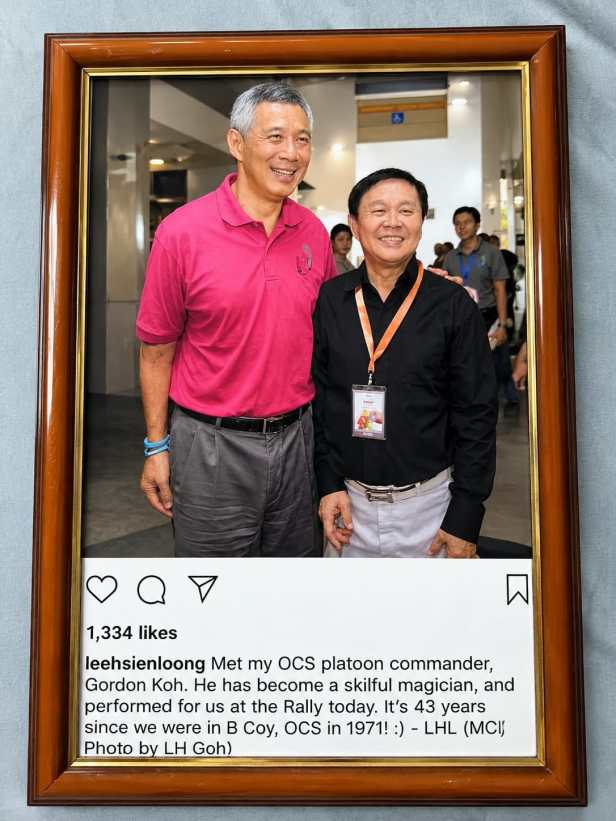
During my military career, I was selected as one of the officers responsible for training Lee Hsien Loong, who would later become Singapore’s Prime Minister, alongside four other scholars during their National Service.
After they completed their officer training in 1972, I decided it was time to leave the army and pursue something different. I have always believed that life offers many opportunities, and I wanted to experience as much as I could rather than remain in one profession.
Your love for vadai began during childhood visits to football matches at Farrer Park. What made those memories so powerful that you eventually wanted to recreate them?
I have loved eating vadai since childhood. Over the years, I tried different versions, including those sold in Geylang Serai, but none quite matched the taste I remembered.
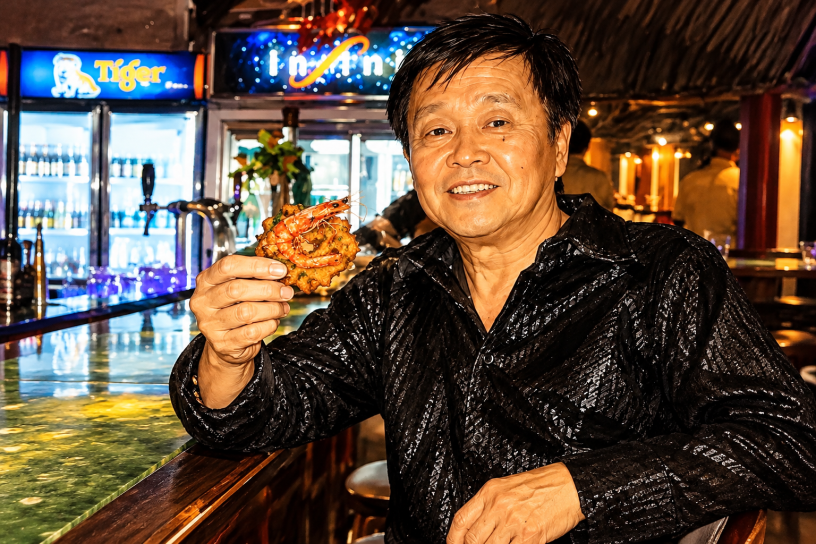
Eventually, I thought, why not make my own? When I started running pubs, I decided to serve vadai so customers could enjoy something to eat while drinking. Business improved significantly, and customers began telling me that my vadai was among the best they had tasted.
Many encouraged me to start selling it commercially and promised to recommend it to their friends. I eventually opened a stall along East Coast Road. Business was slow during the first week, but by the second week, customers were queuing for my vadai.
We attracted considerable media attention, including coverage from The Straits Times, The New Paper and Mediacorp.
I operated the stall for six years before selling the business to someone interested in taking over. By then, I was also managing another pub, so my commitments had become quite demanding.
Gordon’s Vadai became so popular that you were invited to serve it at the Prime Minister’s Chinese New Year celebration. Which moment made you realise that your creation had become something truly special?
There have been many special moments, but what touches me most is the relationship I have built with my customers. Some became good friends over the years. They would thank me for creating something they enjoyed so much.
Some customers even brought gifts for my wife, who helped me at the stall. During the Mid-Autumn Festival, one customer regularly brought boxes of mooncakes for her.
Even today, I have a customer who buys 30 to 50 vadai during the weekends and sends me a bottle of whisky. These gestures mean a great deal to me. They show that the business has created genuine friendships and connections beyond simply selling food.
That is an incredibly satisfying feeling.
As Gordon’s Vadai explores expansion and franchising, how do you ensure that the taste and quality you have spent years perfecting aren’t compromised by commercial growth?
Anyone interested in taking up a franchise must undergo proper training. I personally conduct several sessions to teach them how to prepare the vadai using the correct ingredients and techniques.
They must learn to achieve the right shape, fluffiness and crispiness. I will only allow them to proceed when I’m satisfied that they can consistently reproduce the quality I expect.
For example, a gentleman attended numerous training sessions before I was confident that he had mastered the process. He recently began selling the vadai, and on his first day, he received orders for 200 pieces.
It’s encouraging to see the brand expanding, but maintaining quality will always be my priority.
Looking back, which chapter of your life has taught you the most about yourself, and why?
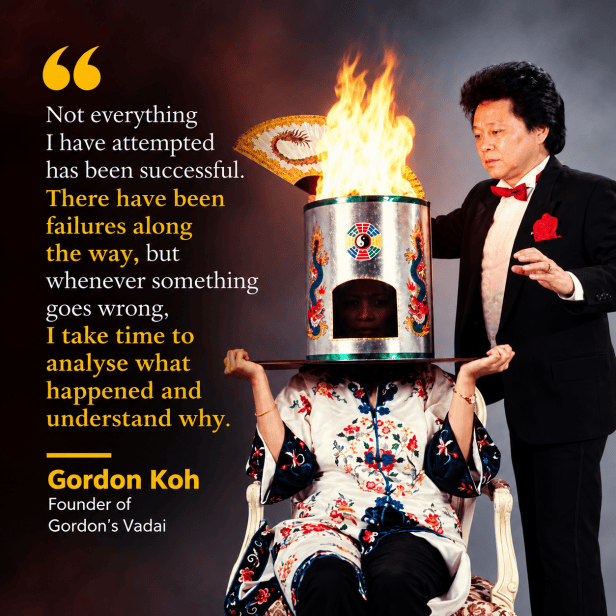
I wouldn’t single out one particular chapter because I have experienced so many different things. Not everything I have attempted has been successful. There have been failures along the way, but whenever something goes wrong, I take time to analyse what happened and understand why.
Magic, for example, was another childhood interest that eventually became a profession. During my performing years, I was fortunate to become a popular and sought-after magician. Later, I established an entertainment company, and my growing business commitments eventually led me to stop performing.
Every experience, whether successful or otherwise, has taught me something valuable. The important thing is to learn from those experiences and avoid repeating the same mistakes.
What do you love most about what you are doing now?
At my age, life is much more relaxed, but I’m not someone who can sit around doing nothing. I believe it is important to remain physically and mentally active.
Keeping myself occupied helps me stay mentally alert, while regular physical activity allows me to maintain my mobility and independence. I want to continue walking briskly, looking after myself and enjoying life without having to depend unnecessarily on family members.
My hope is to remain active and independent for as long as possible.
What is your vision for Singapore in the next five years?
Singapore is a wonderful country, and I believe most of us enjoy a good standard of living. Of course, there is always room for improvement. Having travelled extensively, I have seen the difficult circumstances faced by people in other countries.
In one country I visit regularly, I have seen large numbers of homeless people sleeping along pavements and near railway stations. Some are elderly, while others are families with young children. Seeing such situations is heartbreaking.
I hope Singapore continues to maintain a strong economy while supporting those who are less fortunate. More importantly, I hope future generations can continue enjoying the safety, stability and quality of life that many Singaporeans have today.
If you could have a superpower for one day, what would it be and why?
I would use that power to eliminate poverty and ensure that everyone could enjoy a decent standard of living and a happy family life. It saddens me to see people struggling financially, especially elderly workers who have to work extremely long hours just to make ends meet.
Even in Singapore, I have seen elderly cleaners working two shifts instead of one, presumably because they need the additional income. At their age, having to work such long and tiring hours is difficult.
If I had a superpower, I would want to create a world where nobody had to struggle simply to meet their basic needs.
Connect with Gordon: GordonVadai