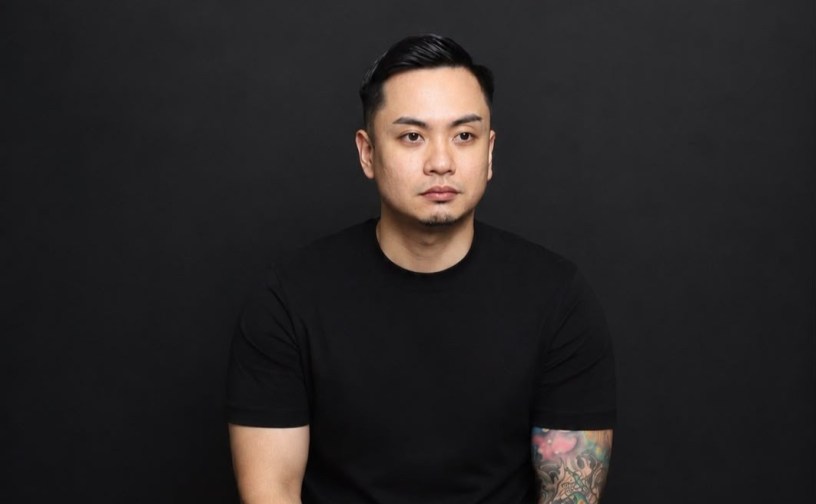
Desmond Ryan Patrick’s journey is one of resilience, redemption and second chances. Having struggled with drug addiction since his teenage years and spent time in and out of prison, he reached a point where overwhelming debts and personal struggles left him feeling hopeless. A close friend’s encouragement eventually helped him see life from a different perspective, inspiring him to leave his troubled past behind and begin rebuilding his future.
Today, Desmond is an entrepreneur in the creative industry and the co-founder of RHELIS, an agency focused on purposeful visual content and storytelling. Despite entering the corporate world without an agency background, he has worked to establish himself through persistence, adaptability and a commitment to delivering meaningful business results. His journey reflects his belief that our past does not have to determine our future.
You have spoken openly about struggling with drug addiction from your teenage years and spending time in and out of prison. Was there a particular moment when you finally realised that this could not be your life anymore?
There was a point before I went back to prison when I felt I had absolutely nothing left. I was heavily in debt, struggling with drug addiction and feeling that my life had become meaningless. The debts seemed impossible to overcome, and I reached a stage where I contemplated suicide because I couldn’t see a way out.
Fortunately, a very good friend stepped in and reminded me that there was so much more to life. He encouraged me to meet up with him and explore a different perspective. He didn’t offer me money or a job. Instead, he introduced me to positive people and helped me see that life could be different.
Being around those people was incredibly motivating. It made me realise that I had reached my limit and needed to change. That was the turning point. I decided I had had enough of my old lifestyle, and I never looked back.
After leaving your old life behind, you still had to rebuild people’s trust. Which was harder: overcoming the addiction itself or proving to people that you had genuinely changed?
Both were difficult in different ways, but I would say rebuilding trust was slightly harder. Overcoming addiction was essential, but even after staying away from drugs for a year or two, people still had doubts about whether I had genuinely changed.
I understood why. I had disappointed my family many times, so naturally, it took them a while to believe that things were different. Even when I found employment, they wondered whether it was a legitimate job and whether I was truly on the right path.
What I have learnt is that trust cannot be rebuilt simply by telling people you have changed.
You have to demonstrate it through consistent actions and results. Over time, people begin to notice your efforts and recognise that the change is genuine. Trust is something you earn, not something you can demand.
You entered the creative industry without an agency background. What were some of your earliest challenges?
Although I didn’t come from an agency background, I had already achieved positive results for people I worked with before starting the agency.
The challenge was figuring out how to deliver those results on a larger scale while managing the operational side of a business. I struggled with hiring the right people and handling the different responsibilities involved in running an agency.
Initially, my co-founder managed much of the back-end work while I handled client-facing responsibilities. I’m naturally an introvert, so having to network, pitch and interact with people from different industries was a major adjustment.
Before entering the corporate world, most of the people I interacted with came from very different backgrounds, including individuals involved in gangs, drugs and other illicit activities.
I had to learn how to communicate professionally, understand the corporate environment and build meaningful connections with business owners and executives. Boardroom presentations were particularly intimidating because I lacked confidence speaking in front of directors and senior decision-makers.
However, through repeated exposure and practice, I gradually became more comfortable. Each presentation helped me build the confidence to communicate effectively in a professional setting.
RHELIS focuses on strong visuals and storytelling, but you also emphasise actual business results. What separates content that simply looks good from content that genuinely helps a business grow?
Many agencies produce visually appealing and entertaining content. We did the same when we first started. However, after working on numerous projects, we realised that attractive content didn’t always deliver the results our clients needed.
A beautifully produced video might have excellent editing, cinematography and visuals. It might even impress other creative agencies, but that doesn’t necessarily translate into business enquiries or sales.
We began rethinking our approach, particularly how we developed scripts and structured content to align with each client’s business objectives. If a video is intended to generate sales, it should encourage viewers to enquire about the business and become part of a meaningful sales funnel.
Good visuals attract attention, but attention alone isn’t enough. That’s why we have shifted towards creating more purposeful content that combines strong storytelling with clear business objectives and measurable results.
In a world flooded with content, what makes audiences lose interest, and what makes them stop scrolling and pay attention?
I think audiences are becoming less interested in content that focuses purely on hard selling. For example, many F&B brands regularly post pictures of menu items, prices and promotions. While there’s nothing wrong with that, such content doesn’t always give people a compelling reason to stop scrolling.
What I find more engaging are stories about the people and experiences behind a brand.
A founder’s journey, behind-the-scenes experiences or the challenges involved in building a business can create a stronger emotional connection with audiences. Singapore has many established businesses that have been passed down through several generations.
Imagine hearing how a grandfather founded a business, how the next generation took over and what changes the family made to adapt to today’s digital environment.
Those stories are interesting because they reveal the human side of a business. Rather than simply promoting products, brands should focus on sharing meaningful stories that give audiences a reason to care.
What would you tell someone who is looking for a second chance in life?
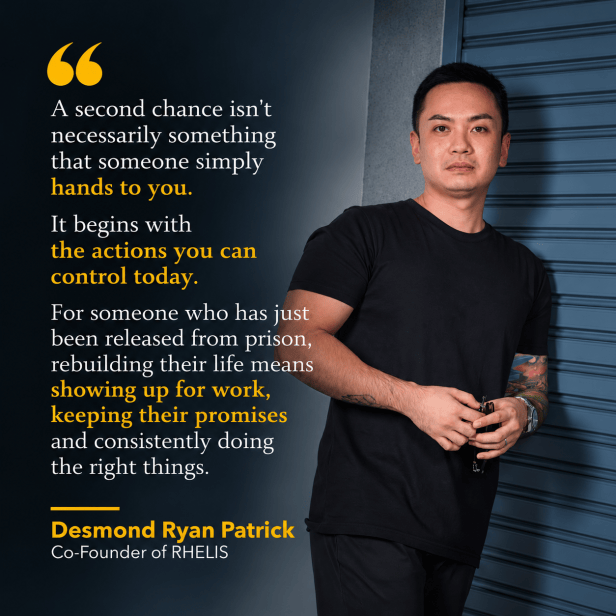
A second chance isn’t necessarily something that someone simply hands to you. It begins with the actions you can control today. For someone who has just been released from prison, rebuilding their life means showing up for work, keeping their promises and consistently doing the right things.
You have to repeat those actions until people begin to recognise the difference. That’s when opportunities gradually open up, allowing you to progress and achieve bigger things.
Your past is part of your story, but it doesn’t have to determine every decision you make for the rest of your life. Mistakes don’t have to define you permanently. You can learn from them, improve yourself and use those lessons to build a better future.
What is your vision for Singapore in the next five years?
One thing I genuinely hope to see is more opportunities for ex-offenders and people who are trying to rebuild their lives. I believe everyone deserves a chance to demonstrate that they have changed and can contribute positively to society.
From a creative industry perspective, I also hope to see greater originality and innovation in the content produced by brands.
Currently, a lot of social media content feels repetitive. Many businesses follow similar formats and approaches, which could eventually cause audiences to lose interest. I have spoken to experienced professionals who have been in the industry for 10 to 20 years, and some share the concern that content will become stale if we don’t continue evolving.
Over the next five years, I hope to see fresh ideas, more creative approaches and greater innovation in Singapore’s social media and storytelling landscape.
If you could have a superpower for one day, what would it be and why?
I would love to have the ability to pause time. Between running businesses, attending training, going to the gym and being a father, there are days when I feel pulled in too many directions.
Sometimes, I simply don’t have enough time to give everything the attention it deserves. People often say that entrepreneurs just need to manage their time better, but the reality is that unexpected problems can arise even after working hours.
Being able to pause time would allow me to handle those responsibilities while still having enough time for my family, personal development and other important parts of my life.
Connect with Desmond: Instagram and TikTok.