A PSLE score of 165 could have discouraged Peter Lim, but it became the turning point that shaped his approach to life. With the guidance of his brothers and a strict study routine, he went on to finish among the top three students in his secondary school cohort every year. The discipline and perseverance he developed during those formative years would later guide him through National Service and a successful career in financial services.
Today, with more than 20 years of experience in the financial industry, Peter has progressed from financial consultant to Financial Services Director. Guided by his three Fs — fatherhood, fitness and finance — he believes that true success comes from consistency, leading by example and helping others discover their purpose. For Peter, wealth and leadership are ultimately about creating a meaningful impact rather than simply achieving financial success.
You scored 165 for your PSLE, but after your brothers introduced a strict study routine, you went on to finish among the top three students every year in secondary school. Looking back, how much did that experience shape the person you eventually became?
Looking back, I see it as a blessing in disguise. My poor PSLE results motivated me to work harder and prove my worth. When my brothers enforced a strict study routine, it taught me the importance of discipline, consistency and hard work.
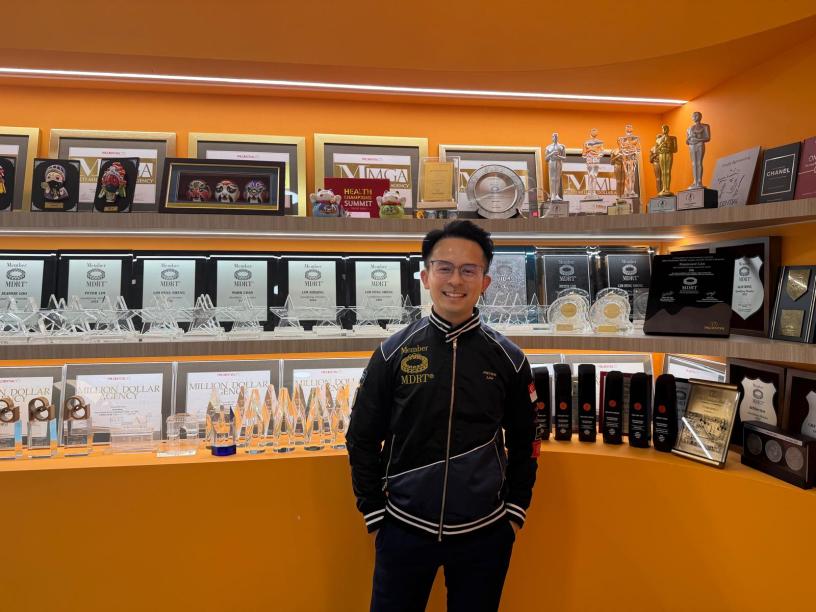
Those lessons became extremely valuable later in life. During National Service, I received the Best Trainee award and Silver Bayonet, which gave me another boost of confidence.
When I entered the financial services industry, I went on to become a top rookie, and those same principles have continued to guide me throughout my career.
Ultimately, the biggest lessons I took away from that experience were discipline and consistent hard work. They have played an important role in shaping who I am today.
You have spent more than 20 years in financial services, progressing from Financial Consultant to Financial Services Director. What leadership lessons have you learnt from building and leading a team?
Leadership is about creating an environment where others can grow and reach their potential. As a financial consultant, I focused on personal achievements, but eventually realised that individual success had its limits. Transitioning into management took two to three years as I shifted from focusing on myself to helping others succeed.
My leadership philosophy centres on two principles. First, you cannot lead from the back. You must uphold high standards and lead by example.
Second, as an Enneagram coach, I help people discover their “why” by understanding what motivates them. In today’s AI-driven world, skills and knowledge are readily available. What people often lack is a clear purpose. Once they discover their “why”, they are better positioned to succeed.
What are the biggest financial mistakes you see individuals making today?
The first mistake is confusing income with wealth. Many people increase their spending as their income rises. Unfortunately, this often means accumulating more liabilities and expenses rather than building assets.
The second mistake is neglecting the fundamentals of investing and wealth accumulation. When people receive a salary increase or suddenly earn more money, they may prioritise lifestyle spending instead of investing in assets. Rather than considering options such as the S&P 500, unit trusts or saving towards property ownership, they may choose to spend their additional income on holidays and other experiences.
This is something I increasingly notice among younger individuals, particularly Gen Z. Ultimately, earning more does not automatically make someone wealthier. What matters is how they manage their income and whether they are building assets for the future.
If you could change just one mindset that people have about money, what would it be?
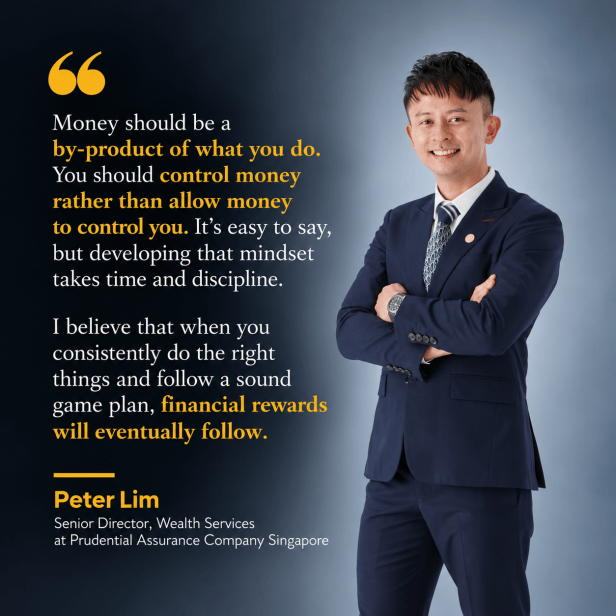
Money should be a by-product of what you do. You should control money rather than allow money to control you. It’s easy to say, but developing that mindset takes time and discipline.
I believe that when you consistently do the right things and follow a sound game plan, financial rewards will eventually follow.
I have experienced the opposite myself. There was a period when I chased money as my ultimate goal, and it made me very unhappy.
That experience taught me that money shouldn’t be the sole objective. When you become overly focused on chasing it, you can end up feeling miserable despite your achievements.
You describe your life through three Fs: fatherhood, fitness and finance. What has fatherhood taught you about life and leadership that your career in finance never could?
I have always believed that children learn more from what you do than what you say. Becoming a father motivated me to become a better leader and set an example for my children.
Recently, my daughter, who is turning 10, told my wife she wanted to be like Daddy — someone who speaks publicly and leads others. Although she may choose a different career, it shows how closely children observe us.
Fatherhood has also taught me that children value your presence more than your income, especially during important milestones.
The same applies to leadership. Your team members care less about your achievements and more about whether you support them, genuinely care about their growth and are there when they need you.
Looking back at your career, is there anything you regret doing or not doing?
I wouldn’t say I have any major regrets, but if I could turn back time, I would encourage my younger self to dream bigger. I would also tell myself not to depend so much on external validation. The confidence and conviction to believe in myself should have developed much earlier.
Growing up, I don’t think our education system necessarily taught us to believe strongly in ourselves or to dream beyond conventional expectations. That’s why I always encourage younger people today to be more daring with their dreams.
What is your vision for Singapore in the next five years?
I believe Singapore will continue to strengthen its position as an economic powerhouse and a leading global financial hub. Our stability and business environment will continue attracting companies and investors, reinforcing Singapore’s importance in the international financial landscape.
As wealth continues to grow, I believe holistic financial planning will become increasingly important, particularly estate planning.
Financial professionals who develop strong expertise in estate planning will be well-positioned to serve the evolving needs of clients.
I also see Singapore gradually becoming a stronger health and wellness hub. Since COVID-19, there has been a noticeable shift in people’s attitudes towards fitness and health.
If you could have a superpower for one day, what would it be and why?
I would love to have the ability to show people their future selves, perhaps 10 or 20 years from now. I want them to see what their lives could look like if they remained disciplined and consistent in their health, careers and personal development.
Many people struggle with delayed gratification because they want immediate results. They find it difficult to appreciate how small, consistent actions can lead to significant outcomes over time.
If I could give people a glimpse of what their future might look like through discipline and perseverance, I believe it could motivate them to make better decisions today.
Connect with Peter: Instagram.