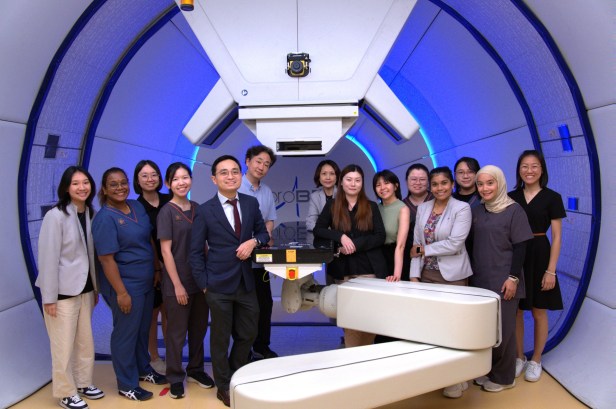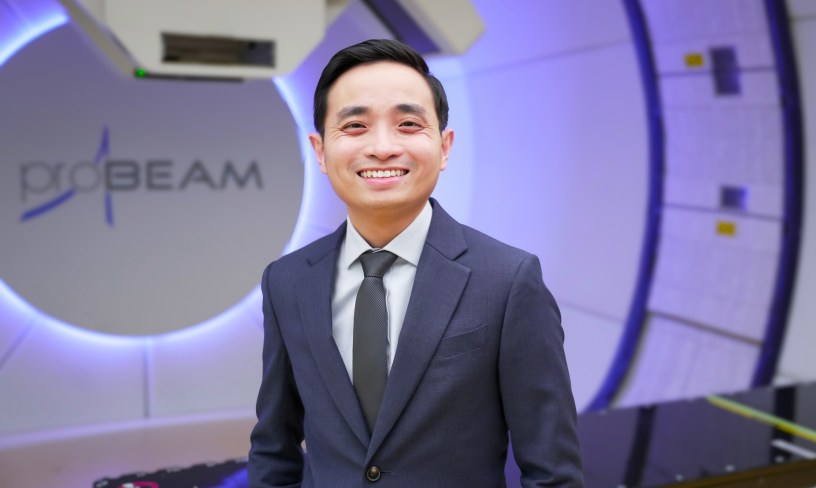
Dr Shaun Ho did not begin his medical career intending to become a radiation oncologist. Initially drawn to surgery, a chance encounter with a radiation oncology trainee introduced him to a specialty that combined the precision and problem-solving he enjoyed with the opportunity to treat cancer without the invasiveness of surgery.
His career has since taken him from the National Cancer Centre Singapore to specialist training in London and the establishment of a radiation oncology service at Raffles Hospital. Through these experiences, Dr Ho has come to believe that excellent cancer care requires more than advanced technology and clinical expertise. It also demands compassion, sound judgement and a willingness to see the person behind the diagnosis.
What first drew you towards oncology, knowing that it would mean spending your career working with people facing some of the most difficult moments of their lives?
I did not graduate intending to become an oncologist. I initially wanted to be a surgeon because I was drawn to anatomy, pathology, precision and problem-solving.
During a surgical posting, I met a doctor training in radiation oncology who introduced me to the specialty. I realised it offered similar precision, with the ability to treat and potentially cure cancer without the invasiveness of surgery. After completing a radiation oncology posting, I decided to pursue it as my career.
What ultimately kept me in the specialty, however, was the patients. They trust us to walk through a serious diagnosis with them, whether we are trying to cure or comfort them. Building meaningful relationships with patients and their families is what makes the work so rewarding.
You worked at the National Cancer Centre Singapore, trained in London and later established the radiation oncology service at Raffles Hospital. What were the defining experiences that shaped the kind of oncologist you are today?
Every stage of my career taught me something different. At the National Cancer Centre Singapore, I built my clinical foundation across different cancers and learnt the importance of multidisciplinary care.
In London, working at a high-volume regional cancer centre exposed me to rare and complex cases, particularly in sarcoma and neuro-oncology, deepening my specialist experience.
At Raffles Hospital, I developed as both a clinician and leader by building a radiation oncology service from scratch, from equipment and staffing to workflows and patient care. It taught me to think beyond treating individual patients and focus on building a system they could trust.
Throughout my career, the doctors, nurses, therapists, physicists and support staff I have worked with have also shaped the doctor I am today.
For someone hearing about proton therapy for the first time, how would you explain it in simple terms, and how is it different from conventional radiotherapy?
Conventional photon radiotherapy and proton therapy both treat cancer, but differ in how radiation is delivered. Conventional radiation passes through the body, while protons can be controlled to reach the tumour, release their energy and stop.
A simple analogy is hitting a golf ball with the right direction and force so that it reaches the hole and stops there. This allows us to treat the cancer while reducing unnecessary radiation to healthy tissue.
Proton therapy can be particularly useful for cancers near critical structures such as the brainstem or spinal cord, and for children, where minimising radiation exposure is especially important.
After spending so much of your career alongside people confronting serious illness, what have your patients taught you about how we should live while we are healthy?
Time and again, I see the same pattern. A cancer diagnosis becomes a wake-up call. After patients complete treatment and recover, something often shifts in their mindset. They start paying more attention to their health, diet, sleep, exercise and even their overall perspective on life.
Some patients say that “life begins after cancer” because they start living with much greater intention after going through the experience. But I often wonder: why does it take a serious illness for us to start living that way? The habits patients adopt after treatment, such as exercising, eating properly, getting enough sleep and paying attention to their bodies and stress levels are not complicated.
They are things all of us can do while we are still healthy. We do not need a serious diagnosis to give us permission to start taking care of ourselves and being kinder to ourselves.
As Medical Director, you are both a doctor and a leader. How do you create a culture where clinical excellence, innovation and compassionate patient care are equally important?
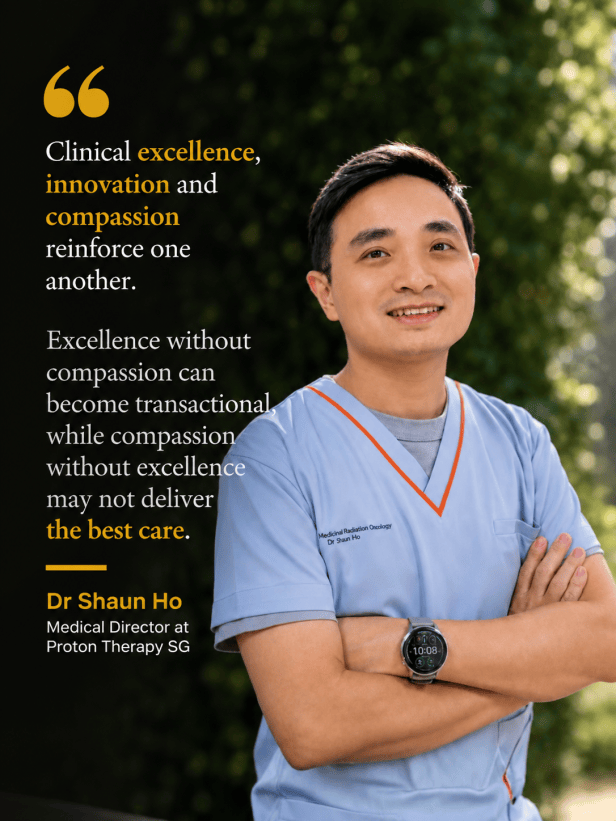
Clinical excellence, innovation and compassion reinforce one another. Excellence without compassion can become transactional, while compassion without excellence may not deliver the best care.
As Medical Director, my role includes establishing protocols and standards to ensure safe, precise treatment while building a team that sees patient care as a shared responsibility.
I have seen colleagues deliver medication to patients who were too unwell to visit the hospital, and we have even helped with transport when necessary. You cannot mandate that kind of culture. It comes from hiring people who genuinely care and ensuring that systems and processes support, rather than hinder, compassionate care.
If you could speak to your younger self, what would you tell him and why?
I would tell my younger self not only to understand disease and treatment, but also to learn how to listen, ask deeper questions and see the person rather than simply the condition.
Patients place tremendous trust in us to act in their best interests, and we should never take that responsibility lightly. Being their advocate means ensuring they receive appropriate and timely care while respecting their wishes and circumstances.
Sometimes, the most advanced treatment is not necessarily the right one. Good medicine is not simply knowing what is possible, but knowing what is best for the person in front of you.
What is your vision for Singapore over the next five years?
I think the next five years will be shaped significantly by AI. Singapore is well placed to embrace it, but I hope we do so wisely without surrendering our own thinking and judgement.
There is a difference between knowledge and wisdom. AI is excellent at providing information, data and identifying patterns, while wisdom is about applying that knowledge through judgement and experience.
In healthcare, that may mean recognising when a patient is holding something back and knowing when to probe deeper. My vision is for Singapore to use AI to become sharper and more efficient while continuing to invest in human judgement and wisdom.
If you could have a superpower for one day, what would it be and why?
I would probably choose the ability to teleport, simply for the fun of it. I love discovering new places and travelling whenever I can, and I spend much of my free time travelling or jogging.
If I could teleport for one day, I would spend those 24 hours hopping around the world and visiting places I have always wanted to see — no flights, traffic or travelling time. There is no grand purpose behind it; I would simply use the opportunity to explore and satisfy my curiosity.
Connect wit Dr. Ho: LinkedIn and Instagram.
Dr Ho is a member of Rainmaker, a revolutionary movement that rallies like-minded people together based on the values of Love, Authenticity, Respect, Kindness and Youthfulness (LARKY).