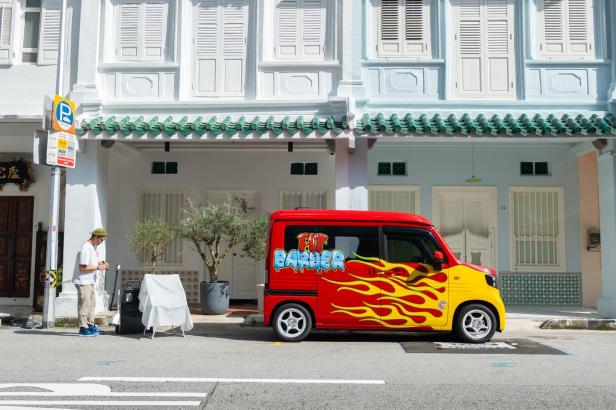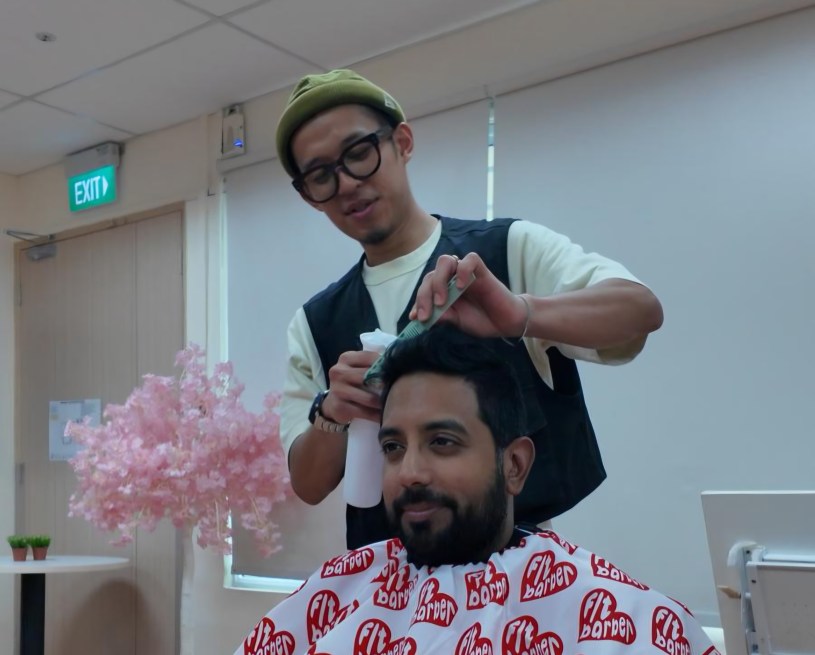
For Andy Ahmad, barbering has never been simply about cutting hair. After spending five years as a professional footballer, he embarked on an entirely different journey, one that eventually led him to build FitBarber around convenience, dignity and service.
Today, Andy serves a remarkably diverse clientele, from elderly and bedbound individuals to children with special needs and high-profile clients. Drawing on the discipline he developed through football and the lessons learnt from every person he serves, Andy hopes to build a network of mobile barbers across Singapore so that grooming remains accessible to everyone.
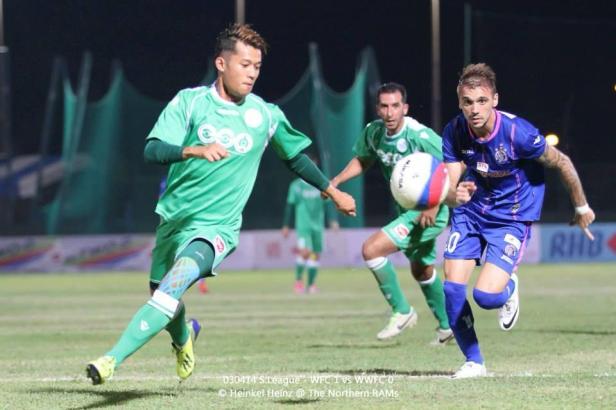
You spent five years as a professional footballer with Woodlands Wellington. What was the hardest part about starting again and building a completely new identity for yourself?
There are actually similarities between football and barbering. I started playing football at youth level, and when I became a professional, I had to prove myself again because I was suddenly playing alongside senior players. I already understood that if I wanted to succeed, I had to put in the work.
When I started mobile barbering 10 years ago, it wasn’t really a thing. People weren’t going onto Google and searching for a mobile barber. However, after serving my first client, I realised there was a market and that I could help many more people.
I also realised that it wasn’t really about the haircut; it was about serving people. That became a responsibility for me. From the beginning, I never evaluated my service purely based on the quality of the haircut. If I did that, I would be competing with traditional barbershops, and I don’t always cut hair under the ideal conditions that a barbershop provides.
Instead, I focus on serving every client to the best of my ability. I believe that is why clients stay with me and recommend me to others.
One of the defining moments in your journey came when you cut the hair of your friend’s father, who had suffered a stroke and passed away a few days later. How did that experience change the way you viewed barbering?
He was the first bedbound client I had served, so the experience was completely new to me. Fortunately, my wife, a nurse specialising in neurology, taught me how to position and turn him safely.
As I served more clients with different physical conditions, I became more confident and realised how meaningful such a simple service could be.
Today, family members often trust me to care for their loved ones when they cannot be present. I complete the haircut, take a photograph and send it to them afterwards. That trust comes with responsibility, so I always understand each client’s condition before serving them safely and respectfully.
Most barbers wait for customers to come to them, but you decided to go to people’s homes and even hospitals. What made you realise there were people being underserved by the traditional barbershop model?
At a traditional barbershop, grooming is often about how you look and feel. But when you can’t leave your home, you may start neglecting that feeling of being well-groomed.
Today, people understand convenience much better. We have Grab, food delivery platforms and many other services that come directly to us. That makes what I do easier for people to understand. I am essentially solving a problem by bringing the service to them.
Family members can arrange for me to visit their loved ones even when they can’t be there themselves. After a haircut, clients see themselves looking smart and well-groomed again. When friends and relatives visit them, they can also see that the person is being well cared for.
People may not have understood the importance of this service 10 years ago, but today they do.
Professional football teaches discipline, resilience and the ability to perform under pressure. Which lessons from your sporting career have proved most useful in building FitBarber?
Football taught me discipline. You show up regardless of how you feel because you understand why the training is necessary. I have applied that same discipline throughout my 10 years in barbering.
It also taught me resilience and to keep moving forward. In barbering, that has meant learning to serve people with different needs rather than choosing only the easiest clients, which has helped me build a diverse clientele.
Most importantly, football taught me that hard work pays off. I worked hard to become a professional footballer, and I have brought the same mindset to becoming a professional mobile barber.
You now serve a wide variety of clients, including those who may require considerably more patience and care. What have they taught you about life?
I’ve learnt something from every client, from elderly people to children with autism. Serving elderly clients is especially meaningful because I never had the opportunity to cut my grandparents’ hair. It gives me a sense of caring for them and is very humbling.
My nephew has autism, and after learning to cut his hair, I began serving other children with special needs. Today, I regularly serve more than 90 of them. They have taught me the importance of staying calm because when I am calm, both the child and parents feel more at ease.
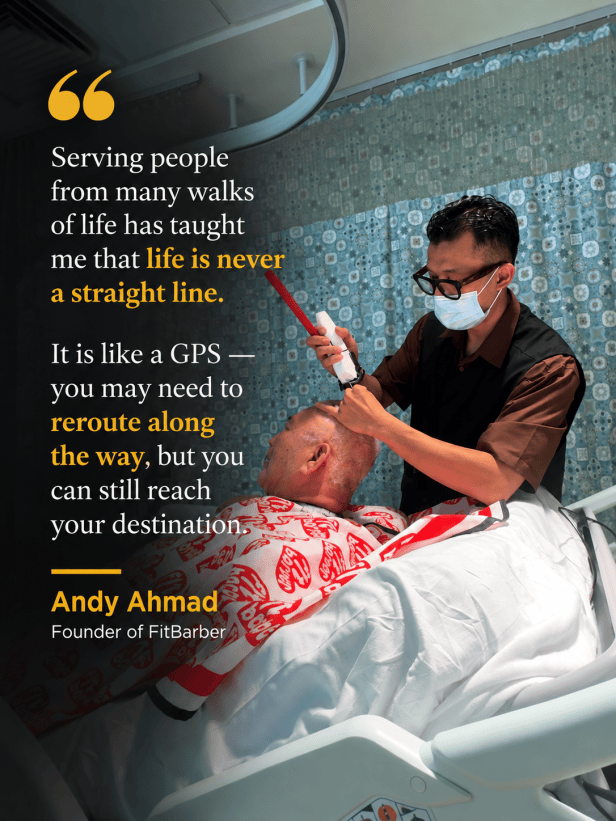
Serving people from many walks of life has taught me that life is never a straight line. It is like a GPS — you may need to reroute along the way, but you can still reach your destination.
If you had the opportunity to return to professional football but had to give up your current business, which path would you choose and why?
At this stage of my life, I would choose the business.
Football makes people happy, and there’s tremendous satisfaction in that. But an athlete’s career has a limited lifespan. What I’m doing now allows me to help people in a much more direct way, and I find that incredibly satisfying.
There doesn’t have to be a lifespan to what I’ve built. Even when I’m no longer doing the work myself, I can pass my knowledge to a younger generation who can continue what I started. In that sense, the impact can continue beyond me.
That’s why I would choose the business over football today.
What is your vision for FitBarber and Singapore over the next five years?
My vision is for mobile barbering to become widely recognised and easily accessible throughout Singapore.
We are currently building a network of barbers in different regions. Travelling from one end of Singapore to another can be exhausting and inefficient, so if I can’t personally attend to a client in the east, for example, I can allocate the appointment to one of the barbers based there.
Over the past 10 years, I’ve walked to clients, cycled to them, driven and ridden my motorcycle. I’ve learnt that there is always a way to help someone.
Ultimately, I would like every part of Singapore to have a mobile barber available. They don’t necessarily have to work directly under me; they could simply be affiliated with FitBarber. The important thing is making the service accessible to the people who need it.
If you could have one superpower for a day, what would it be and why?
I would probably choose flying. Sometimes, the most important thing is simply being able to get somewhere quickly and efficiently. If you can’t run fast, make sure you can fly fast!
Connect with Andy: Instagram and TikTok.