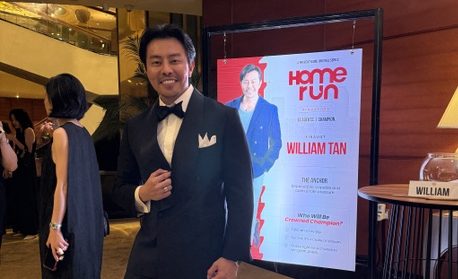
After more than two decades in marketing, advertising and communications, William Tan made a bold career change at 45, entering Singapore’s competitive real estate industry. Seven years later, his decision to embrace a new challenge culminated in winning PropertyGuru’s Home Run Season 3, proving that experience, adaptability and determination can be powerful advantages at any stage of life.
Beyond property transactions, William is passionate about home staging, helping clients make informed investment decisions and redefining what success means. Through his real estate career and home staging venture, DreamHaus, he combines marketing expertise with a keen understanding of property presentation. In this interview, he reflects on changing careers, overcoming self-doubt, the lessons behind his reality television victory and his hopes for a more inclusive Singapore.
You spent more than two decades in marketing and communications before becoming a property agent at 45. What prompted such a significant career change, and did you worry about starting too late?
After more than 20 years in advertising, media publishing and marketing, I reached a turning point in my mid-40s. With the media landscape changing rapidly, I began considering a different career path.
My growing interest in property investment led me to explore becoming a property agent. I took the examinations and discovered that my marketing and communications experience was highly relevant to real estate.
Rather than seeing age as a disadvantage, I embraced the opportunity to challenge myself and begin a new chapter.
You recently emerged as the winner of PropertyGuru’s Home Run Season 3. What motivated you to participate, and how did you feel when you were announced as the winner?
After seven years in real estate, I wanted a new challenge. Although I initially hesitated about appearing on reality television and facing public judgement, my good friend Kesang, the previous season’s runner-up, encouraged me to participate.
As a Generation X property agent, I wanted to show that age isn’t a limitation, even as younger agents embrace social media and technology. We must adapt and use our experience to remain relevant.
Winning was exciting, but the greatest reward was the journey of self-discovery. The competition pushed me beyond my comfort zone, helped me confront my weaknesses and recognise my strengths. That personal growth meant more to me than the trophy or prizes.
Throughout Home Run Season 3, you faced challenges involving property presentations, home staging and teamwork. Which challenge pushed you furthest outside your comfort zone, and what did it teach you?
The third challenge, involving video production, was probably my toughest. Despite my background in media and marketing, I was competing against Vanessa, an experienced videographer who regularly produces property videos.
I initially thought we would collaborate, so discovering we were competitors affected my confidence. Although the judges praised both videos, a decision I made towards the end nearly cost me the competition. Fortunately, I was saved from elimination.
It was a wake-up call that reminded me never to take success for granted, even in my area of expertise.
The following week, I bounced back and was named Most Valuable Player (MVP) in the commercial group challenge. Going from near elimination to MVP reinforced the importance of resilience, adaptability and confidence after setbacks.
You established DreamHaus to pursue your passion for home staging. What inspired this venture, and how much difference can good presentation make when selling a property?
I’ve always been passionate about home staging and how presentation influences buyers. While it’s common in countries like the United States and Australia, many Singapore sellers are reluctant to pay additional staging costs, leaving agents to cover them.
I started DreamHaus to pursue this passion and differentiate my real estate services. I incorporate staging into selected property listings, and other agents have since approached me for similar services.
I believe selling property goes beyond floor plans and specifications. It’s about storytelling and helping buyers imagine living in the space. Good staging creates stronger first impressions, highlights a property’s potential and builds emotional connections.
For me, effective property marketing combines the art of storytelling with the science of presentation.
Many Singaporeans view property as an important way to build wealth. What are the biggest mistakes you see buyers making, and what advice would you give first-time property investors?
The first mistake is failing to distinguish between buying a home and purchasing an investment property. A home involves personal preferences and lifestyle needs, while investment decisions should focus on financial returns rather than emotions.
Another common mistake is fear of missing out (FOMO). Social media and aggressive property marketing can pressure buyers into making hasty decisions without proper evaluation.
The second mistake is overstretching financially. Just because a bank offers a substantial mortgage doesn’t mean you should borrow the maximum amount. With repayments lasting 20 to 30 years, buyers must consider their long-term affordability and quality of life.
The third mistake is overlooking the exit strategy. Investors should consider future resale demand, as factors such as location, floor level, facing and afternoon sun exposure can affect a property’s attractiveness.
Ultimately, my advice is to avoid emotional decisions, understand your financial limits and always consider resale potential before committing.
What did you get wrong earlier in your career that you’re now glad you experienced?
I wouldn’t say I got something badly wrong, but my definition of success has changed over time.
When I was younger, success meant career progression, higher income, job titles and recognition. While these achievements still matter, I’ve realised they shouldn’t define us.
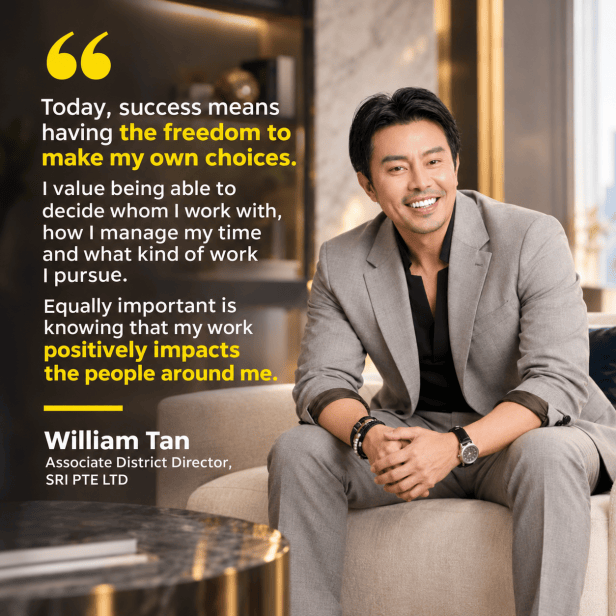
Today, success means having the freedom to make my own choices. I value being able to decide whom I work with, how I manage my time and what kind of work I pursue. Equally important is knowing that my work positively impacts the people around me.
Financial success remains important, but earning a million dollars at the expense of my integrity or ethics wouldn’t make me feel successful. To me, genuine success is about balancing financial achievement with personal freedom, fulfilment and values.
What’s your vision for Singapore in the next five years?
I hope Singapore becomes a more inclusive society where everyone, whether single or married, has the opportunity to own a home and feel accepted, regardless of their family circumstances.
I also hope Singaporeans place greater emphasis on quality of life rather than material achievements. We often associate success with upgrading from an HDB flat to a condominium or landed property, but a bigger home doesn’t necessarily mean a better life.
There’s nothing wrong with pursuing these goals, but happiness should come from living comfortably within our means and according to our needs. I hope Singaporeans feel free to define success on their own terms rather than conforming to societal expectations.
If you could have a superpower for one day, what would it be and why?
I would choose teleportation. As a property agent, time is precious, and we spend countless hours travelling between viewings, appointments and client meetings.
Unlike a typical nine-to-five job, real estate often requires working evenings and weekends. Teleportation would allow me to meet clients, attend viewings and respond to their needs instantly, making my work much more efficient.
Of course, I’d also use it for leisure! Imagine spending a few hours in Paris before returning to Singapore instantly. That would be an incredible luxury!
Connect with William: linktr.ee.