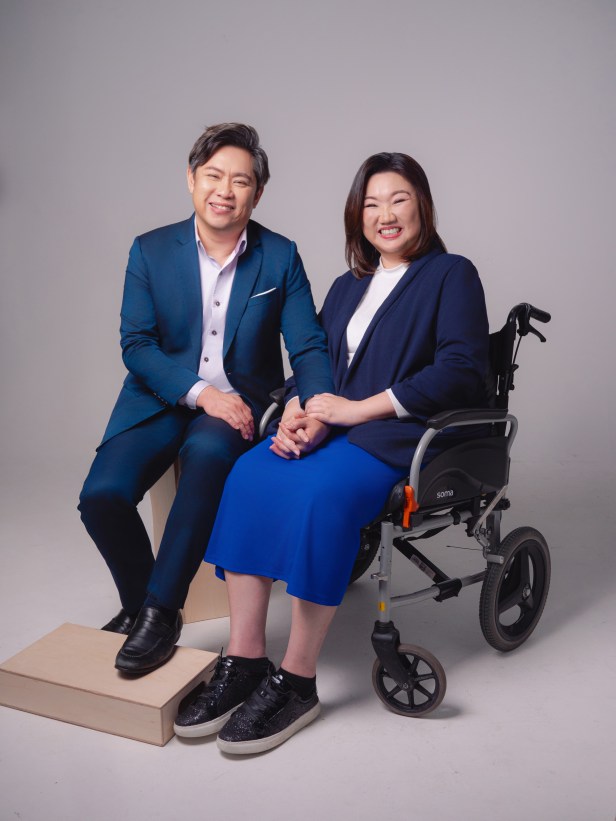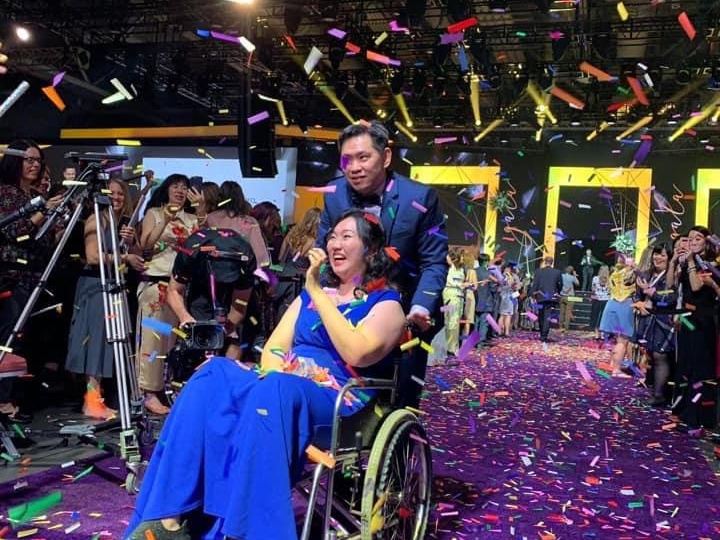
For Deborah Wong, life took an unexpected turn in 2017 when she was diagnosed with amyotrophic lateral sclerosis (ALS), a progressive neurological disease. As a mother of three young daughters, her greatest fear was not death itself, but the possibility of leaving her children without a mother. Yet, amid the uncertainty, Deborah found renewed purpose in sharing hope, building a business and supporting others facing difficult circumstances.
Despite her physical limitations, Deborah has built a dōTERRA business serving more than 3,000 customers, alongside her husband, Fabian. Her journey has also been one of emotional healing, faith and learning to recognise her own worth. Today, she hopes to empower more women to achieve financial independence while raising awareness of the challenges faced by people living with ALS.
You have shared that growing up, you often felt your mother favoured your brother, even selling her flat to finance his education. How did those experiences affect your sense of self-worth when you were younger?
I felt that I had to work extremely hard to be worthy of love. There was always a lingering feeling that I wasn’t good enough.
Looking back, I realise I was never truly happy. I constantly kept myself busy, trying to compensate for my lack of self-worth. I was wearing a mask, appearing happy on the outside while feeling uncertain about who I really was inside.
You were diagnosed with ALS in 2017 and given a difficult prognosis. What was the hardest part of accepting the diagnosis, particularly as a mother of three young daughters?
My greatest fear was that my daughters would grow up without their mother. They were only two, four and six years old, and I worried about how my absence might affect their formative years.
It broke my heart to imagine them growing up without a mother’s love or what I considered a complete family. I broke down when my neurologist told me to prepare my children for the possibility that I had only three to five years left.
Death itself doesn’t frighten me. What pains me is the suffering my passing could cause my loved ones. Learning to release that burden has been part of my journey.
Despite your physical limitations, you built a dōTERRA business serving more than 3,000 customers. What motivated you to keep building when others might have stopped working?
It began with a heartfelt desire to share what had helped me feel better, hoping that others going through difficult times could find hope and light.
There was a fire within me that kept me going, even when I was physically exhausted. Along the way, opportunities appeared, and many wonderful people stepped forward to help.
I began to understand the saying that when you truly, deeply desire something, the universe conspires to help you achieve it.
I have learnt that we don’t need to figure everything out immediately. We simply need to focus on taking the next step towards our goals and allow time for things to fall into place.
Your husband Fabian initially wasn’t interested in essential oils but eventually became deeply involved in the business. How has your relationship changed through everything you have faced together?
I have come to appreciate Fabian’s love and his willingness to grow alongside me. He has always been supportive, but before my ALS diagnosis, I often took him for granted. Because of my childhood insecurities, I had little tolerance for mistakes and would sometimes scold him over minor things.
As I began my emotional healing journey and learnt to accept myself, I started recognising the sacrifices he had made.
Today, as we plan our business and future together, I feel that he completes and complements me, supporting me in areas where my disability creates challenges.
Living with ALS and building a business together have brought us much closer. As a Christian, I believe that Fabian and I can achieve anything as a team with God’s help. I’m constantly amazed by how prayers I made months or even years earlier have been answered through unexpected opportunities and support.
Your mission has evolved from sharing hope to empowering women. Why has helping women achieve financial independence become so personal to you?
My greatest inspiration is my mother, who raised us as a single parent. She worked three jobs to support our family. Even as a young child, I felt guilty watching her constantly exhausted and in pain.
Today, I believe my business can provide women with opportunities to earn an income while caring for their children. Just as my daughters are proud of my achievements, I hope other children can witness their mothers overcoming challenges and building something meaningful. They might even become involved in helping their mothers.
Deep down, I simply don’t want another mother and child to experience the same struggles my mother and I endured.
What has life taught you that success never could?
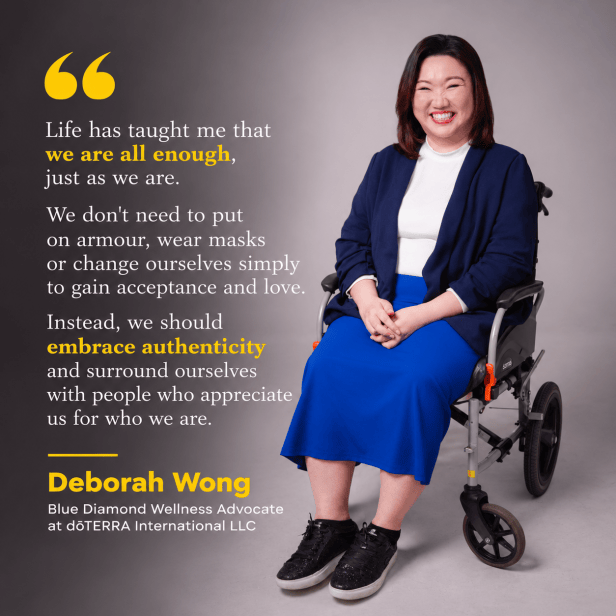
Life has taught me that we are all enough, just as we are. We don’t need to put on armour, wear masks or change ourselves simply to gain acceptance and love.
Instead, we should embrace authenticity and surround ourselves with people who appreciate us for who we are. Have faith, be bold and courageous, and keep moving forward one step at a time.
Most importantly, focus on what you can do with the resources available to you, rather than dwelling on what you have lost or what lies beyond your control.
What’s your vision for Singapore in the next five years?
I envision a Singapore where people have greater freedom to enjoy life as artificial intelligence helps reduce workloads.
With increased productivity, I hope employees will have opportunities to take on more advanced, better-paying jobs while enjoying a healthier work-life balance.
I also hope that improved quality of life will encourage more Singaporeans to start families and contribute towards a happier society. Ultimately, I would love to see Singapore rise in global happiness rankings.
If you could have a superpower for one day, what would it be and why?
I would choose the power to cure everyone living with ALS and make the disease disappear forever. There is currently no cure for ALS, and its progression can be devastating.
Many people with ALS, often referred to as PALS, eventually require feeding tubes, breathing assistance through ventilators and round-the-clock care. Some become confined to their beds, unable to move or speak.
For those dependent on ventilators, even a power failure can become life-threatening. I know how difficult communication can be because ALS has affected my own speech.
If I had that superpower, I would free everyone suffering from ALS and give their caregivers the opportunity to pursue their passions and live fulfilling lives.
Connect with Deborah: Facebook and Instagram.
Deborah is a member of Rainmaker, a revolutionary movement that rallies like-minded people together based on the values of Love, Authenticity, Respect, Kindness and Youthfulness (LARKY).