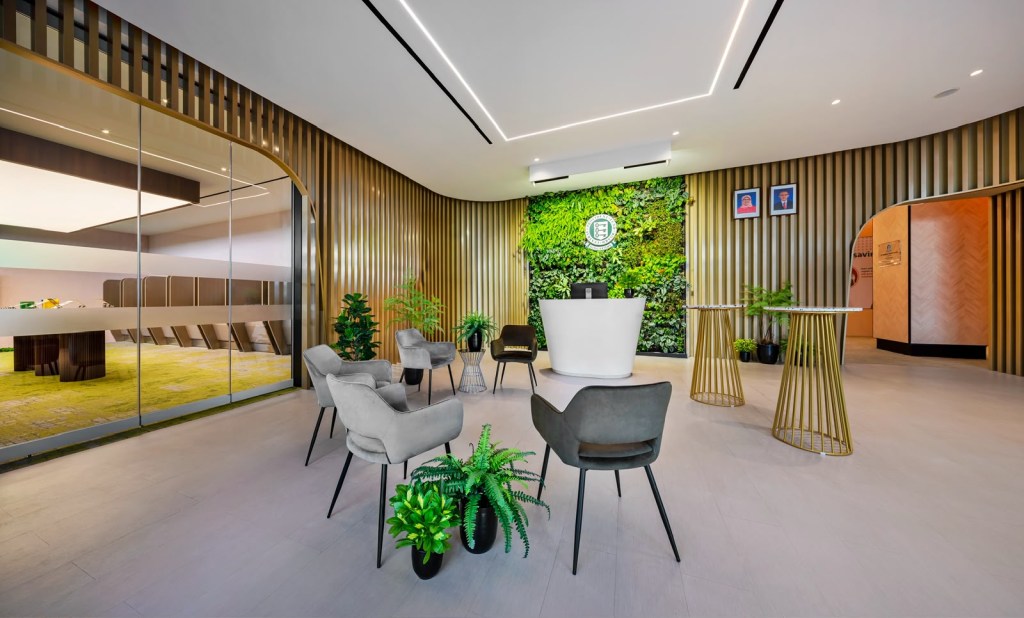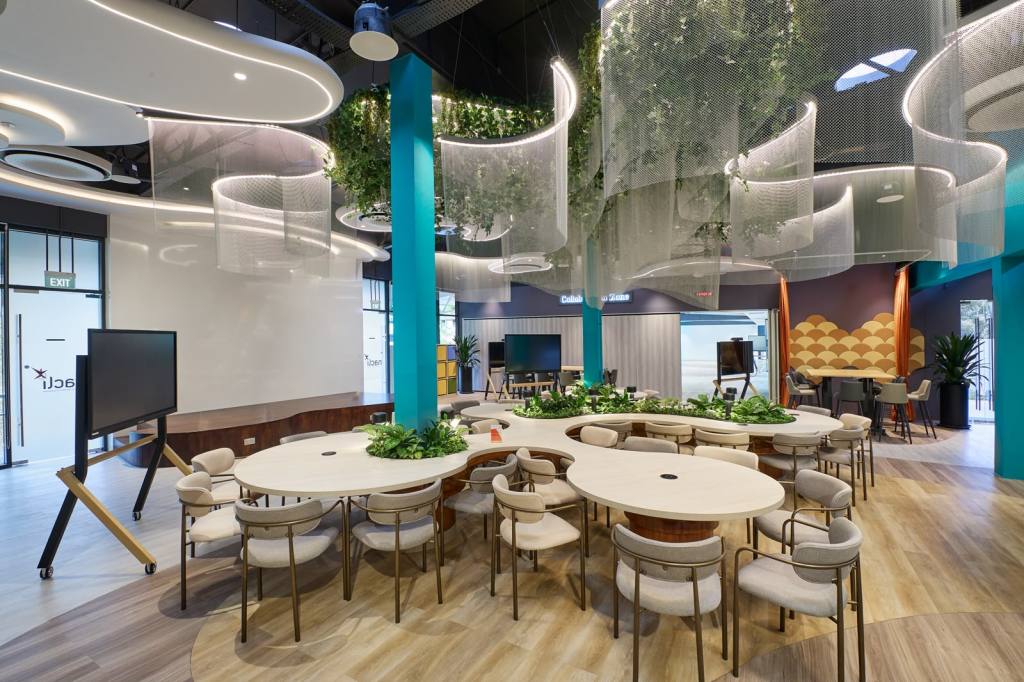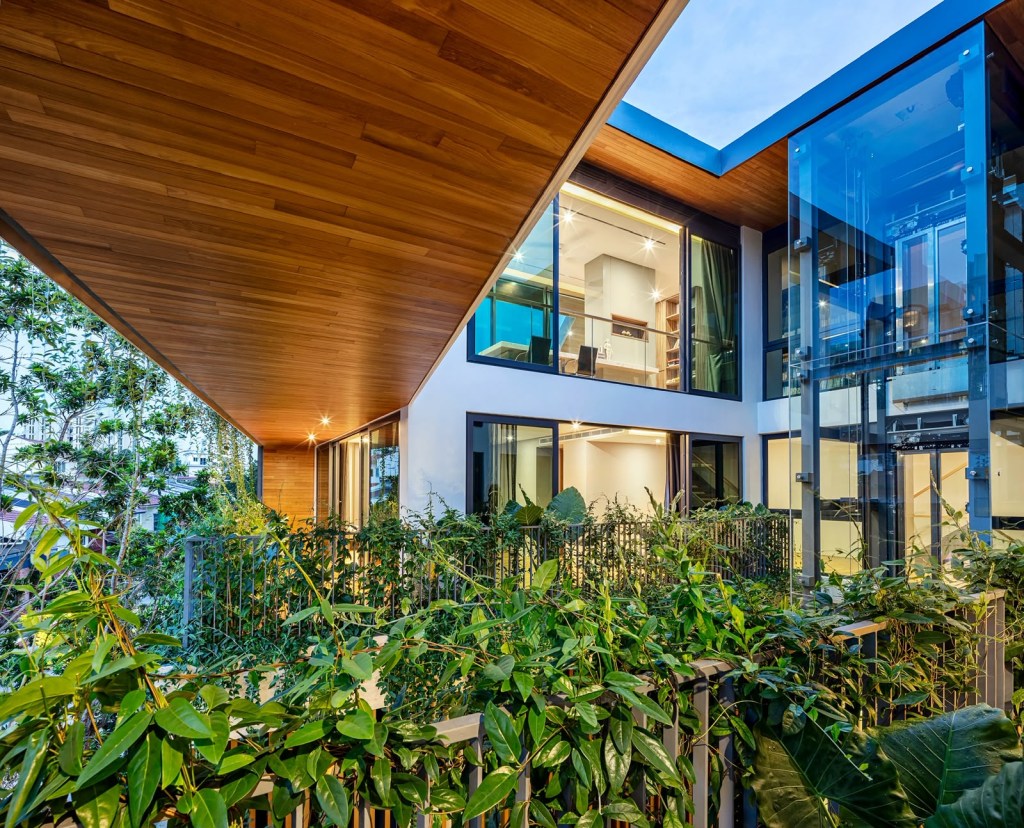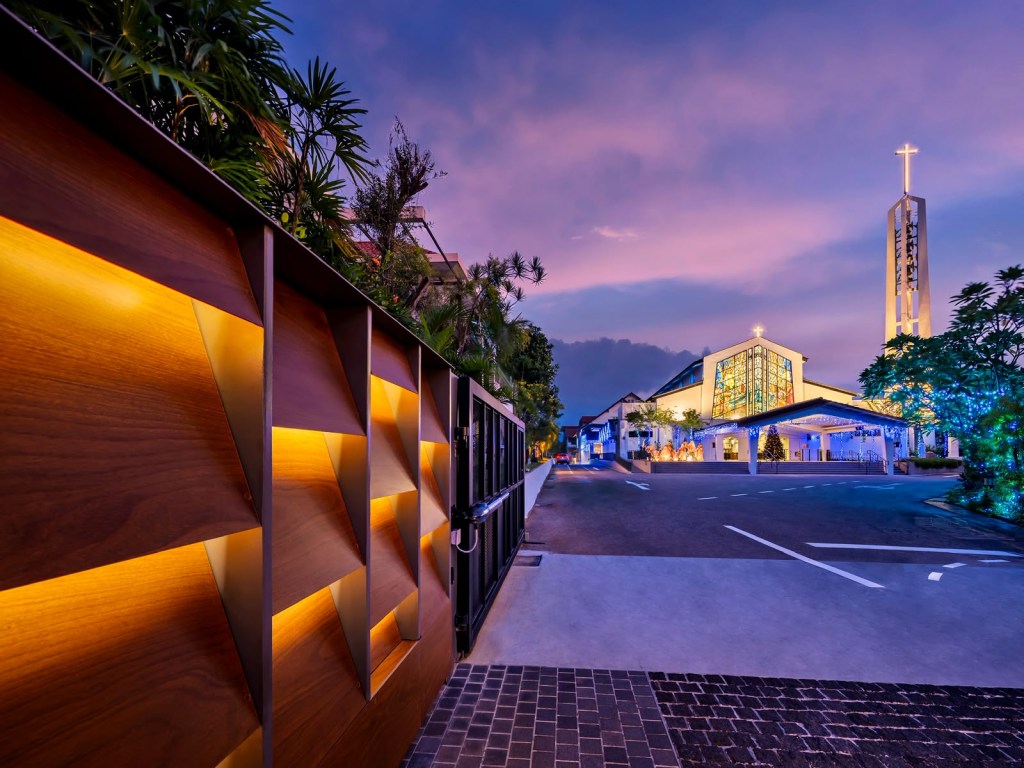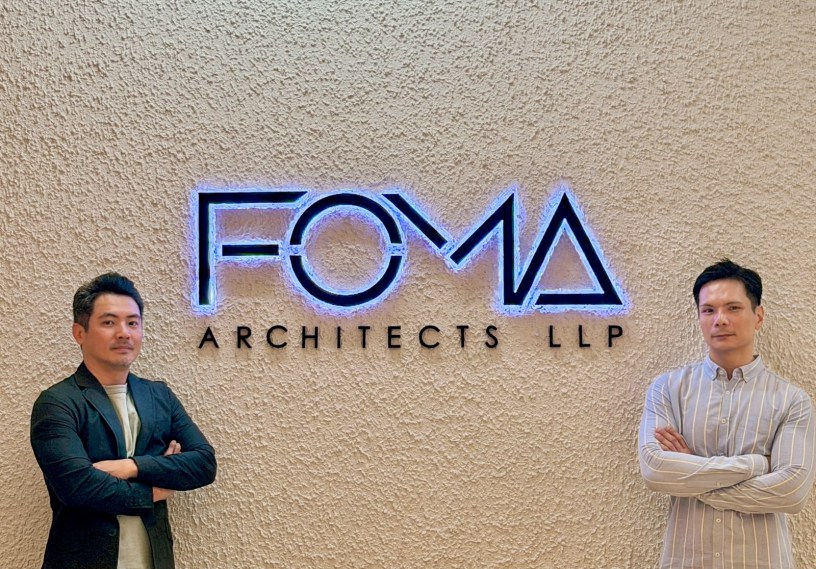
For Chun Hao and Terence, architecture is more than designing beautiful buildings. It is about creating meaningful spaces that balance aesthetics, functionality and the needs of those who use them. Having known each other since their university days at the National University of Singapore (NUS), the pair established FOMA Architects in 2013, combining their complementary strengths to build an architectural practice grounded in creativity, precision and mutual trust.
Over the years, their partnership has been shaped by professional challenges, valuable business lessons and a shared belief that good architecture should connect people with nature, culture and their surroundings. In this interview, Chun Hao and Terence discuss their design philosophy, the realities of running an architectural practice, lessons from difficult partnerships and their vision for Singapore’s built environment.
You established FOMA Architects together in 2013. How did your partnership begin, and what made you confident that you could build a successful architectural practice together?
Chun Hao: I have always wanted to build something of my own, especially after being retrenched within a year of joining my first architectural firm.
I knew Terence from our days studying architecture at NUS and recognised him as someone exceptionally talented and hardworking. A few years after graduation, we bumped into each other, and I suggested establishing our own practice. He readily agreed.
Terence: At that time, I had spent about four years working on institutional and residential projects. Despite gaining experience, I kept questioning my purpose as an architect and the value I wanted to contribute. When Chun Hao approached me, the decision was relatively easy. We initially gave ourselves one year to test the partnership.
During that period, I discovered that Chun Hao was systematic, driven and an excellent business partner. That first year laid the foundation for our partnership. When we established FOMA in 2013, we weren’t certain our partnership would succeed. We simply wanted the freedom to pursue our own creative direction after gaining experience in the industry.
Our complementary strengths helped. Chun Hao focuses on contracts and site construction, while I specialise in design exploration. Over time, we have developed mutual trust and remained committed to our shared vision.
Architecture requires creativity, but clients also have budgets, expectations and practical limitations. Have you ever had to compromise on a design you strongly believed in?
Terence: Every architectural design involves compromise, although I prefer to call it optimisation. We must balance budgets, site conditions, client aspirations and regulatory requirements. Compromise doesn’t necessarily mean abandoning an idea. It means protecting the original design intent while translating it into something practical.
We often explore alternative materials, strategies and aesthetics to achieve the same objectives. Establishing a shared understanding with clients at the beginning is crucial. When everyone agrees on the project’s aspirations and direction, the execution becomes much smoother.
Chun Hao: It is also important to remember that we design spaces for people. Every client has different needs, workflows and operational requirements.
As architects, we may have strong creative convictions, but those ideas must serve the people using the space. There’s little value in insisting on a beautiful design if it doesn’t function properly. Otherwise, the building risks becoming a white elephant.
In a highly urbanised country like Singapore, what should architects do differently as climate and environmental challenges become more pressing?
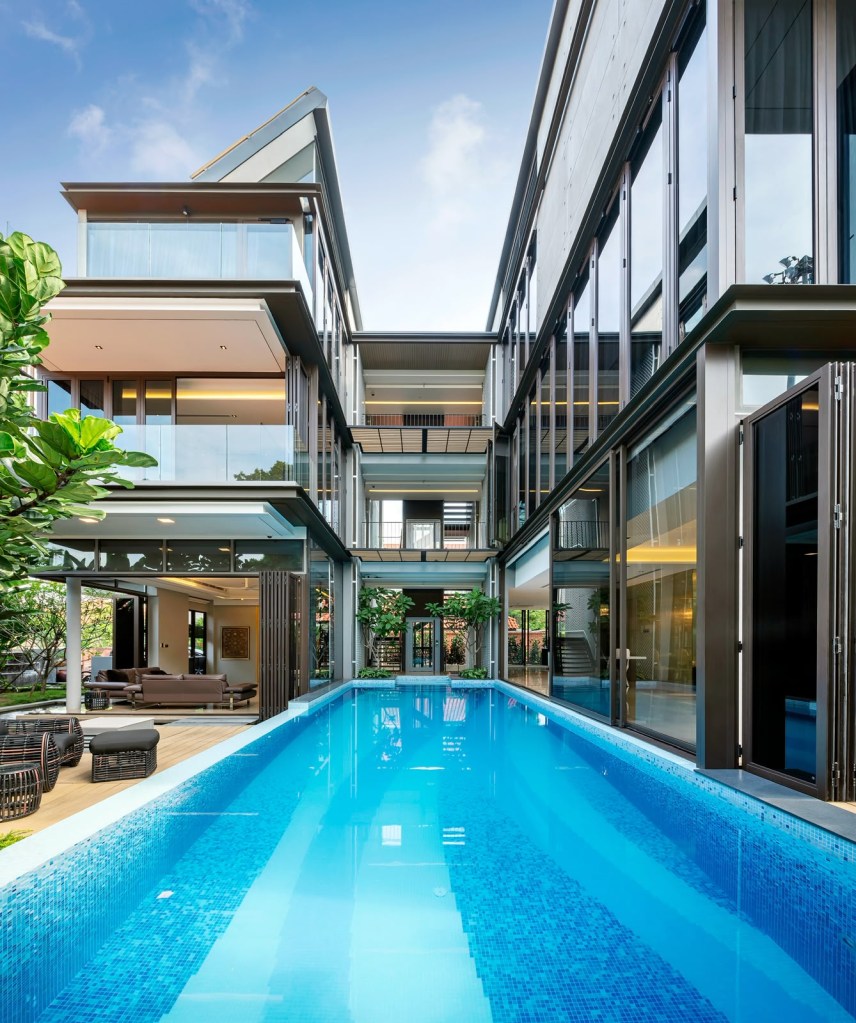
Terence: In Singapore, architecture must respond to natural conditions such as sunlight, heat, rainfall, wind, humidity and occasional haze. We see architecture as creating a building envelope that connects the interior environment with the natural surroundings.
This forms the foundation of passive sustainable design, where architectural elements help manage environmental conditions. However, rising temperatures mean passive solutions alone may eventually have limitations.
Architects must therefore embrace technological advancements, including smart building systems, automation and solar energy. Sustainable architecture isn’t simply about creating attractive forms. It’s about integrating design and technology to improve comfort and environmental performance.
As co-founders, you probably don’t always agree on every business or design decision. How do you resolve creative differences?
Chun Hao: After working together for many years, we have learnt to understand, appreciate and build upon each other’s strengths.
I generally take the lead on regulatory compliance and operational requirements, while Terence focuses on design direction, material selection, aesthetics and the overall experience of interior spaces.
We have developed a complementary working relationship where we respect each other’s expertise and remain receptive to feedback. Mutual trust and respect have been essential in helping us make better decisions and work together effectively.
Buildings can outlive their designers. When someone enters a FOMA-designed space 50 years from now, what would you want them to feel?
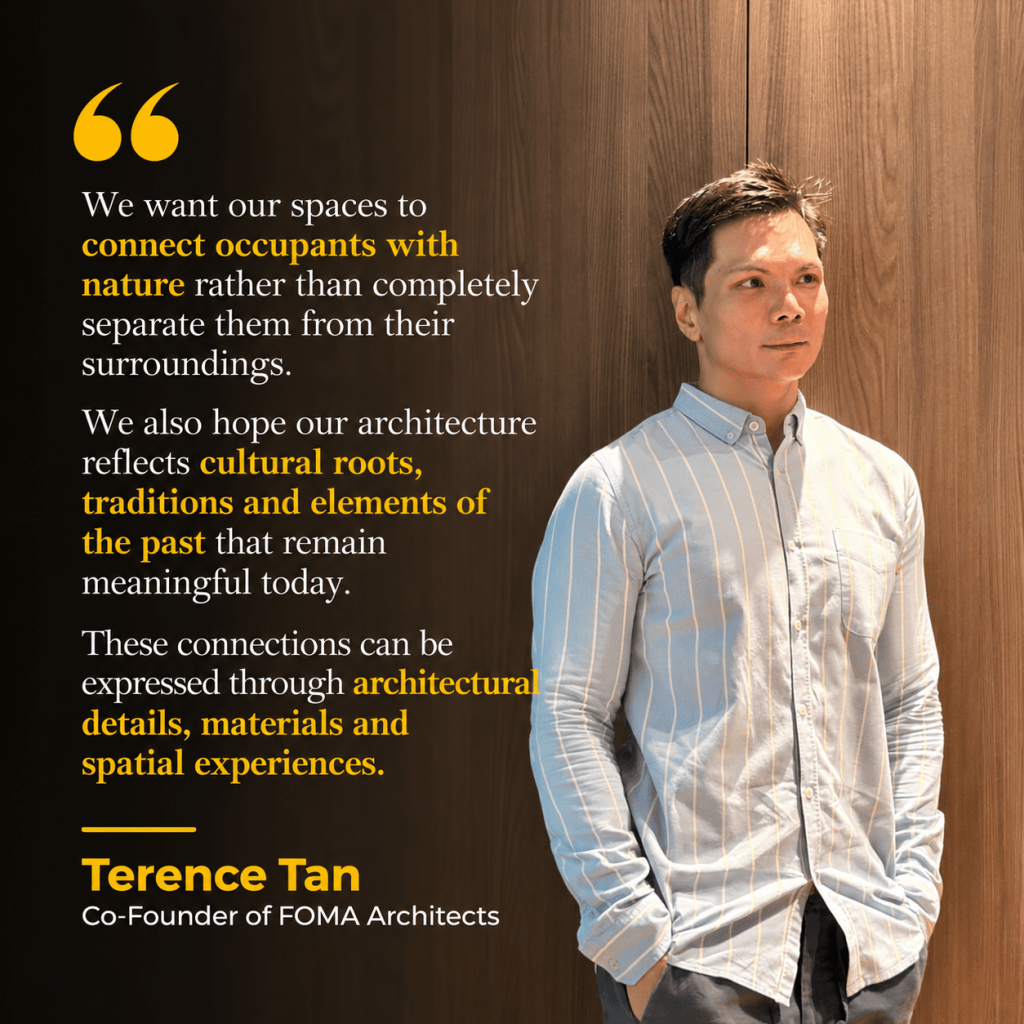
Terence: We want our spaces to connect occupants with nature rather than completely separate them from their surroundings. We also hope our architecture reflects cultural roots, traditions and elements of the past that remain meaningful today.
These connections can be expressed through architectural details, materials and spatial experiences.
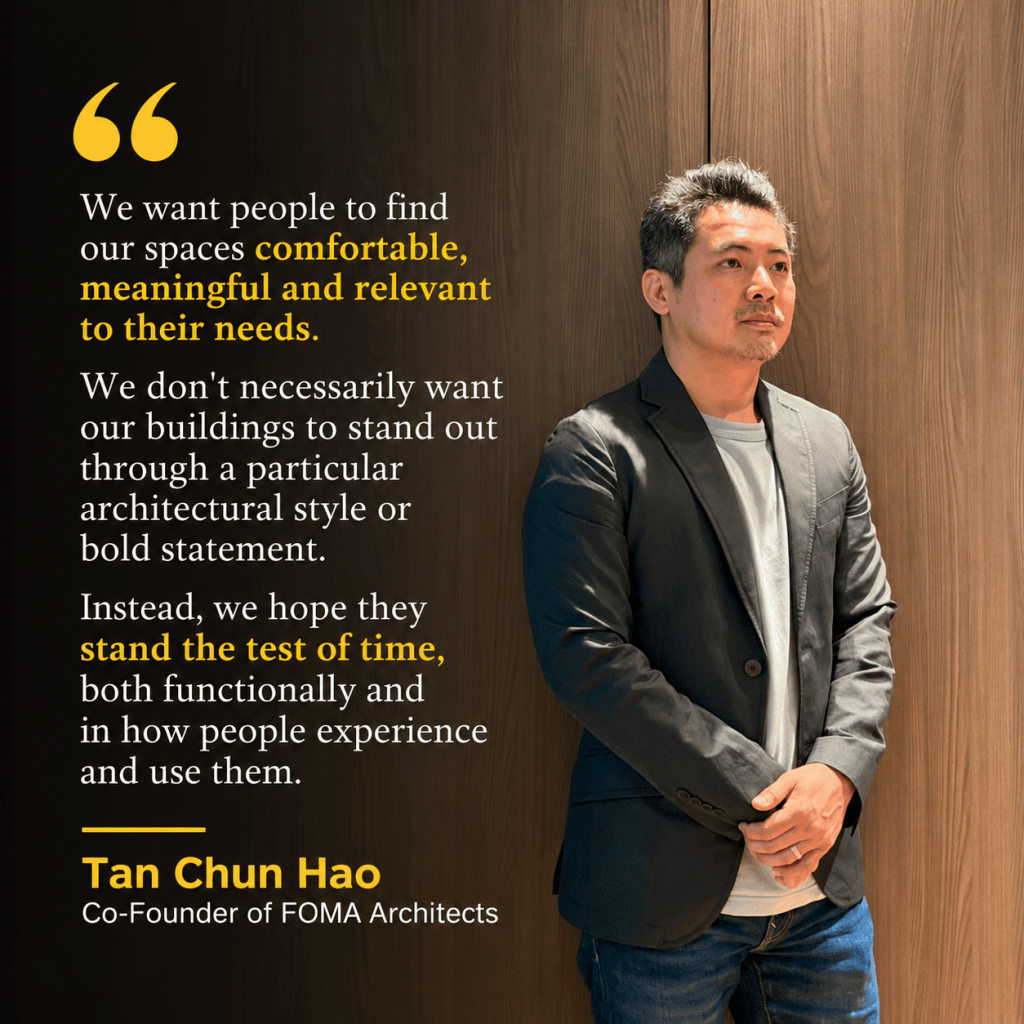
Chun Hao: We want people to find our spaces comfortable, meaningful and relevant to their needs. We don’t necessarily want our buildings to stand out through a particular architectural style or bold statement.
Instead, we hope they stand the test of time, both functionally and in how people experience and use them.
What is the most expensive lesson you have learnt in life, and how has it changed your decisions?
Terence: My greatest lesson has been the importance of meticulous attention to detail. Architects are responsible for ensuring that drawings, material specifications and regulatory requirements are accurate. Mistakes can lead to serious consequences, including legal disputes.
Early in my career, I experienced considerable stress over regulatory non-compliance on site. Those experiences taught me to be much more careful with every drawing, specification and decision.
Chun Hao: My biggest lessons came from doing business with friends. When we first started, we collaborated with an interior design firm on an additions and alterations project for a landed house.
Because the owner was a friend, we relied on a verbal profit-sharing agreement without signing a formal contract. After two years of work, we received nothing.
We subsequently introduced a strict policy requiring signed contracts before commencing any project.
Unfortunately, a similar incident occurred with another interior design firm owned by someone I had known for years. Despite having a signed agreement, we received only a few hundred dollars after a year of service.
These experiences taught me that friendship and business don’t always go hand in hand. Trust is important, but it should never replace proper agreements and professional boundaries. I have also learnt that a friend’s friend isn’t necessarily your friend.
What’s your vision for Singapore in the next five years?
Terence: As Singapore continues developing and becoming more densely populated, I hope to see greater architectural diversity across the island. Different regions should develop their own identities, drawing inspiration from their histories, cultures and surroundings.
Rather than having public spaces that look increasingly similar, we could create distinctive environments that reflect the character of each neighbourhood. I hope Singapore’s northern, southern, eastern and western regions will each develop meaningful architectural identities that residents can appreciate.
If you could have a superpower for one day, what would it be and why?
Terence: I would love the ability to accelerate time and observe how buildings age over decades. Architects are usually involved from conceptualisation to completion. Once a building is handed over, we rarely get to observe how it changes over the years.
I would like to see how materials age, how natural light moves through spaces and how occupants adapt buildings to their needs. Understanding a building’s entire life cycle would be fascinating.
Chun Hao: I would choose mind-reading. I would love to understand how great architects think, approach design challenges and make decisions. Being able to explore their creative processes and discover how they translate ideas into meaningful architecture would be incredibly valuable.
Connect with Chun Hao & Terence: FOMA and Facebook.