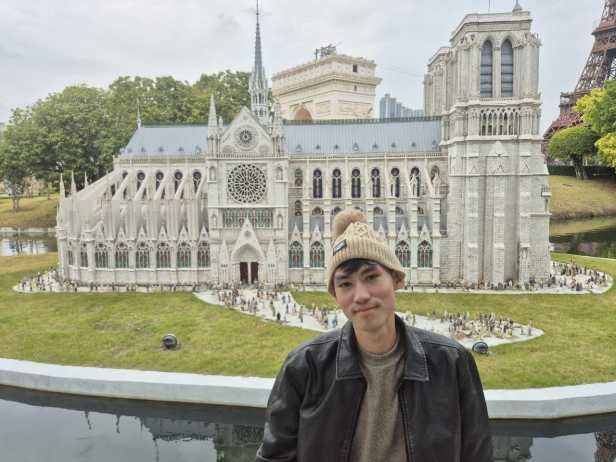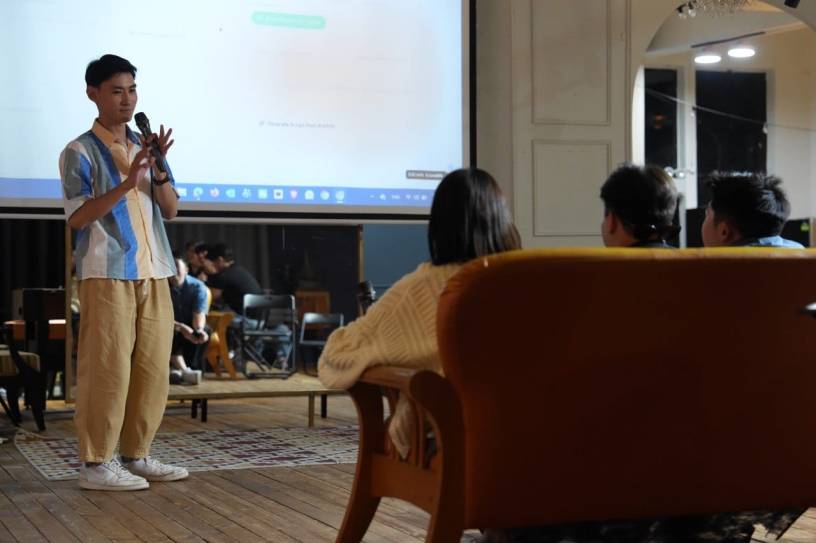
Meet Amos, a versatile creative and marketing strategist who is redefining what it means to build a career in Singapore today. Balancing his role as an International Marketing Executive at James Cook University with his work as an actor and the founder of his boutique agency, Amoz Creative, he exemplifies the power of the multihyphenate professional.
In a landscape that often pressures young professionals into linear, single-track paths, Amos has dedicated himself to exploring the intersections of psychology, digital innovation and human connection, helping to shape a more adaptable, creative and expressive Gen Z workforce.
What inspired you to pursue such a multifaceted career, balancing roles as an international marketing executive, writer and actor?
I began in Electrical Engineering, specialising in Power Engineering. While researching floating photovoltaics during COVID-19, I realised my real interest was in people, communication and human behaviour. This eventually led me towards business and entrepreneurship.
I didn’t want to be confined to one field, so I founded Amoz Creative and later moved into international marketing, combining my analytical background with digital strategy.
Writing has remained a constant, helping me document my journey and reflect on my experiences. Whether working in marketing, developing brand strategies or acting, these different roles have collectively shaped my identity.
Many young professionals feel pressured to conform to traditional expectations. How do you create a safe and resilient mindset that allows you to put yourself out there and embrace being a multihyphenate?
For me, it comes down to three things: hunger, self-discipline and a strong support network.
My search for clarity developed a curious mindset. I also created structures that allowed me to experiment at low cost, giving me a safe space to make mistakes without jeopardising my livelihood.
From there, I broadened my knowledge through reputable courses and different perspectives. Just as importantly, I surround myself with people who keep me grounded, challenge me to grow and support me through difficult moments.
In your experience, what is one myth about career success or creative fulfilment that you wish more people would challenge, and why?
One myth I wish more people would challenge is the idea that everyone needs a single, lifelong “true calling”. That belief can create unnecessary pressure to discover the one perfect career quickly, even though different seasons of our lives can change what we want and need.
Young people can also fall into the trap of comparing themselves with their peers and assuming something is wrong if they want to change industries or develop a completely different skill.
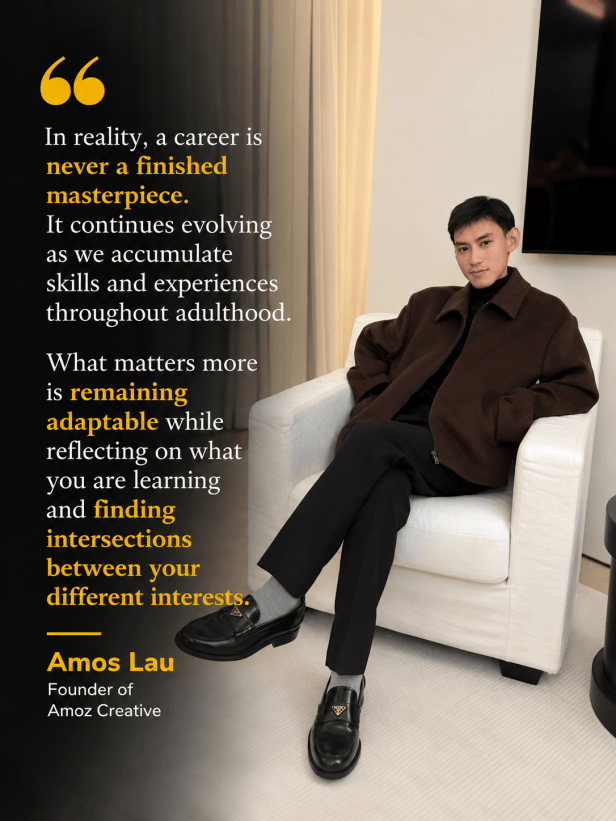
In reality, a career is never a finished masterpiece. It continues evolving as we accumulate skills and experiences throughout adulthood. What matters more is remaining adaptable while reflecting on what you are learning and finding intersections between your different interests.
Letting go of the expectation of a “normal”, linear career allows you to build a life that is authentically yours rather than performative.
What is one piece of guidance you would give to fellow creatives or young professionals struggling to find their voice?
For creatives, embrace community. Different or even opposing opinions can deepen your artistic perspective rather than forcing you to retreat into your own bubble.
Find a few close confidantes who are committed to growing alongside you. Ideally, they should offer both high expectations and strong support. They are people who expect the best from you but are also there when you struggle. That creates a safe space to grow at your own pace, particularly if you are a late bloomer.
For young professionals, being well-read and sometimes stepping away from AI have helped me develop my own thinking. Exposure to contrasting perspectives keeps you humble and open to learning from subject-matter experts.
Also pay attention to what naturally interests you outside your studies or full-time job. Those interests can be useful signposts. A content creator, for example, may discover that the same creative strengths used outside work are valuable in a full-time career.
Students can think similarly about electives. A subject you genuinely enjoy and perform well in could eventually point towards an entirely different career.
Which role do you prefer more: being an actor or a marketing executive, and why?
In short, acting. However, in Singapore, I also have to be pragmatic.
The Passion Paradox by Brad Stulberg and Steve Magness discusses how we can grow to enjoy and master something through patience, duty and deliberate practice.
If circumstances allowed me to focus entirely on acting, I would love to spend more time honing the craft. However, we also have to consider Singapore’s rising cost of living, financial independence and our responsibilities to our families and society.
Marketing allows me to apply my creative mindset and skills towards something bigger than myself, whether that is helping a company or brand achieve meaningful results. Seeing the impact of that work gives me a sense of purpose, while full-time employment also provides practical financial benefits such as CPF contributions and employee benefits.
So while acting is the role I naturally gravitate towards, marketing provides another meaningful way for me to use my creativity.
If you could truly change your life, how would you like your life to be?
Ideally, I would like to live holistically across what I consider the eight important areas of a successful human life. At this stage, I want to create a wider impact sustainably through storytelling while still having balance, rest and mobility in my life. I see this as part of my vocation and broader mission.
Impact remains important to me, but sustainability matters just as much. I don’t want to create impact at the expense of every other part of my life.
What is your vision for Singapore in the next five years?
My vision is for Singapore to become more interconnected across different communities, backgrounds and generations.
As AI develops, I believe Singapore can empower people to create impact beyond the workplace while encouraging greater collaboration across Southeast Asia and between people with technical, financial and creative skill sets.
I also hope we value creative capital alongside financial and technical capital, while becoming more accepting of non-linear careers. Ultimately, sustainable progress comes through adaptability rather than rigid conformity.
If you could have a superpower for one day, what would it be and why?
I would choose The Flash’s super-speed. I have been fascinated by speed since childhood, particularly after watching The Flash television series and seeing a human being push beyond ordinary physical limitations. That fascination eventually inspired me to take up running during my tertiary education.
I enjoyed feeling the wind against my face and imagining that I was developing my own “Speed Force”. In reality, it was simply my internal motivation pushing me beyond my personal limitations.
Having super-speed for a day would be incredible. I could see whether I could attend two social events simultaneously, experience the world appearing to slow down around me and perhaps get an extraordinary amount of work done.
Connect with Amos: AmozCreative, LinkedIn and Instagram.