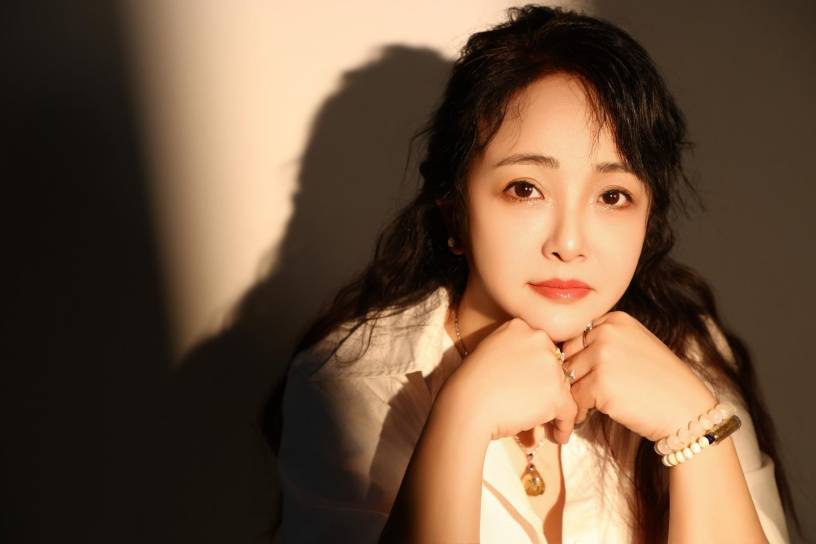
Faustina Lim’s career has taken her from the Singapore Police Force to banking and, eventually, into the worlds of food and wellness. While these chapters may appear very different, they are connected by a common thread: her desire to serve people, solve problems and make a positive difference in their lives.
Her journey took on deeper meaning after she was diagnosed with a rare blood disorder and later Guillain-Barré syndrome, which temporarily left her paralysed. As she rebuilt her health, food became something she could take control of, inspiring her to train professionally in culinary arts and study food science. Today, her bigger dream is to become a “Chef Without Borders”, using food, education and practical skills to empower others.
Your career has taken you from the Singapore Police Force to banking and eventually into food and wellness. Looking back, what connects these very different chapters of your life?
Looking back, these chapters are more connected than they appear. The Singapore Police Force taught me discipline, responsibility and service, while banking taught me precision, resilience and professional standards. These qualities followed me into food and wellness.
The common thread has always been people. Whether solving cases, supporting leaders or promoting healthier living, I have always wanted to make people’s lives better.
What has changed is how I serve. Today, I focus on helping people take better care of themselves and understand what is happening within their bodies.
Your life changed dramatically when you were diagnosed with a rare blood disorder and later Guillain-Barré syndrome, which left you temporarily paralysed. What went through your mind when you suddenly found yourself unable to do basic things you had always taken for granted?
The most truthful answer is fear and panic. I had always been independent and healthy, but suddenly I became the person who needed help.
Basic things I had taken for granted — standing, walking or simply moving around — became incredibly challenging. I wondered, “Is this going to be my life from now on? Will I ever recover?”
The experience taught me to respect small steps. During recovery, even standing or holding a pen became an achievement. Today, strength means accepting that I may not be able to do everything, but I can always take the next step and do a little better.
Food became one part of your recovery that you felt you could take control of. What made you train professionally as a chef and then study food science?
I have always loved cooking and spending time in the kitchen. When I became ill, there were many things I could no longer control, but one thing I could control was the food I put into my body. That started me thinking much more deeply about nutrition.
I did not want simply to be told to “eat healthily”.
I wanted to understand what healthy eating actually meant. Why does one ingredient affect the body differently from another? How does the cooking process change its nutritional value? How do we make food genuinely healthy rather than simply labelling or marketing it as healthy?
Those questions kept me going. After receiving professional culinary training, I wanted to go deeper and understand the science behind food, such as its composition, nutrition and what genuinely makes something healthy. That led me to study food science.
What are some of the biggest misconceptions about healthy eating that you would like people to rethink?
One of the biggest misconceptions is that healthy eating has to be extreme, such as removing carbohydrates, giving up foods you enjoy or buying expensive superfoods.
I believe sustainable health comes from consistent daily choices, like eating more whole foods, getting enough vegetables and protein, managing portions, and reducing excessive sugar and highly processed foods.
There is also no single perfect diet. Our age, lifestyle, culture and health needs differ, so what works for one person may not work for another.
Chef Without Borders began as an idea centred on using food to empower women and children in developing communities. What is your long-term vision for the project, and what impact do you hope it will create?
Chef Without Borders began as a dream about food but has grown into something much bigger. I hope to build a community that uses food to improve health, provide education, develop practical skills and create income opportunities.
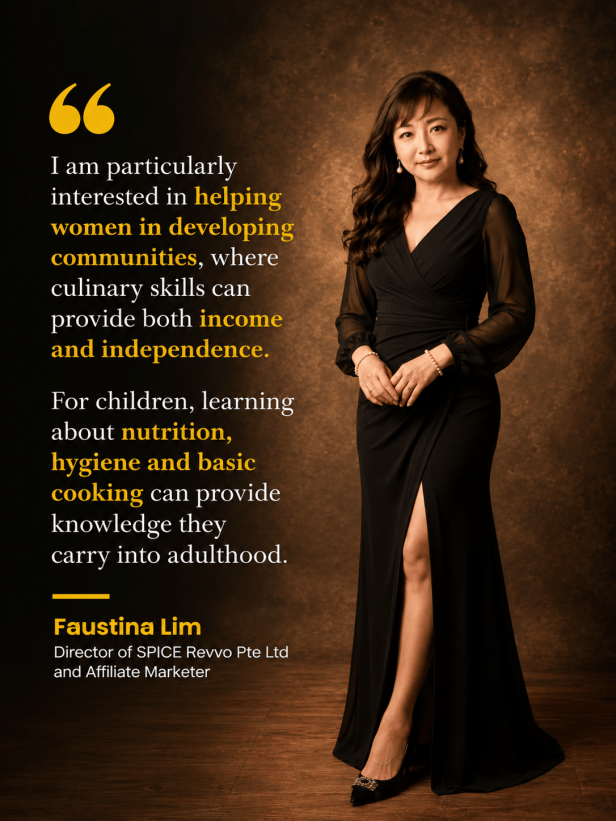
I am particularly interested in helping women in developing communities, where culinary skills can provide both income and independence. For children, learning about nutrition, hygiene and basic cooking can provide knowledge they carry into adulthood.
I want to create something sustainable rather than simply arrive, provide help and leave. My goal is to start in Singapore and eventually take the mission further.
If you could undo one part of your life, what would it be?
I do not think I would undo any major part of my life. There are certainly experiences I would never choose to go through again, but if I removed them completely, I might also remove the experiences that shaped the person I am today.
If I could change one thing, however, I would learn much earlier to listen to myself and to my body, and pay greater attention to the signals it was giving me.
Apart from that, I believe everything I have gone through has contributed to my character today.
What is your vision for Singapore over the next five years?
I would love to see Singapore become not only a country with excellent healthcare, but also a society that is much stronger in preventive health. We are living longer, but the important question is whether we are living those additional years well.
I hope people become more knowledgeable about food, mental wellbeing, ageing gracefully and the lifestyle choices that affect long-term health. When people are better informed, they can make better choices.
Community also has an important role to play. Healthy living should not belong only to people who can afford premium products. Good health information and sustainable healthy choices should be understandable and accessible to everyone. That is my vision for Singapore.
If you could have a superpower for one day, what would it be and why?
I would choose the ability to heal. Not immortality, but simply the ability to heal people. If, for one day, I could take away someone’s pain or restore their ability to see, move, work or simply live without suffering, I would spend every minute of that day doing exactly that.
Connect with Faustina: FaustinaLim, Facebook and TikTok.
Health Advice Disclaimer
The information provided on this platform is for educational and informational purposes only. It is not intended as medical advice, diagnosis, or treatment, and should not be relied upon as a substitute for professional medical consultation, advice, or treatment from a qualified healthcare provider.
In Singapore, all health-related content is to be understood as general wellness information and not a substitute for medical consultation. Individuals are encouraged to seek advice from a registered medical practitioner under the Ministry of Health (MOH) before making any healthcare decisions.
