Muhammad Fahad Sulaiman’s journey into recovery therapy began with his own shoulder injury. After conventional treatment failed to fully resolve the problem, he decided to understand the mechanics of his own body, studying massage anatomy and biomechanics before successfully addressing the injury himself.
That experience eventually led to Muscle Minit, where Fahad now works with clients ranging from athletes and office workers to people living with chronic pain. His approach goes beyond short-term relief, emphasising movement, consistency and helping people better understand their own bodies.
Your journey into this industry began with your own shoulder injury, which you struggled to resolve despite seeking professional help. What happened, and what eventually made you find the answer yourself?
Five years ago, I was doing a shoulder press when I felt an impingement. The pain was sharp enough that I stopped working out completely. I did what most people would do. I went to see a qualified therapist and committed fully to 10 sessions. But even after all that, my shoulder still wasn’t back to 100%.
That was when it hit me. If I actually wanted this fixed, I needed to understand why it was happening in the first place, rather than just keep paying someone to manage the symptoms. So I took a diploma in massage anatomy, picked up some biomechanics along the way and started applying what I learnt directly to my own body. Three months later, my shoulder was good again. I had fixed it myself.
That’s really how Muscle Minit started. It came from the industry not being able to solve my own problem, so I went and became the person who could.
Many people accept that chronic pain is simply something they have to live with. What have your clients taught you about the psychological impact of living with pain for years?
One of the people I work with had chronic lower back pain and had gone through the full medical route. He started with physiotherapy, and when that wasn’t enough, his doctor recommended a rhizotomy, a procedure that interrupts the nerve carrying the pain signal.
He went through with it and returned to physiotherapy, but even after all that, the pain and discomfort never fully went away.
That’s when the anxiety set in. When you have done everything you were told to do and the pain is still there, your body starts associating movement itself with danger. He became very careful and guarded about how he moved. This is the part people don’t talk about enough. Chronic pain isn’t only physical; it changes how safe you feel inside your own body.
We worked together to slowly rebuild that trust in movement. Today, he’s able to walk long distances with his family and even play golf again.
You often emphasise that treatment alone isn’t enough and that clients must also do the work themselves. How much of recovery comes down to what happens outside the treatment room?
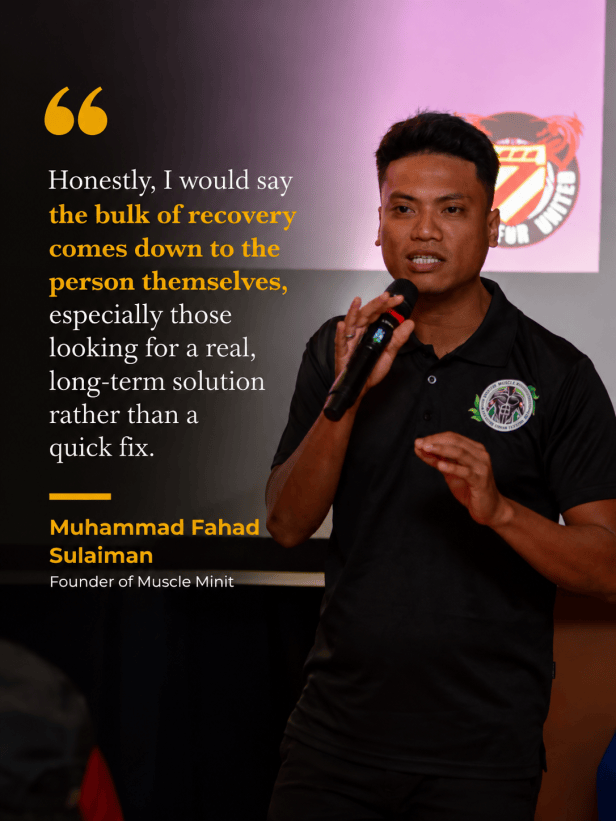
Honestly, I would say the bulk of recovery comes down to the person themselves, especially those looking for a real, long-term solution rather than a quick fix. What I do in the treatment room gets things moving in the right direction, but if the effort stops the moment they walk out the door, progress slows down quickly.
Depending on the case, I will get them doing things such as isometric holds, controlled resistance work without heavy loading or isolation exercises targeting a specific muscle. Nothing extreme, just consistent work.
Those who stay disciplined recover faster, and their results actually hold. Those who stop doing the work still improve, just much more slowly. It isn’t about blame; it’s simply how the body works. Consistency compounds, and so does inconsistency.
Your clients range from athletes to office workers and people dealing with long-standing injuries. What problems or habits do you repeatedly see causing people unnecessary pain?
For office workers, it’s almost always the same pattern — sitting too long with their shoulders rounded forward. What most people don’t realise is how far the effects of that posture can reach. I see a lot of shoulder pinching and even tingling down the arm, and people assume it’s a shoulder issue.
Often, it’s really the posture affecting the nerves around the neck and upper back, with the shoulder simply being where they feel it.
For the more active ones, it’s usually about pushing through small niggles instead of addressing them early.
But if there is one habit that cuts across everyone, it is people coming in for a single massage session expecting to walk out completely fixed. Real recovery is a partnership. I can guide it and speed it up, but the person still needs to put in the effort too.
Muscle Minit has started bringing its treatments and demonstrations to community events. Why is it important for you to reach people outside the treatment room?
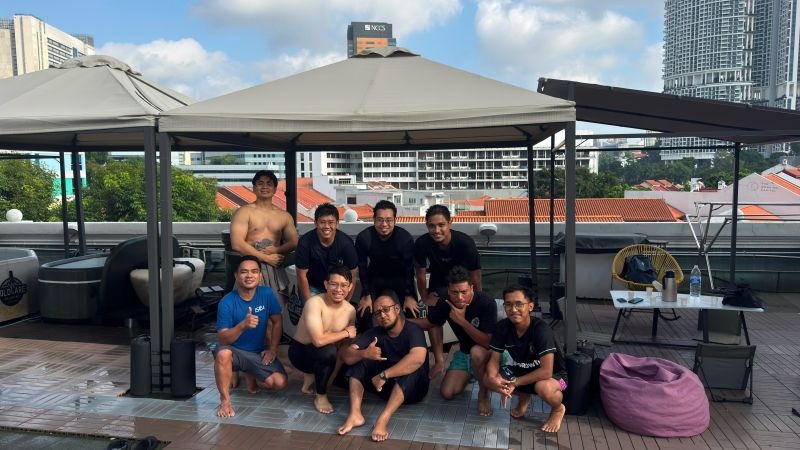
I have brought Muscle Minit to cold plunge sessions, pickleball networking events, and Muay Thai and boxing events. A lot of people don’t realise they need recovery work until they actually experience it, so instead of waiting for someone to walk through my door, I go to where they already are.
At these events, I do live demonstrations, and more than once, someone has looked at me as though I had just performed a card trick and asked how I did it. I tell them, “No magic lah, just anatomy.” Though I don’t mind if they keep thinking I’m a bit of a wizard if it gets them moving better.
For me, it is less about pitching and more about giving people an honest first experience — no pressure, no hard sell. If it clicks for them, they know exactly where to find me.
If you could speak to your younger self, what would you tell him?
Honestly, my younger self wasn’t even searching for a purpose because I wasn’t exposed to people who dared to think big. Everyone around me just said, “Study hard,” and that was the entire blueprint I was given.
So, if I could tell him one thing, it would be this: surround yourself with people who dream bigger than you, and you will start believing bigger too. The business and the path I’m on now only happened once I started surrounding myself with people who thought that way.
What’s your vision for Singapore in the next five years?
There was a specific moment that shaped how I think about this — a conversation with Mr Yusof, someone I met through BNI. He told me to think bigger and that I was capable of more than I gave myself credit for. It landed differently because of who was saying it and how genuine the belief behind it felt.
After that conversation, I stopped running Muscle Minit like a one-man show. I expanded the team to three therapists, and I’m still expanding.
That’s what I hope for Singapore over the next five years, and that is more young people getting that kind of encouragement earlier in life and having the opportunity to act on it.
If you could have a superpower for one day, what would it be and why?
Instant healing touch, haha — but only for one day. After that, you’ll still need to book an appointment.
I know it sounds funny coming from someone who always tells people there’s no quick fix, but that’s exactly why it works as a hypothetical. For one day, I would want to experience the opposite of everything I actually believe in — no process, no consistency required.
That’s also why I wouldn’t want it permanently. If healing became instant, people would stop needing to understand their own bodies, and that’s the part that actually creates lasting change.
Connect with Fahad: MuscleMinit, LinkedIn, and Instagram.