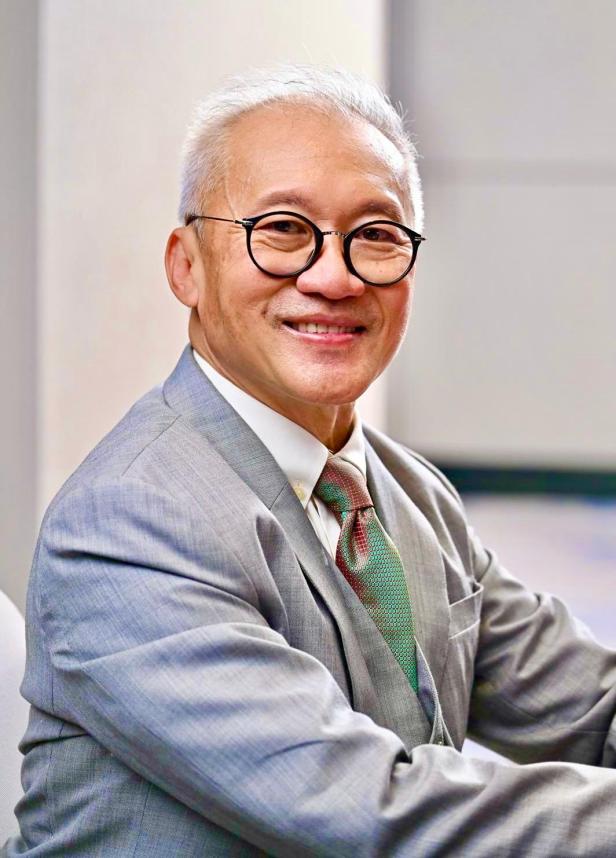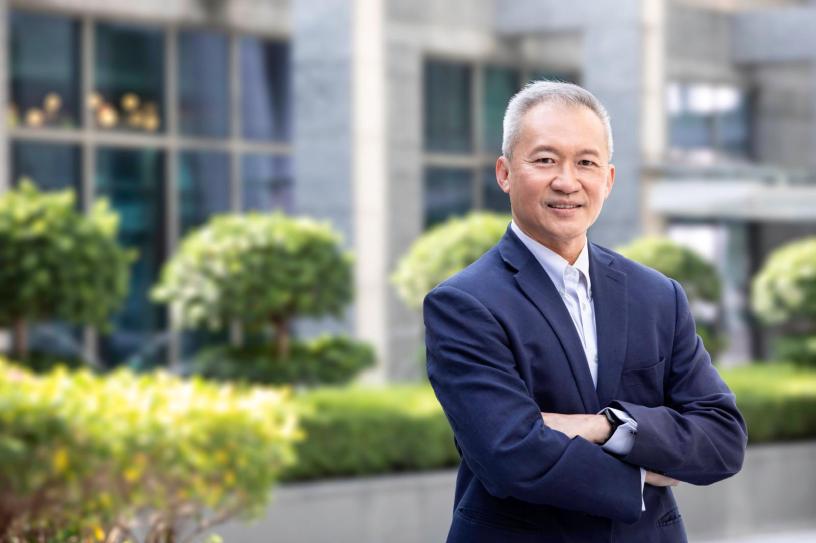
Dr. Daniel Ng has spent more than four decades across technology, marketing, consulting and leadership. Beginning as a software engineer, his career has taken him through organisations including IBM, Microsoft, Sun Microsystems, Cloudera and Neo4j, before his current work with Omni-Integra and Graphen AI.
Today, his focus extends beyond technology to leadership, sustainability and the human impact of business. As Chairman of the CEO Circle at the Sustainable Business Network Association Malaysia (SustNET), he advocates moving sustainability beyond corporate reporting and into everyday decision-making.
You’ve spent more than four decades across technology, marketing, consulting and leadership. Looking back, how has your definition of what makes a truly successful business changed over the years?
Early in my career, success was often associated with the organisation you worked for, the people reporting to you and the logo on your business card. Those things still matter, but after more than four decades, I have come to realise that profit is an outcome, not the only purpose.
I began as a software engineer after graduating from Canada and went on to work with organisations including IBM, Microsoft, Sun Microsystems, Red Hat, Cloudera and Neo4j, and now Omni-Integra. The more technology I encountered, the more convinced I became that businesses ultimately succeed because of people.
Today, I define success by three questions: Did it create value? Did it create value responsibly? Did it leave people and the ecosystem better off? A business that makes money but destroys trust or burns out its people has not truly succeeded.
As Chairman of the CEO Circle at SustNET, what are the biggest sustainability challenges CEOs face today, and what have you learnt from these discussions?
One of the biggest problems is that we have made sustainability sound like a department. It goes under ESG (Environmental, Social, and Governance), ESG goes into reporting and, somewhere along the way, sustainability becomes a document rather than a way of doing business.
The challenge is converting understanding into action while balancing profitability, regulations, stakeholders and climate pressures. At SustNET, our Sustainability Integration Model recognises that environmental restoration, community well-being, corporate prosperity, governance and human behaviour are interconnected.
We also launched Project GENIUS for Sustainability at the Asia Pacific Sustainability Conference and Awards (APSCA) to bring kindness and innovation into the conversation.
Corporate behaviour ultimately comes from people, which is why I advocate “Self-ESG” — starting with personal responsibility, choices and behaviour.
My biggest lesson is simple: sustainability cannot be delegated. Reports and sustainability officers have their place, but sustainability must influence everyday decisions. Leaders need to stop asking, “What must my company report?” and start asking, “What must my company change?”
You mentioned that Project GENIUS connects sustainable business initiatives with the kindness movement. What place does kindness have in business, and can it actually contribute to better commercial outcomes?
For many years, business treated kindness as separate from performance. But kindness is not weakness; it can be an extraordinary form of intelligence. When employees trust their leaders, they communicate openly and problems surface earlier, creating real commercial benefits.
Project GENIUS — “Generating Environmental Innovation Using Scraps” — combines sustainability with kindness, including viewing waste as assets. Its 2026 APSCA launch brought together more than 300 delegates.
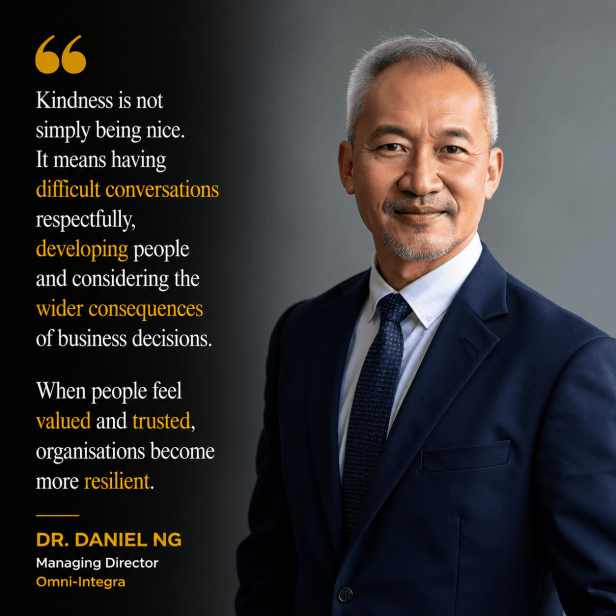
Kindness is not simply being nice. It means having difficult conversations respectfully, developing people and considering the wider consequences of business decisions. When people feel valued and trusted, organisations become more resilient.
Can kindness improve commercial outcomes? Absolutely. But I advocate it because it is the right way to build a business and doing the right thing often turns out to be good business too.
Through Omni-Integra, you help companies expand into Singapore and the wider Asia Pacific region. What are the biggest mistakes businesses make when entering these markets, and what do they need to understand before attempting to scale?
The biggest mistake is believing that Asia Pacific is one market. It is incredibly diverse in culture, language, regulations, purchasing behaviours and business traditions.
Having spent much of my career across the region, I have learnt that market entry is not about asking, “How do I sell my product?” but, “How do I earn the right to participate?” Companies often underestimate relationships, local partnerships, culture and patience.
At Omni-Integra, we see regional expansion as ecosystem entry: understanding the market, finding trusted partners and adapting to local needs. A strong global brand still needs local relevance. My formula is “global ambition, local humility”. Build relationships, trust and local capability, then build the business.
You have witnessed several major technological shifts over your career. How do you see AI changing leadership and business today?
I have lived through many technological revolutions, from mainframes and personal computing to the internet, cloud technology and connected data. Now we have AI.
AI is different because it influences cognitive work, challenging us to rethink how we think. As AI can process and generate enormous amounts of information, the real competitive advantages become judgement, ethics, creativity, empathy and trust.
This is why I believe in “humanising technology”. AI can identify patterns, automate processes and support decisions, but humans must still decide what should be done, not merely what can be done.
The future belongs to humans who know how to work intelligently with machines. Leaders should ask not only, “What can AI automate?” but also, “What should remain beautifully, intentionally human?”
What qualities have you consistently found separate leaders who build something enduring from those who achieve only short-term success?
After more than four decades, I have become sceptical of the idea of the perfect leader. I have seen brilliant people fail and quiet people transform organisations.
Enduring leaders understand that leadership is stewardship. They are humble, curious, willing to listen and focused on making others stronger. I now find more satisfaction in mentoring and developing people than in collecting titles or celebrating corporate milestones.
I have also experienced disappointments and moments when I had to start again, which taught me resilience. But resilience without kindness can become stubbornness, so leaders also need grace to admit when they are wrong, let others succeed and remember those who helped them.
Enduring leadership is not about standing taller than everyone else. It is about leaving more people standing when you leave.
What is your vision for Singapore over the next five years?
I would like Singapore to become more than simply the world’s most efficient city. My vision is a human-centred, intelligent city where technology, sustainability, economic competitiveness and social cohesion reinforce one another.
The next chapter should move from smart infrastructure to smart humanity. As AI becomes embedded across society, we must embrace it without losing what makes us human. This means investing in lifelong learning, valuing older workers’ experience and equipping young people with ethics, empathy and critical thinking.
Sustainability must also move from reporting to regeneration, with Singapore using technology, finance and innovation to influence the region.
Ultimately, my vision is a Singapore that is smarter, greener, more inclusive and kinder — a small country with a big heart and a disproportionately positive impact.
If you could have a superpower for one day, what would it be and why?
I would choose the ability to instantly understand another person’s perspective such as their experiences, fears, hopes and assumptions. Imagine understanding what a CEO is worried about but cannot say, why a young employee remains silent or how technology feels to an elderly person.
Many of the world’s problems are caused not by a lack of knowledge, but by a lack of understanding. Even as AI becomes better at processing language, truly understanding people requires context, empathy and humility.
If I had that ability for one day, I would spend it listening. Perhaps we do not need a superpower after all. We already have the ability to listen; we simply do not use it enough.
Connect with Dr. Daniel: LinkedIn.