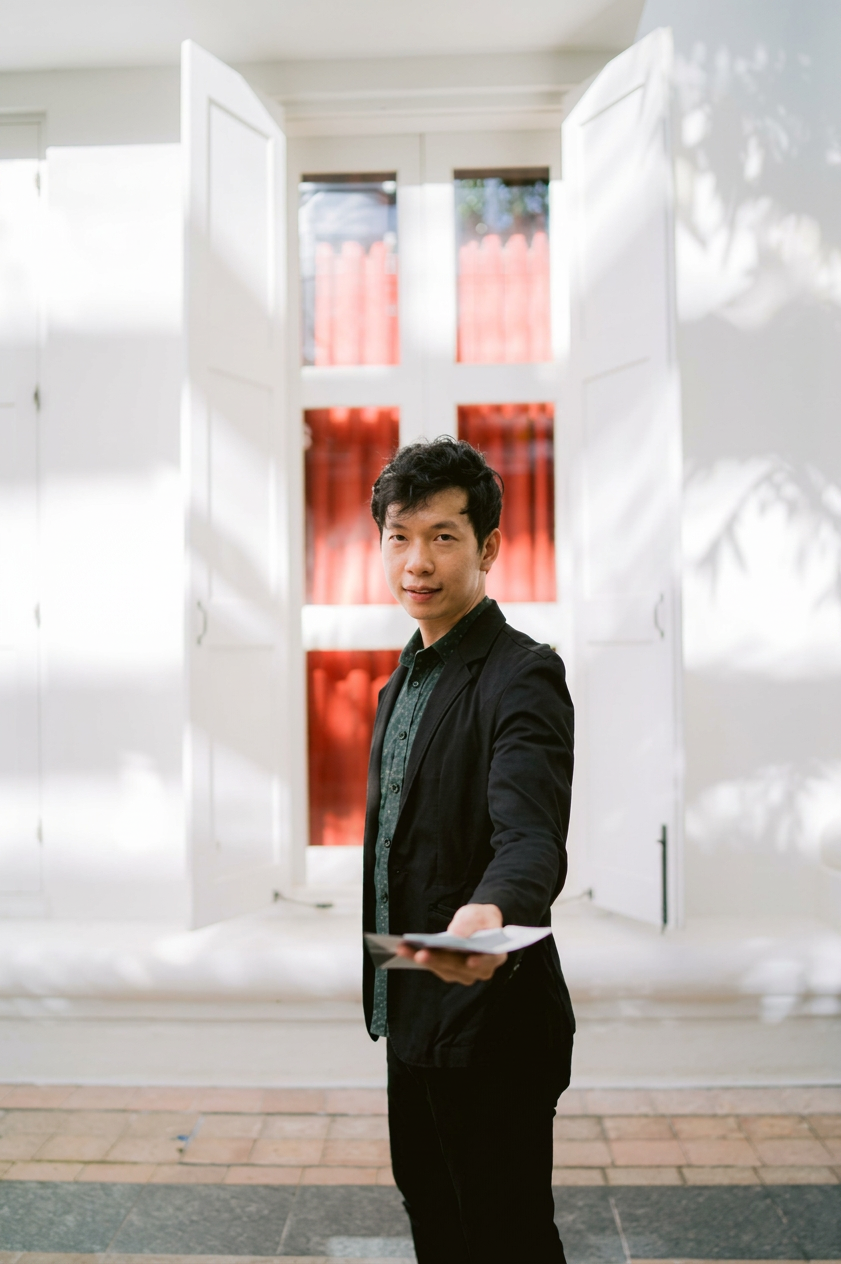
A car accident at the age of six left Jackie unable to use his right hand and leg. Growing up, he struggled with exclusion, bullying and a lack of confidence, often feeling that others noticed his disability before recognising his abilities.
Over time, Jackie transformed those experiences into determination. Today, he is a one-handed magician, cardist, active runner and motivational speaker who uses his story to challenge assumptions, inspire confidence and show others that limitations do not have to define their potential.
Your life changed dramatically after a car accident at the age of six. Looking back, what was the turning point when you stopped asking, “Why me?” and started asking, “What can I still become?”
When I was younger, I often asked myself, “Why me?” After the accident at six, I struggled to understand why my life had changed so suddenly.
In primary school, I felt excluded because I was not allowed to join physical education lessons or sports activities. My family wanted to protect me, but I felt that people focused more on my limitations than my abilities.
Secondary school was even harder. I was verbally bullied and mocked for wearing a hand splint, which made me ashamed and afraid of being judged. I often avoided other students and even considered transferring to a special school.
Although I consistently ranked among the top 10 students and received award nominations, I dreaded going on stage because I worried about how to shake hands with the principal. I feared the entire school would laugh at me and often hoped my name would not be called.
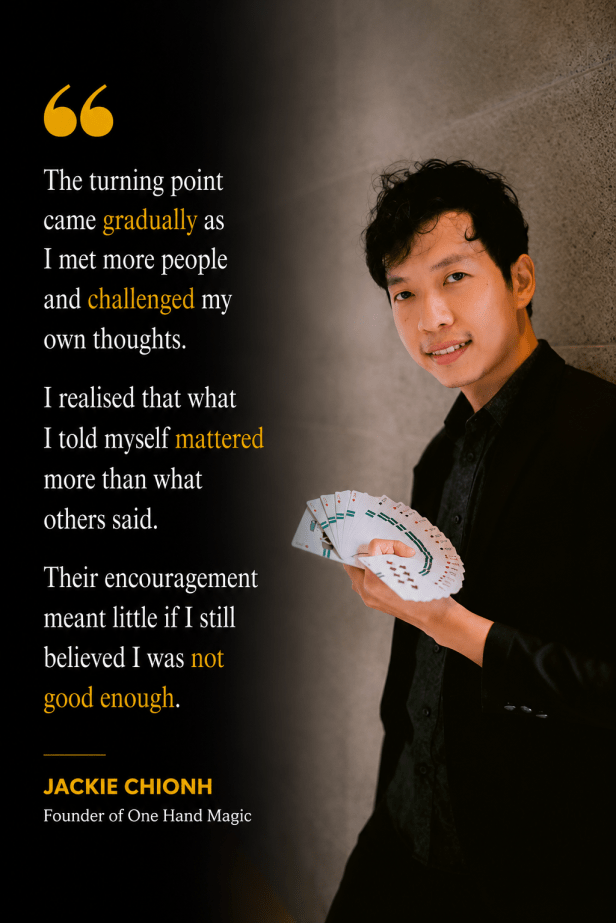
Becoming positive took time. The turning point came gradually as I met more people and challenged my own thoughts. I realised that what I told myself mattered more than what others said. Their encouragement meant little if I still believed I was not good enough.
Today, when I speak on stage, I focus on inspiring others instead of worrying about judgement. I no longer ask, “Why me?” because I may never receive an answer. Instead, I say, “Try me.” Challenges remain, but they will not stop me from living life to the fullest.
At 17, you chose to learn magic using only one hand. Two years later, you took up cardistry, an art form built on speed, precision and finger dexterity. Many people would have considered it impossible. What made you believe it was worth attempting?
It all started with my passion for magic. No one taught me, so I watched online videos, experimented with playing cards and learnt through trial and error.
When I visited magic shops, many tricks required two hands. Some magicians were unsure whether they could even be adapted for someone like me. Instead of giving up, I learnt to think creatively, customise the techniques and develop my own methods.
Cardistry was even more challenging because it relies on speed, precision and finger dexterity. I dropped the cards countless times, but I kept practising until I mastered each move. Watching myself perform intricate flourishes with one hand gave me an incredible sense of satisfaction.
People are often surprised that I can perform magic or complete marathons with a disability, but I have learnt not to let stereotypes define me. I simply keep working until people see what is possible.
Magic creates the illusion that anything is possible. Beyond entertaining your audience, what do you hope people take away after watching you perform with one hand?
I hope they remember that limitations do not define our potential.
Most people initially notice that I am performing with one hand, but I hope they leave seeing determination, creativity and resilience instead.
If someone walks away believing that they can overcome their own challenges, then my performance has achieved something much greater than entertainment.
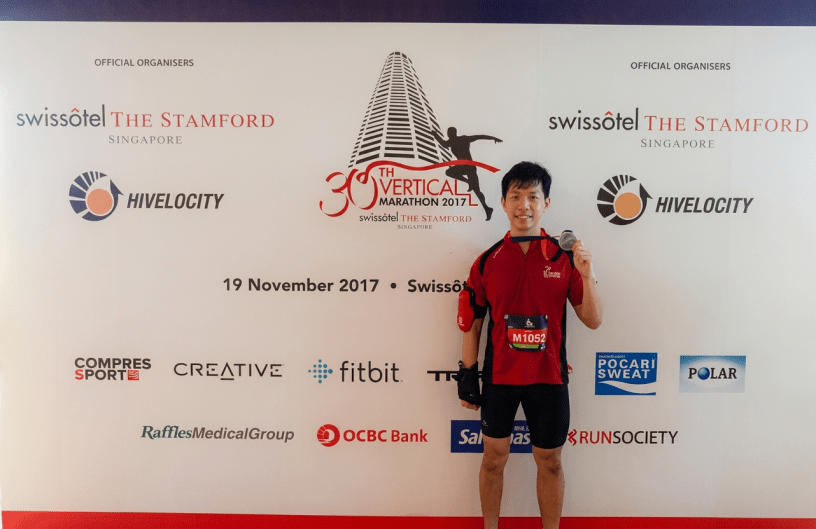
You have completed numerous races, including a vertical marathon in which you climbed 73 storeys. Which was more difficult: the physical challenge or overcoming the mental voice telling you to stop?
The mental challenge was more difficult. My body naturally becomes tired, and physically, I may not be as strong as an able-bodied person. However, it is ultimately the mind that tells you to stop.
During the vertical marathon, I constantly reminded myself that I did not need to be the fastest. I simply had to keep moving, one step at a time, until I reached the top.
I also try to improve on my personal best because doing so gives me a strong sense of achievement. Climbing against gravity with my physical condition is challenging, but overcoming the mental barrier makes reaching the top especially meaningful.
As a motivational speaker, you have met people from all walks of life. What do you think prevents so many people from reaching their full potential?
Many people underestimate themselves before they even begin. I have experienced those doubts myself.
Fear of failure, fear of judgement and the desire to remain within our comfort zones often prevent us from taking the first step. That first step is usually the hardest, but once we take it, the journey often becomes easier.
We do not need to have everything figured out before we begin. We simply need the courage to start.
What is one life lesson you wish you had learnt earlier?
I wish I had learnt earlier to stop comparing myself with others.
Everyone has a different journey. The only person I need to be better than is the person I was yesterday. Once I understood that, I became much happier and more confident. Confidence was never part of my vocabulary when I was younger. I constantly worried about what others thought and lived according to their judgement.
Today, I remind myself to be comfortable with who I am, stop comparing my journey with other people’s and work towards becoming a better version of myself each day.
What is your vision for Singapore over the next five years?
I hope Singapore becomes even more inclusive, not only through accessible infrastructure but also through a more inclusive mindset.
I would like people with disabilities to be recognised for their abilities and contributions, rather than being defined by their limitations. I also hope they will be given more opportunities to lead, perform and inspire others.
If you could have one superpower for a day, what would it be, and why?
I would choose the ability to inspire confidence in people instantly. Many people have talent and potential but do not believe in themselves. If I could help them recognise their abilities, even for one day, it could change the direction of their lives.
Connect with Jackie: LinkedIn, Facebook and TikTok.