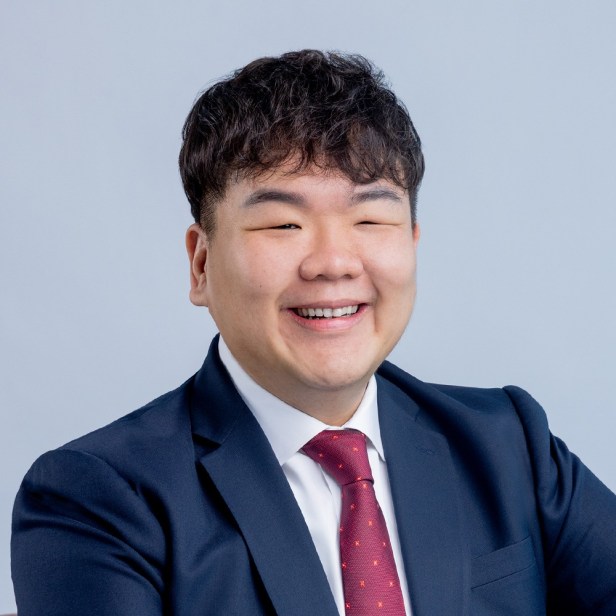
Starting a business often requires courage, but few entrepreneurs take as dramatic a leap as Lancaster. At just 27 years old, he walked away from a stable career at the Inland Revenue Authority of Singapore (IRAS), accepted an 82% pay cut and set out to build a business dedicated to helping small and medium-sized enterprises navigate tax and corporate compliance challenges. Armed with conviction rather than certainty, he chose to pursue a vision of making professional tax advice more accessible to growing businesses.
More than a decade later, Lancaster has built a thriving practice serving SMEs across Singapore while establishing himself as a trusted adviser and business leader. His entrepreneurial journey is a testament to the power of calculated risk-taking, resilience and continuous learning. From overcoming uncertainty in the early years to embracing AI and modern business practices, his story offers valuable insights into leadership, adaptability and building a sustainable business in an increasingly digital world.
You took an 82% pay cut to start One Tax CM in 2014. What gave you the conviction to walk away from a comfortable career and take that risk?
I began my career with the Inland Revenue Authority of Singapore (IRAS), where I worked for about six years. It was a stable and comfortable job, and I am grateful for everything I learnt there. However, I felt there was a limit to how far I could grow within the organisation.
During my time at IRAS, I interacted with many SMEs and realised that a large number of them needed help with tax and compliance matters. Many found it intimidating to approach large accounting firms, while others simply lacked the resources to do so. I saw an opportunity to start a practice focused on serving these businesses.
At the time, I was only 27 years old, single and still living with my parents, so I had very few financial commitments. I was confident in my abilities and felt that if things did not work out, I could always return to employment. Looking back, it was a calculated risk that I was willing to take.
Looking back, what were some of the darkest moments during the early years of building the company?
The most challenging part was the uncertainty. In the early days, I relied entirely on word-of-mouth referrals and did not invest in marketing. I never knew when the next enquiry would come or when the next sale would close.
Unlike today, where we have established sales funnels and marketing channels, there was no predictable pipeline. That uncertainty created a lot of stress.
Another challenge was simply not knowing what I did not know. Like many first-time entrepreneurs, I made mistakes along the way. Some of those mistakes even cost me client relationships. However, those experiences strengthened my resilience. As difficult as they were, they helped me grow both personally and professionally.
What are some common mistakes business owners make when it comes to tax planning and corporate compliance?
One common mistake is relying on advice from friends or acquaintances who are not professionally trained in tax. While well-intentioned, such advice is often inaccurate.
For example, some business owners believe that purchasing a car under a company automatically makes all related expenses tax deductible. In reality, Singapore tax regulations restrict the deductibility of expenses related to private passenger vehicles.
Another common mistake is trying to handle everything themselves. I understand why many entrepreneurs do this in the early stages, as they want to keep costs low. However, as the business grows, they become increasingly busy and often lack the time or expertise to manage compliance matters properly.
Many continue with outdated processes until the issues become too large to ignore. By the time they seek professional help, years of records may need to be corrected. My advice is to engage professional support early. There are service providers available at different price points, and most businesses can find one that fits their budget.
You have mentioned that being a good boss is harder than many people realise. What have been your biggest leadership lessons?
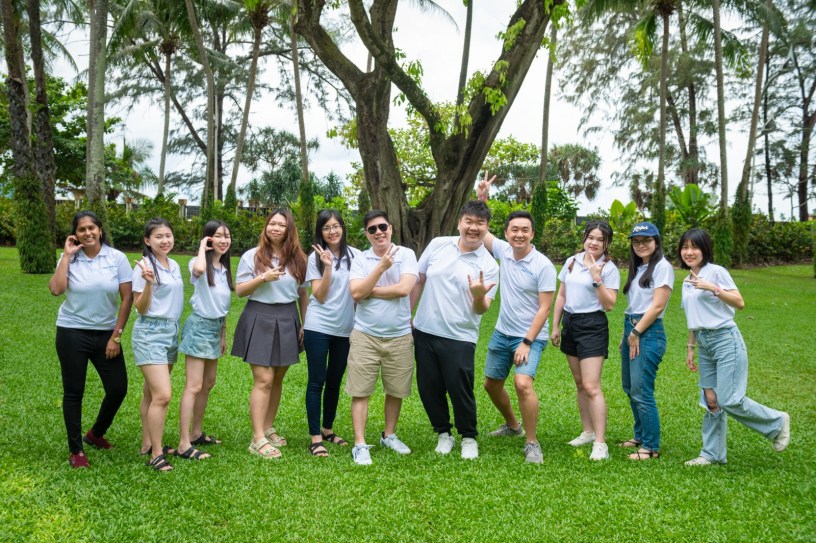
A fun fact is that the last employee to leave my firm did so about five years ago, which is uncommon in an industry where the average turnover is around one year.
This was intentional. We take time to understand what motivates each employee, whether it is career progression, learning opportunities or financial rewards. That investment helps build long-term commitment.
For example, when an employee from our corporate secretarial team expressed an interest in accounting, we offered her a six-month trial in the new role. By listening to her aspirations, we created greater job satisfaction and growth opportunities.
One of my biggest leadership lessons is that internal stakeholders are just as important as external ones. Employees stay not just because of salary, but because they believe in your vision and leadership, making internal relationships just as important as client relationships.
Many professionals worry about staying relevant in a rapidly changing economy. What advice would you give them?
Artificial intelligence is one of the biggest topics today, and it is already transforming many industries, including my own.
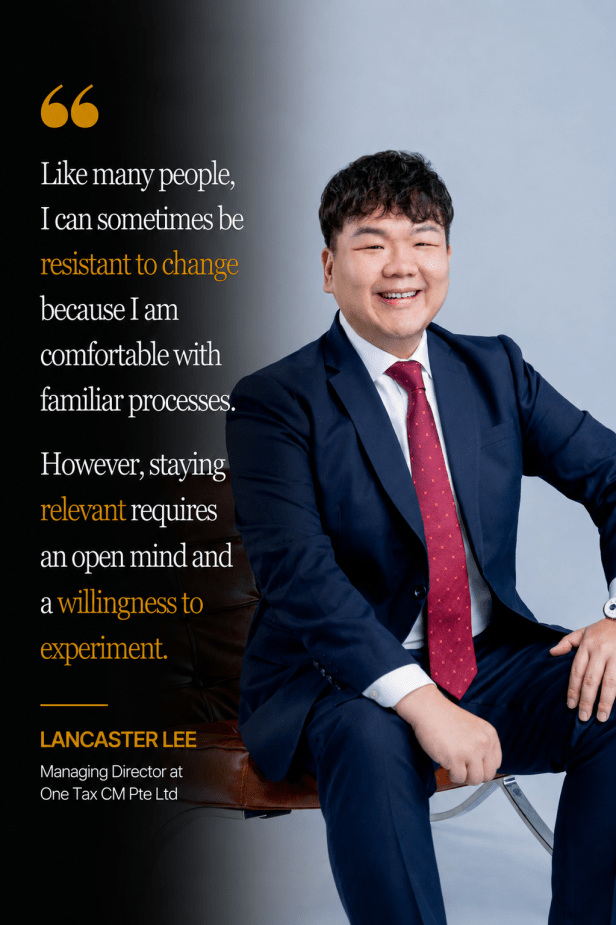
My advice is to continually look for ways to disrupt yourself before someone else does. Like many people, I can sometimes be resistant to change because I am comfortable with familiar processes. However, staying relevant requires an open mind and a willingness to experiment.
At our firm, we provide paid ChatGPT subscriptions to our employees because we want them to embrace AI, improve their thinking processes and increase productivity. AI should not be feared or ignored. Instead, professionals should learn how to leverage it as a tool for growth and development.
If you had to start over from zero tomorrow, what would you do differently?
I would invest in marketing much earlier.
For the first five years of my business, I focused almost entirely on service delivery and paid very little attention to building a digital presence. If I were starting again, I would attend more networking events, build a website earlier, invest in SEO and establish sales funnels from the outset.
Looking back, I believe the business could have grown faster had I prioritised marketing and visibility from day one.
What is your vision for Singapore in the next five years?
Singapore is facing rising business costs, and many multinational corporations have shifted back-office functions to neighbouring countries. Rather than resisting these changes, we need to adapt.
To remain competitive, Singapore must continue developing high-value industries and new technologies where we can maintain a competitive advantage.
Compared to many countries in the region, Singapore has embraced AI more aggressively. I hope we continue to lead in this space and serve as a model for how technology can drive productivity, innovation and economic growth.
If you could have a superpower for one day, what would it be and why?
I would choose mind reading.
In business, there are times when you believe you have presented a strong proposal or offered a great solution, yet the client chooses another option. Being able to understand what people are truly thinking would help me improve my communication, refine my proposals and better serve my clients.
Connect with Lancaster: OneTaxCM, LinkedIn and Instagram.