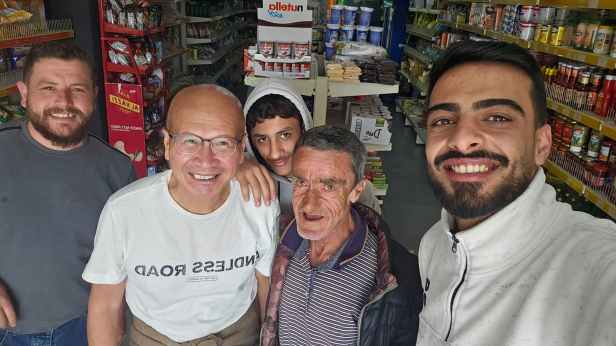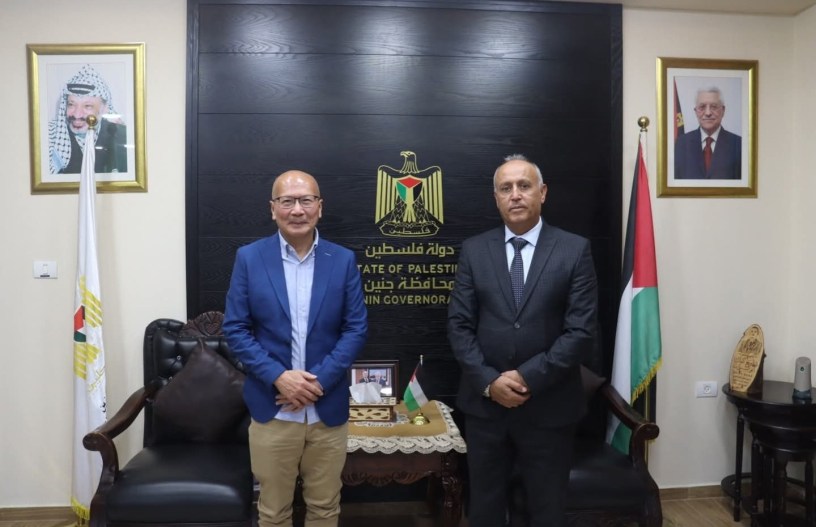
Meet Gilbert, founder of Love Aid Singapore, a humanitarian organisation dedicated to supporting vulnerable communities affected by conflict, poverty, and displacement. While many charitable initiatives focus on Southeast Asia, Gilbert chose a different path, dedicating much of his work to helping refugees and war-affected families in the Middle East, particularly in Lebanon and Gaza.
Driven by compassion and a deep belief that every person deserves dignity and support, Gilbert has spent years mobilising aid, raising awareness, and inspiring Singaporeans to look beyond their borders. Through Love Aid Singapore, he continues to champion humanitarian causes in some of the world’s most challenging environments.
What inspired you to start Love Aid Singapore, and why did you choose to focus on humanitarian and relief work overseas?
About eight or nine years ago, we began exploring regional charity work in countries such as Malaysia, Indonesia, Thailand, and Myanmar. While the work was meaningful, nothing particularly stood out to me because many Singaporean charity groups were already active in those areas.
Then someone introduced me to humanitarian work in the Middle East. I attended a conference in Lebanon and was immediately drawn to the region’s needs. Most of the NGOs operating there were from Europe, and there were very few organisations from Asia involved.
From that point on, we began travelling there every year during Ramadan, winter, and Eid to provide assistance. Despite the challenges and risks, I felt we could make a meaningful contribution. Since the events of 7 October, we have intensified our humanitarian efforts in the Middle East and have never looked back.
Through your work supporting Gaza, what realities have impacted you the most?
One of the biggest challenges is that I have never been able to enter Gaza myself despite trying to obtain permits. Humanitarian work has always been about connecting with people directly, and not being physically present in Gaza has been one of the hardest realities for me to accept.
As someone who is naturally hands-on, that adjustment was difficult.
In places like Lebanon, I can personally meet the people we help, distribute blankets and food, and interact directly with beneficiaries. With Gaza, however, I have had to rely entirely on local partners on the ground. My role is mainly to provide instructions, coordinate efforts, and transfer funds.
What are some of the biggest operational challenges you face while running humanitarian initiatives in conflict zones?
The first challenge is working remotely. Humanitarian work is often driven by direct interaction with the people you serve. Not being able to enter Gaza means losing that personal connection.
The second challenge involves logistics. Many aid trucks were unable to enter Gaza, including shipments we had arranged. At one point, trucks carrying supplies were stuck between Cairo and Rafah, forcing us to rethink our approach and work through local partners already inside Gaza.
The third challenge is transferring funds. Traditional banking channels are often limited or unavailable. We had to explore alternative methods of transferring aid, which required discussions with regulators and charity authorities.
Another challenge is communication. The NGO we work with in Gaza does not speak English, so many conversations take place through translation tools. This sometimes creates misunderstandings and requires additional effort to ensure instructions are clearly understood.
What have you learned about human resilience through the people you have helped?
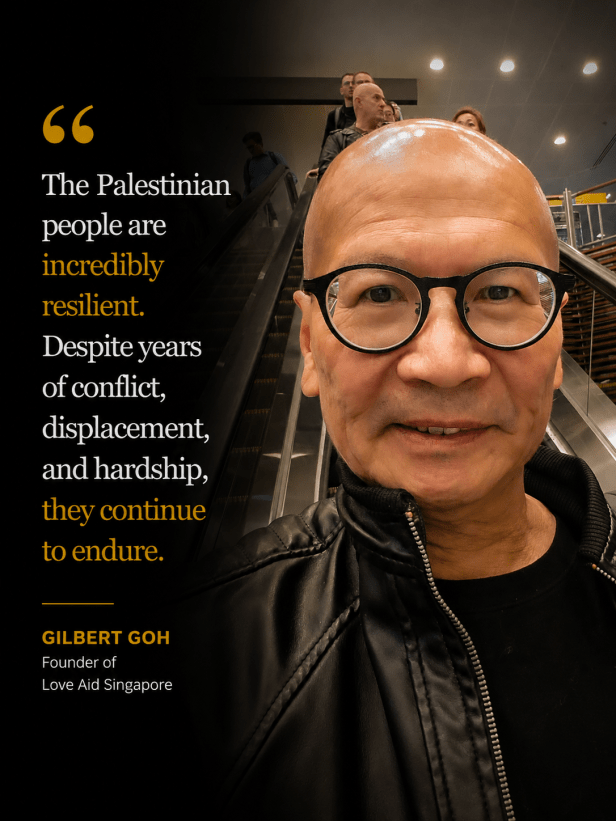
The Palestinian people are incredibly resilient.
Despite years of conflict, displacement, and hardship, they continue to endure. They may complain about the lack of food, shelter, and security, but they remain committed to their homeland.
One example that struck me was when thousands of people returned to northern Gaza during a ceasefire, even though many areas had been reduced to rubble. When asked why they wanted to return, many simply said, “This is my home.”
That level of attachment, determination, and resilience is truly remarkable.
Humanitarian work can be emotionally draining. What keeps you going despite the difficult situations you encounter?
I believe the people affected by these conflicts deserve our help.
At the same time, I hope to inspire more Singaporeans to step forward and support humanitarian causes. While many Singaporeans contribute generously, I still feel that only a relatively small percentage of the population is actively involved in helping communities such as the Palestinians.
As a Chinese Singaporean Christian, I also hope to encourage everyone to get involved. Compassion should not be limited by race, religion, or nationality.
What is the biggest failure in your life, and what did it teach you?
Personally, my divorce was one of the most difficult experiences of my life.
It happened around 13 or 14 years ago, and it took me years to recover emotionally. I also have a daughter, so there was a sense that I had let my family down.
However, looking back, that difficult period also opened doors for me. It gave me the freedom to pursue humanitarian work in conflict zones, something that would have been far more difficult if I had remained married.
While it was a painful chapter, it ultimately allowed me to pursue a purpose that has become an important part of my life.
What is your vision for Singapore in the next five years?
I hope to see a more resilient and tougher Singapore.
We live in a very comfortable, safe, and well-organised society. We have excellent infrastructure, one of the world’s strongest passports, and a high standard of living. While these are blessings, they can also make us overly comfortable.
I believe Singapore has much to contribute to the world. We have resources, strong systems, and a good international reputation. Whenever I tell people overseas that I am from Singapore, they immediately associate our country with trust, efficiency, and responsibility.
I hope we can use those strengths to contribute more actively to global humanitarian efforts and help communities affected by conflict and hardship.
If you could have a superpower for one day, what would it be and why?
I would want the ability to stop all wars. If there were no wars, there would be far less suffering, displacement, destruction, and loss of life. It is a simple answer, but that would be my wish.
Connect with Gilbert: LoveAidSingapore and Instagram