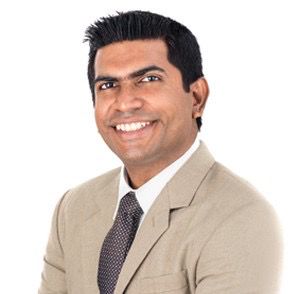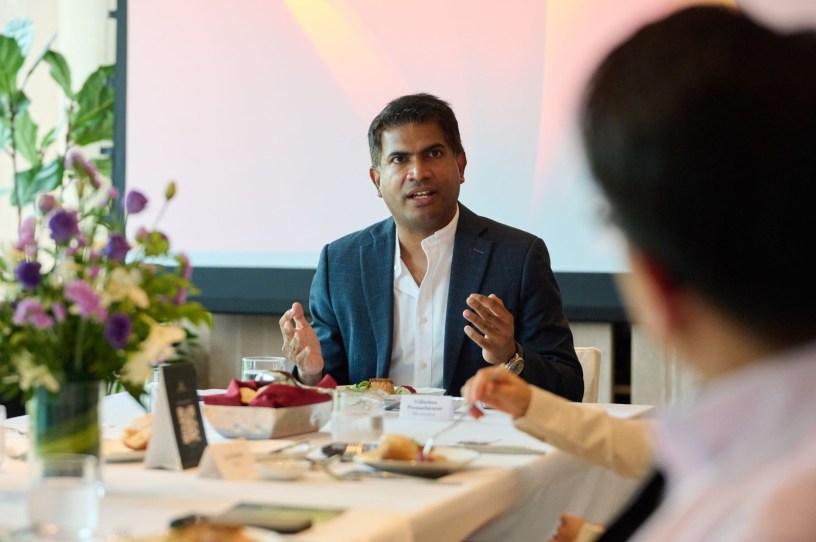
Meet Vidushan, a fintech entrepreneur and ecosystem builder who transitioned from investment banking into the world of technology-driven financial services. Originally from Sri Lanka, he recognised the growing need for digital financial solutions during the pandemic and has since dedicated himself to helping businesses, founders, and investors connect more effectively across borders.
Today, Vidushan is the founder of 8 Circle, an international startup ecosystem that began as a simple WhatsApp group and has evolved into a growing platform spanning multiple countries. Through his work in fintech, digital securities, and startup communities, he focuses on helping founders accelerate market access, build meaningful partnerships, and scale their businesses globally.
You started as an investment banker before moving into fintech entrepreneurship. What made you leave the traditional finance world behind?
Primarily, I saw an opportunity to transform financial services through technology. During COVID-19, the need became even more apparent because of lockdowns and the increasing reliance on websites, mobile apps, and digital financial services.
I am originally from Sri Lanka, where visiting a bank or financial institution was often a critical part of accessing financial services. The pandemic highlighted how much technology could improve accessibility and convenience.
When I moved to Singapore in October 2022, I began to see broader applications of technology within financial services. That experience ultimately led me to work on a range of fintech solutions.
You have built multiple ventures across fintech, digital securities, and startup ecosystems. Looking back, what have been some of the toughest moments during your entrepreneurial journey?
The primary challenge is always finding product-market fit. You may have a strong idea and interview hundreds of potential customers to understand their pain points, but building a technology solution that truly meets their needs remains difficult.
The second challenge is differentiation. In a competitive market, you must clearly demonstrate why your solution stands out from the rest. The third challenge is identifying the right North Star and determining the key objectives that will drive growth and scaling.
Finally, there is the constant challenge of fundraising and securing the right talent. Building a business requires finding people with the right skills, mindset, and commitment to help achieve your goals.
8 Circle started as a simple WhatsApp group for founders. What gap in the startup ecosystem were you trying to solve when building it into an international startup ecosystem across multiple countries?
8 Circle was born out of my own experience as a foreign founder from Sri Lanka starting a business in Singapore. One of the biggest challenges was finding practical information about setting up a company, handling compliance matters, reaching investors, and building partnerships.
While much of this information was available online, it was often more valuable to learn directly from fellow founders and investors who had already gone through the process. Singapore hosts countless networking events, but there was no central community where founders could continuously engage, exchange ideas, and help one another overcome challenges. That became the foundation of 8 Circle.
Over the past 16 months, we have discovered an interesting value proposition. Building technology products is becoming easier every day, but finding customers, investors, and partners remains difficult. Through events, curated roundtables, and one-to-one introductions, we help businesses accelerate their go-to-market journey.
We also launched products such as Boost, which helps identify business intentions and expansion goals, and Circle 8, which facilitates meaningful business connections through events and meetings. Ultimately, our goal is to reduce the time and cost required for market access while helping businesses shorten sales cycles and expand more efficiently.
As startup ecosystems become increasingly global, how important is cross-border collaboration for founders looking to scale beyond their home markets?
Cross-border collaboration is critical today. Unlike 10 or 20 years ago, businesses no longer need to establish a full local presence before exploring new markets. With the right local partner, founders can gain access to customers, investors, and networks almost immediately.
For example, hosting an event with a trusted local partner allows businesses to test demand and connect with potential customers without first incorporating a company or navigating extensive compliance requirements. The stronger and faster you build these partnerships, the further you can go.
You have mentored startup founders from different countries. What qualities do you consistently see in strong entrepreneurs?
The most important quality is resilience. Entrepreneurship comes with both good days and bad days. Founders constantly face challenges, whether it is keeping the business afloat, finding product-market fit, or managing uncertainty.
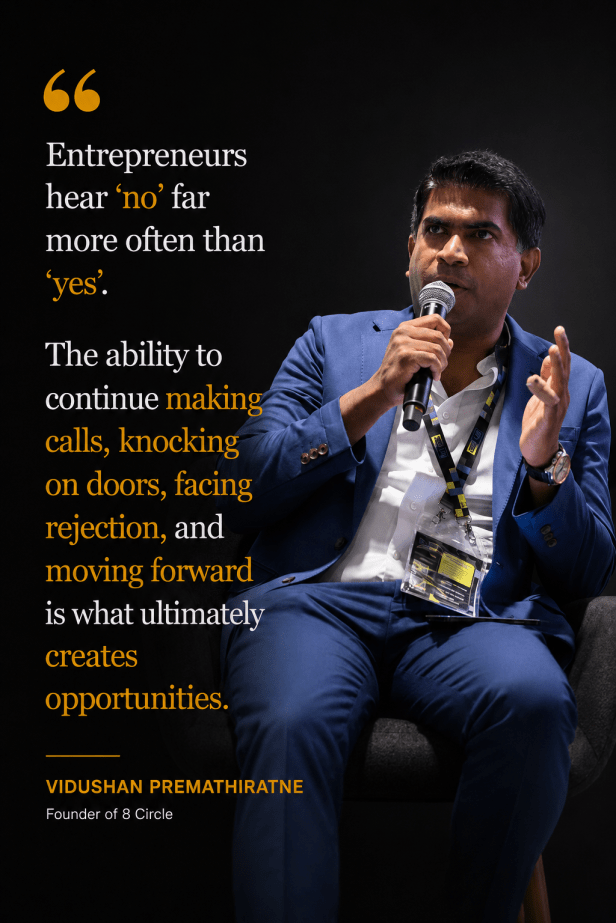
The second key quality is persistence. Entrepreneurs hear “no” far more often than “yes”. The ability to continue making calls, knocking on doors, facing rejection, and moving forward is what ultimately creates opportunities. If you can master resilience and persistence, you dramatically increase your chances of success.
In this age of AI and automation, where many things are being handed over to machines, what do you believe humanity must never lose?
Empathy. Machines can process information, but they cannot genuinely empathise with people. Human connection remains incredibly important, whether in business or personal relationships. It is not about LinkedIn connections or social media followers. It is about meaningful conversations and genuine interactions.
We should always be willing to help others achieve their goals. In my experience, when you do that consistently, rewards naturally follow.
What is your vision for Singapore in the next five years?
I believe Singapore will continue to strengthen its position as a major global financial hub. Its greatest advantage is connectivity. Beyond being a financial centre, I see Singapore becoming an access layer for businesses looking to expand into regional and global markets.
If companies can establish themselves here and quickly connect with customers, partners, and investors across multiple countries, Singapore will become even more valuable as a launchpad for international growth. That is also the vision we are building into our own products: helping Singapore become not only a technology and financial hub, but also a market expansion platform.
If you could have a superpower for one day, what would it be and why?
I would choose the ability to learn any skill instantly.The world is changing rapidly through AI, technological innovation, and global challenges. The faster we can learn and adapt, the better positioned we are to succeed. Being able to acquire knowledge and skills quickly would help people navigate change far more effectively.
Connect with Vidushan: LinkedIn.