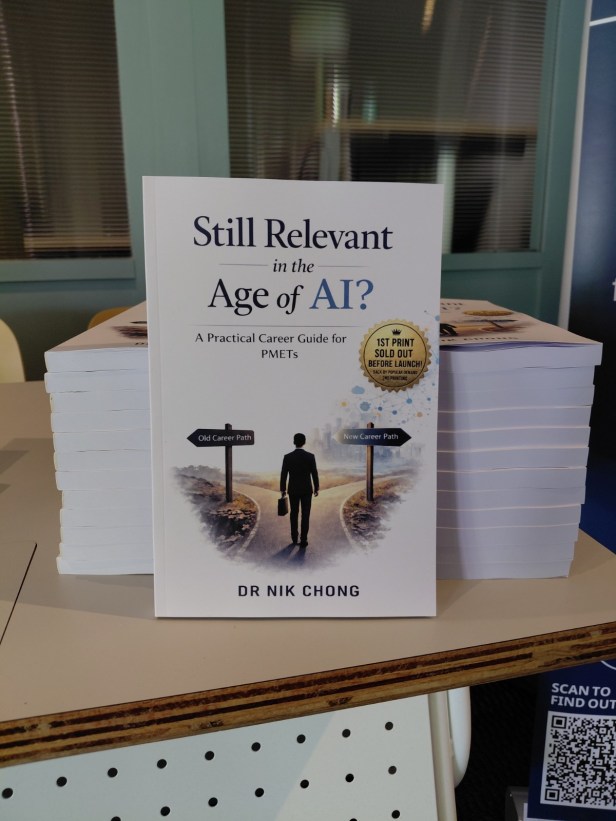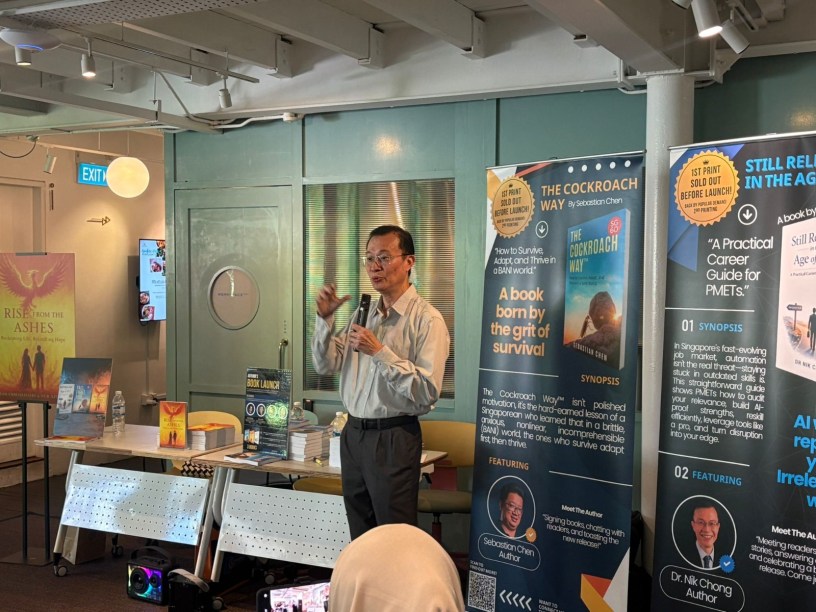
Meet Dr. Nik Chong, author of Still Relevant in the Age of AI? A Practical Career Guide for PMETs. An HR and business consultant, Dr. Chong wrote the book to help professionals, managers, executives, and technicians (PMETs) navigate the disruptive wave of AI, which has triggered widespread job losses and greater career uncertainty amid structural industry shifts.
Having faced retrenchment himself years ago, he understands the psychological toll of losing one’s job, especially for mid-career professionals. Dr. Chong believes professionals must learn not only how to adapt to technological change, but also how to rebuild their confidence, identity, and purpose in an increasingly tumultuous job market. Through his book and community initiatives such as SG60 Voices From The Heart and Speak Up Collective, Dr. Chong advocates for greater career resilience, visibility, and emotional support for PMETs.
Your book Still Relevant in the Age of AI? comes at a time when many PMETs feel anxious about their future. What motivated you to write this book?
I was retrenched in the early 2000s. That experience created a lasting sense of vulnerability. I was in my early forties, and although I managed to find another job, I kept thinking: what if this happened again in my fifties, or later?
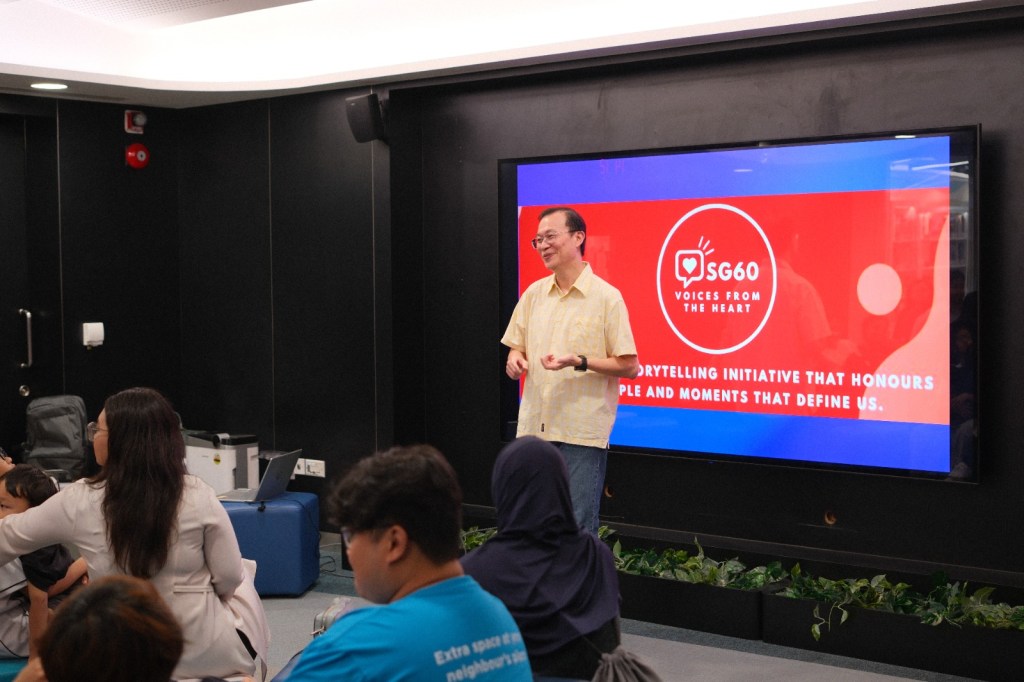
Through my community work, such as SG60 Voices From The Heart and Speak Up Collective, which I co-founded with author and corporate trainer Sebastian Chen, I heard similar stories from people facing retrenchment.
Even though it has been years since my retrenchment, I realised that the emotions people go through such as loss of identity, helplessness, self-blame, and uncertainty about the future have remained the same.
The book is really an accumulation of my years in HR, consulting, and community work. I wanted to put these experiences together to help PMETs become better prepared for the realities of today’s job market.
What are some struggles PMETs carry that society rarely talks about?
PMETs make up about 64% of Singapore’s workforce, which is a significant group. Yet many people assume that because PMETs are educated professionals, they should be able to take care of themselves.
Lower-income workers often receive stronger protection through unions or employment regulations, but PMETs, especially those in their forties and above, are frequently left vulnerable during restructuring exercises.
Many are in mid-career, supporting families, children, and ageing parents while earning comfortable salaries. Unfortunately, that also makes them prime targets during cost-cutting exercises. Employers may claim that older workers are too expensive, less flexible, or resistant to younger management.
The reality is that once someone crosses forty, finding another comparable role becomes much harder. Many professionals struggle with fear, uncertainty, and the pressure of maintaining financial responsibilities while facing age-related hiring biases.
In your book, you mentioned “hire the employer”. What does that mean, and why is that mindset important today?
The conventional way to look for a job is to search for job postings, then tailor your CV and optimise your application using AI to get past applicant tracking systems. At the same time, employers are using AI to screen candidates. In many cases, it becomes a process of AI interacting with AI.
In a tight job market, differentiation matters. Be deliberate about the employers you target: do their values align with yours? Does their work excite you? Then make it clear what you bring to the table and why you are the obvious choice. Some individuals who have adopted this technique have found recruiters and headhunters reaching out to them.
This approach is different from simply customising a CV. That is a reactive approach, which mainly involves tailoring keywords and experience to match a job description. Hiring the employer is proactive. It shapes how employers and recruiters perceive your value before you even apply for the role.
This is achieved through building your visibility, reputation, networking, sharing industry insights, and establishing a clear professional identity. One helps you pass applicant tracking system screenings; the other makes people seek you out.
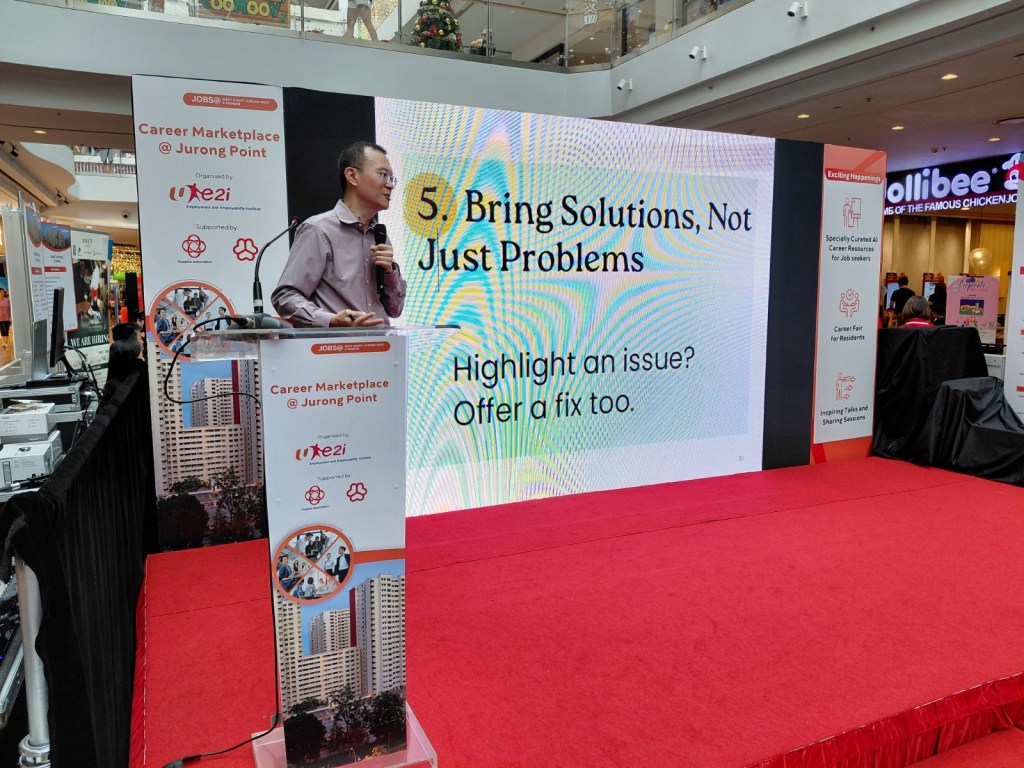
Many Singaporeans are taught to stay humble and avoid self-promotion. In reality, people who know how to communicate their value often advance faster. Some individuals may not even be the most capable, but they know how to market themselves effectively.
You mentioned market visibility. Can you elaborate further on why this matters in today’s context?
In today’s workplace, visibility equals perceived competence. If nobody knows what you have achieved, someone else may take the credit, or management may simply overlook you.
Most PMETs are willing to work long hours to deliver results. The problem is that many believe their work will speak for itself. Many Singaporeans are taught to stay humble and avoid self-promotion. In reality, people who know how to communicate their value often advance faster. Some individuals may not even be the most capable, but they know how to market themselves effectively.
That is why visibility matters, both within organisations and externally through platforms like LinkedIn and social media. If you are not actively sharing your ideas, experiences, and expertise, you risk becoming overlooked, both within your current organisation and by potential employers and recruiters.
You co-organise Speak Up Nights for retrenched workers. Why is creating a safe space for people to speak openly about their retrenchment experience important?
Government agencies and other organisations provide excellent technical support, such as CV writing, interview preparation, and job search strategies. However, what many retrenched individuals need first is emotional support.
When someone loses a job, the immediate response is often shock, denial, anger, shame, or self-blame. It can feel like grief. Telling someone to immediately update their CV may not address what they are emotionally going through.
We created Speak Up Nights to provide a safe environment where people can openly share their experiences without judgement. We want people to understand that retrenchment is not a personal failure. It is often a result of larger economic and corporate decisions.
I sometimes tell younger professionals that if retrenchment must happen, it is better to experience it earlier in life. Recovering from retrenchment at twenty-five or thirty is very different from facing it for the first time at fifty-five.
How would you make the world a better place?
I do not think I can change the whole world. What I can do is contribute within my own context and experience. If I can help PMETs cope better, regain confidence, or secure their next opportunity through some of the ideas we share, that is meaningful to me.
What is your vision for Singapore in the next five years?
I believe the job market may become more difficult before it improves. Although current unemployment levels seem under control, the broader effects of AI-driven transformation and economic restructuring have yet to fully emerge.
Long-term unemployment is increasingly becoming a concern. I know people who have been unemployed for several years. That is a worrying trend.
To remain relevant, Singaporeans will need to learn how to work effectively alongside AI. The challenge is whether people can adapt quickly enough to remain relevant.
If you could have a superpower for one day, what would it be and why?
I would want the ability to ensure that AI remains under human control.
Right now, AI is advancing faster than policies, regulations, and safeguards can keep up. Technology should serve humanity, not replace or dominate it. If there was a way to ensure AI is used responsibly to support people rather than displace them, that is the superpower I would want.
Connect with Dr. Nik: LinkedIn.