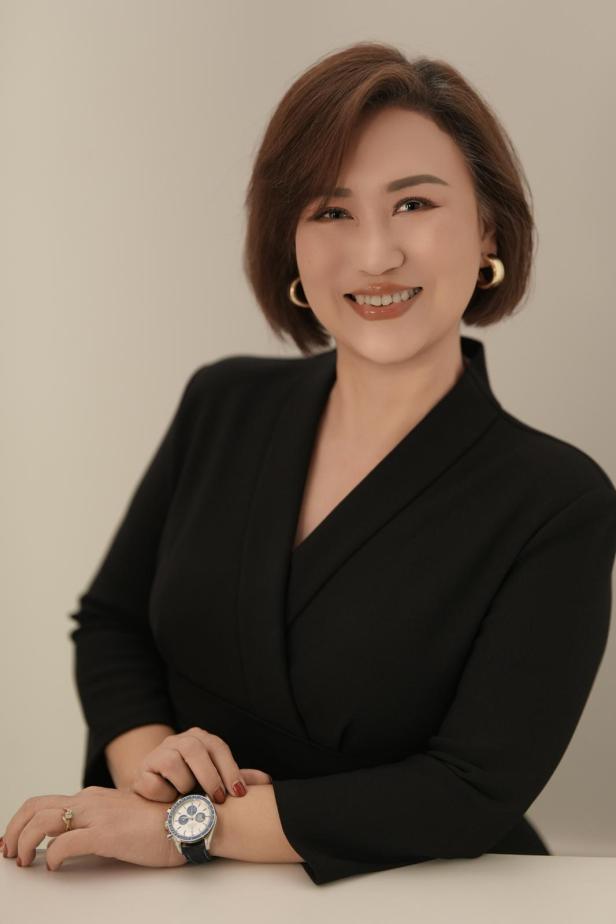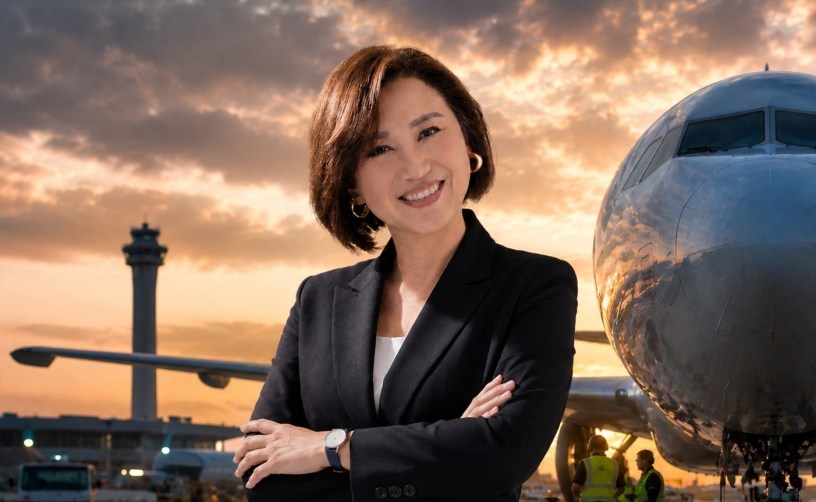
Meet Dr. Marie Ang, International Corporate Affairs Director at Singapore Institute of Aerospace Engineers International (SIAEi), whose career spans social impact, leadership, international development, aviation, and aerospace. Across these diverse chapters, one constant has remained at the heart of her work: people. Whether she is speaking about leadership, systems, or transformation, her focus is always on human potential, purpose, and the hope people need to keep moving forward.
Today, Dr. Marie continues to champion a more human-centred approach to leadership and work. In an age shaped by AI, global uncertainty, and rapid change, she believes that organisations must not lose sight of empathy, dignity, and meaningful purpose. For her, true leadership is not about managing people, but enabling them to grow, lead, and create impact beyond themselves.
Your career spans social impact, leadership, international development, and now aviation and aerospace. What has been the common thread connecting all these chapters of your life?
The common thread has always been people. I generally prefer to talk about people more than processes. Across every industry, the question is whether people can find purpose, meaning, and hope in what they do. Hope matters because if life is only about surviving, putting food on the table, and having a roof over your head, then what comes after that?
I do not see organisations merely as systems and structures, but as ecosystems of human potential. This is especially important now with AI, where many people feel discouraged or fearful that their jobs may be displaced. In the past, people asked what they hoped to achieve through their purpose and work. Today, many are asking whether they will even have a job. That is one of the trends I see, and it is also what connects everything I do.
You once shared that “a good leader is an enabler.” What does that look like in practice?
A good leader is not defined by having many followers. A good leader builds other leaders. Leadership is about showing the way, paving the way, and sometimes carving the way for others. When you raise leaders, you are not just duplicating yourself, but also passing on values, systems, and ways of thinking.
I once told my husband that leaders do not manage people; leaders lead. When you try to manage people too much, it becomes micromanagement or macromanagement. People are human beings with their own thoughts, experiences, and abilities. A true leader builds trust, gives people room to grow, and focuses on outcomes rather than controlling every method. In today’s workplace, especially with flexible work and changing expectations, trust is the glue that holds everything together.
You spent time working in the social impact and charity space before moving back into aviation and aerospace. What did that teach you about people and systems?
It taught me that good intentions alone are not enough. Impact must also be sustainable. I have worked across small companies, public-listed companies, charities, SMEs, and MNCs, and I have seen how systems vary widely. Sometimes governance, structure, and measurable outcomes are missing.
At the same time, we must ask how goals are achieved. Are people burnt out? Are they working excessive hours? With technology, work has intruded into personal and family time, and for some people, work has become their identity. I have seen a lot of fatigue and emotional burnout. This season taught me that we need empathy more than ever. Effective systems must balance operational efficiency with human dignity.
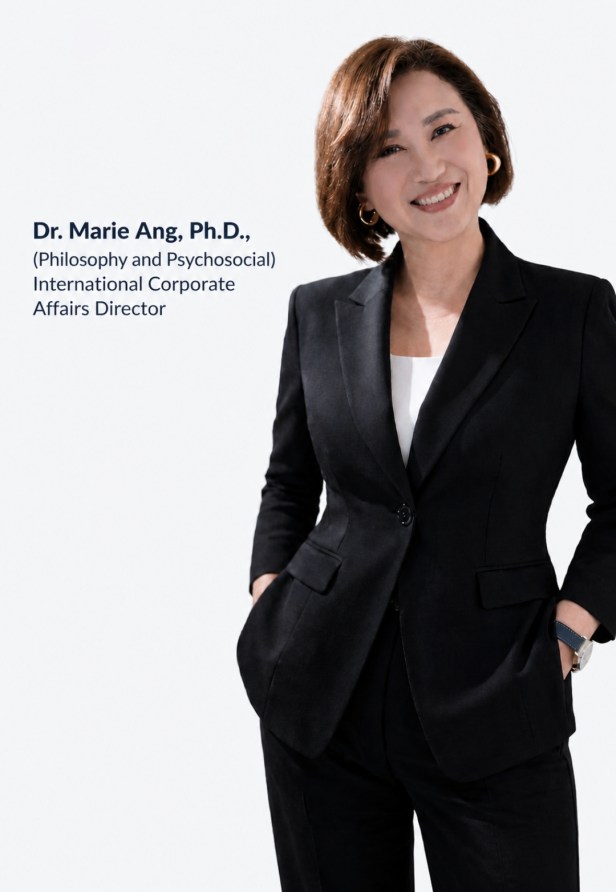
Leadership is about showing the way, paving the way, and sometimes carving the way for others. When you raise leaders, you are not just duplicating yourself, but also passing on values, systems, and ways of thinking.
You have stepped into the aviation and aerospace sector during a time of major transformation. What excites you most about the future of this industry?
What excites me is how technology and AI can complement what we do. Aviation is not just about buying a ticket and flying to another country. There are many layers involved, including safety, security, engineering, maintenance, sustainability, and global connectivity.
Today, we are looking at predictive maintenance, better safety systems, and even how aircraft parts can be recycled or converted into value. If we combine technological advancement with ethical and human-centred leadership, aviation will not only become more innovative, but also more relevant than before.
You have talked about humanity, dignity, and emotional intelligence. In your view, what are people truly searching for today?
I believe people are searching for purpose, meaning, hope, and significance. Many young people graduate and ask, “What’s next?” Sometimes their academic results determine their career path, but that may not align with their passion or gifts. I believe people want to be heard, seen, respected, and valued, not simply judged by performance.
To me, there are different levels of purpose. There is the daily purpose of working to earn a living. There is the feel-good purpose of helping others or volunteering. Then there is the ultimate purpose, where you do something you are deeply committed to for the rest of your life. That kind of purpose is usually bigger than yourself.
What kind of legacy do you hope to leave behind through your work and influence?
I hope to leave behind a legacy that changes not just individuals, but communities. Growing up in Singapore, I realise how blessed we are. When I travel to places like Cambodia or Taiwan, I see how many things we take for granted, from shelter and infrastructure to education and opportunity.
One of my CSR (Corporate Social Responsibility) projects is to bring displaced youths to Singapore to study maintenance, repair, and operations in the aviation industry, giving them a chance to build a better life. If we can change the life trajectory of one young person, we can also impact their family and community. I believe we cannot empower people without equipping them, and we cannot just equip them without guiding them to become better leaders.
What is your vision for Singapore in the next five years?
Singapore has grown rapidly from our kampong days to become a respected global nation. Many countries admire us not just for our achievements, but also for our resilience and tenacity. We have built a strong reputation despite having no natural resources. I hope that in the next five years, Singapore will invest not only economically, but also in people, both within our country and beyond.
We must remain competitive while preserving social trust, multicultural harmony, and human dignity. As Singaporeans, we carry a powerful passport, but we also carry the responsibility of representing our country with integrity wherever we go.
If you could have a superpower for one day, what would it be and why?
I would like to restore empathy and compassion. In our pursuit of excellence, credentials, and success, I think we sometimes lose touch with our humanity. Many conflicts and misunderstandings come from limited perspectives and self-centredness. If I had a superpower, I would help people truly see one another as fellow human beings, with all our flaws, beauty, intelligence, and humanity.
Connect with Dr. Marie: Facebook and LinkedIn.
Dr. Marie is a member of Rainmaker, a revolutionary movement that rallies like-minded people together based on the values of Love, Authenticity, Respect, Kindness and Youthfulness (LARKY).