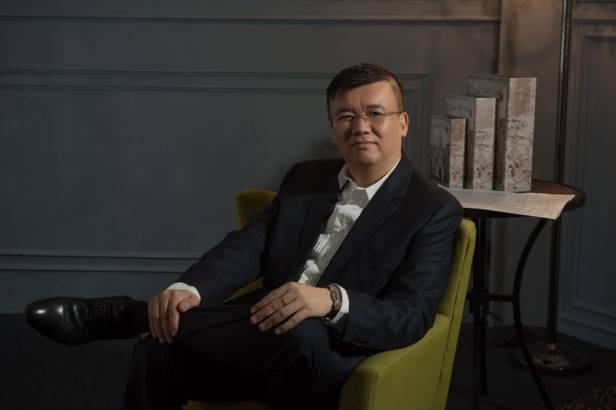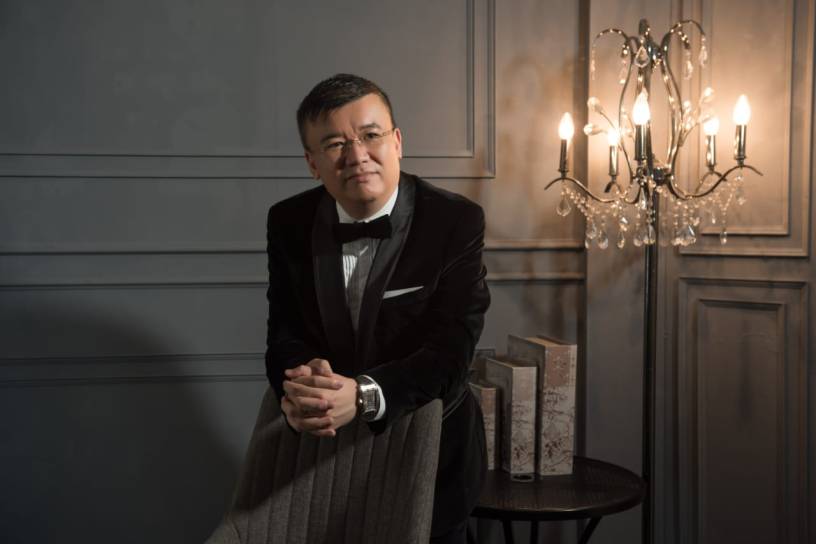
With more than three decades of experience spanning construction, manufacturing and property development, Dato’ Sri Chang Yin Siang has built a career defined by leadership, entrepreneurship and an evolving commitment to sustainability. From his early days as a civil engineer to senior positions at S P Setia, Goldery Group and Mabosa, his journey reflects a belief that successful businesses must deliver both commercial value and lasting benefits to society.
Now serving as Chief Sustainability Officer & Group Director at Mabosa, he advocates environmental, social and governance (ESG) practices, sustainable construction and responsible business growth. Beyond his corporate responsibilities, he is actively involved in business associations and mentoring entrepreneurs. Today, he shares lessons from his career, emerging opportunities within the Johor-Singapore Special Economic Zone and his vision for a more sustainable future.
You have built a career spanning more than three decades across several industries. What were the defining moments that shaped your journey?
Across construction, manufacturing and property development, four defining moments stand out. I began as a civil engineer with contractors such as Sato Kogyo, where I learnt that quality comes from discipline and attention to detail.
At S P Setia, I discovered how trust, consistency and delivering on promises contribute to building a strong brand.
Establishing my own company in Iskandar Malaysia was another turning point. For the first time, business risks became deeply personal, and I experienced entrepreneurship from a completely different perspective.
The fourth milestone came when I joined Mabosa in 2019, eventually becoming its Chief Sustainability Officer.
That experience changed how I viewed my responsibilities. I realised that the next chapter of my career should focus not only on what we build, but also on what we leave behind for future generations.
You have held senior leadership positions across several organisations. Which experience challenged you most as a leader, and what did it teach you?
Leading organisational change at Mabosa was particularly challenging. Founded in 1975, the group has a long history in construction and engineering supplies. Introducing sustainability meant encouraging people to view environmental responsibility as an opportunity rather than an additional cost.
I quickly realised that people don’t change simply because they are instructed to do so. They need to see tangible results. We therefore began with practical initiatives, including introducing green building materials and Industrialised Building System (IBS) solutions.
As these initiatives demonstrated their value, it became easier to build support for broader changes. The experience reinforced three important leadership lessons: listen before making decisions, remain consistent in your actions and never be afraid to learn from others.
I believe effective leaders should be comfortable acknowledging that they don’t always have all the answers.
You have been involved in property development for many years and now advocate sustainable development and ESG practices. What changed your perspective on businesses’ responsibilities towards society and the environment?
My perspective changed gradually through my experiences within the industry. After spending years in construction, you begin noticing the enormous amount of waste generated on building sites. You also realise that the buildings we create will affect people’s lives for decades.
At the same time, market expectations began changing. Banks, investors and multinational corporations increasingly wanted businesses to demonstrate their commitment to ESG principles.
What truly convinced me was seeing sustainable solutions succeed in practice. For example, some of our partners in Thailand have developed ways to transform agricultural waste, including coconut husks, into construction materials.
Such innovations demonstrate that environmental responsibility and commercial viability can complement each other. I believe businesses operate with society’s permission. We therefore have a responsibility to contribute positively to the communities and environments in which we operate.
Profitability and responsibility shouldn’t be viewed as opposing objectives. A successful business should leave the world better than it found it.
Beyond your corporate responsibilities, you are actively involved in business associations and entrepreneurship development. What motivates you to mentor other entrepreneurs, and what have you learnt from them?
Entrepreneurship can be a lonely journey, and I have learnt many lessons through difficult experiences. Through my involvement in business associations, I hope to help other entrepreneurs avoid some of the mistakes I made and shorten their learning curves.
However, mentoring isn’t a one-way relationship. Younger entrepreneurs often bring fresh perspectives, digital capabilities and a willingness to take risks. In return, I share my experience in navigating business cycles, managing uncertainty and evaluating risks.
I have also observed that many businesses don’t fail because they lack good ideas. More often, their difficulties arise from poor cash-flow management, unsuitable business partners or a lack of patience. These are practical challenges that entrepreneurs must learn to manage.
I find mentoring rewarding because it allows different generations to exchange knowledge and grow together.
Johor is entering an important period of economic development, particularly through the Johor-Singapore Special Economic Zone. What opportunities are entrepreneurs on both sides of the Causeway overlooking, and what challenges must they overcome?
Entrepreneurs on both sides of the Causeway often focus on major investments in data centres and semiconductors, overlooking opportunities in the supporting ecosystem.
The Johor-Singapore Special Economic Zone attracted RM132 billion in investments between 2025 and June 2026. Events such as the Micron–OCBC initiative, involving 30 suppliers from South Korea, Japan and Taiwan, highlight opportunities in green construction, logistics, industrial properties, workforce housing and training.
Johor offers Singapore businesses opportunities to expand, while Singapore provides Johor entrepreneurs access to capital and global standards.
Key challenges include policy clarity, talent shortages, infrastructure capacity and ESG compliance. The JS-SEZ master plan is expected by end-2026, while the RTS Link is scheduled to begin passenger services in February 2027.
After achieving the goals you once worked towards, how do you find a new purpose that continues to drive you?
I have stopped viewing success as a final destination. Earlier in my career, my ambitions revolved around completing projects, achieving professional recognition, securing leadership positions and receiving awards.
Today, I ask myself a different question: what will outlast me? I hope to contribute towards a more sustainable built environment while helping develop the next generation of entrepreneurs. I also want to remain a lifelong learner, whether that means exploring artificial intelligence, circular construction materials or emerging technologies.
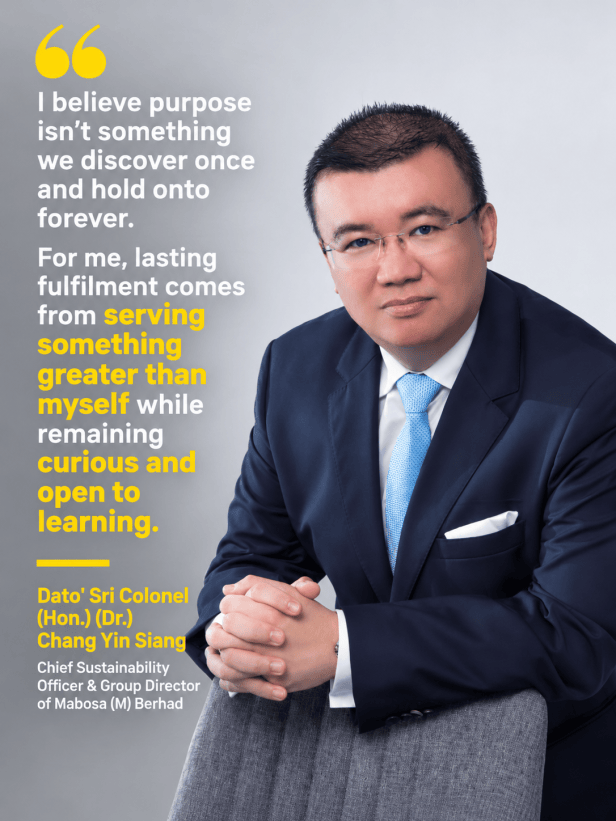
I believe purpose isn’t something we discover once and hold onto forever. It evolves as we gain new experiences and recognise opportunities to contribute. For me, lasting fulfilment comes from serving something greater than myself while remaining curious and open to learning.
If you could have a superpower for one day, what would it be and why?
I would choose the ability to transform any form of waste into useful building materials. The construction industry consumes enormous quantities of natural resources while generating substantial waste.
Imagine being able to turn agricultural, industrial and construction waste into walls, paving materials or even paint with a single touch. We could dramatically reduce waste while creating valuable resources for future development.
In fact, we are already seeing early examples of this through our partners in Thailand, who are using coconut husks to develop construction materials. With my superpower, I would simply accelerate that process a billion times!
Connect with Dato’ Sri Chang: LinkedIn