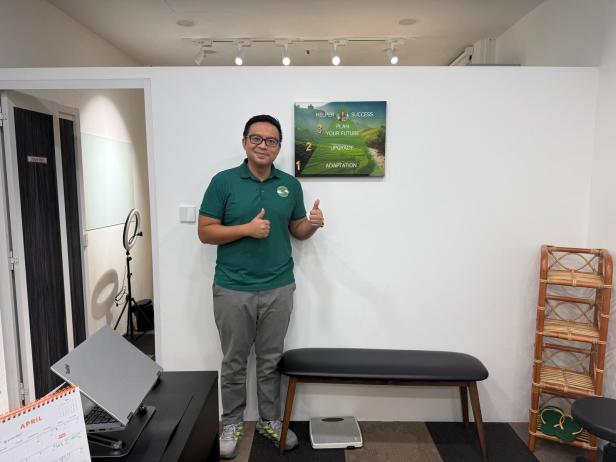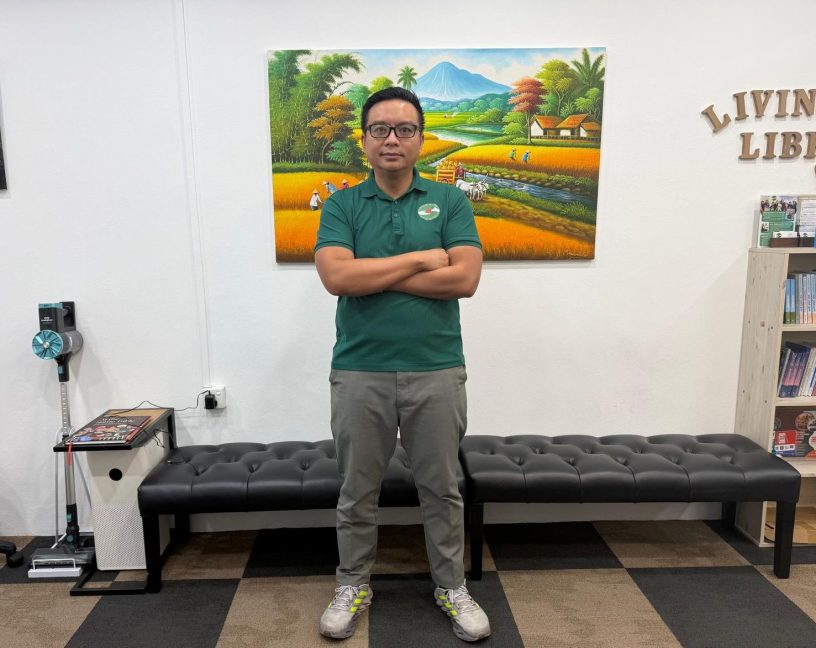
For Ierfan Ibrahim, co-founder of Living Well Maid Agency, helping families find domestic helpers goes beyond matching candidates with employers. It is about understanding people, managing expectations and building relationships based on trust, patience and empathy.
Since establishing the agency with his wife in 2017, Ierfan has navigated the uncertainties of entrepreneurship while helping more than 1,000 domestic helpers find placements in Singapore. Through his experiences, he has developed a strong belief that successful working relationships depend not only on skills but also on mutual understanding and the willingness to adapt.
You started Living Well Maid Agency in 2017. What were the biggest challenges during the early years, and did you ever question your decision?
The biggest challenge was our lack of experience. We didn’t know where to find domestic helpers or employers, so we explored different channels, including Facebook.
My wife initially took the lead in the business. Having previously worked in aviation, I considered returning to the industry if things didn’t work out. I even obtained a car for Grab driving as a backup plan. I had several contingency plans because I wasn’t entirely confident about our future.
Fortunately, we managed to arrange approximately 50 placements in our first year, which was an encouraging start for both of us.
Choosing a domestic helper is a deeply personal decision. How do you build trust with families who are worried about making the wrong choice?
Successful domestic helper employment requires the collective effort of three parties: the helper, the employer and the agency. The helper must be willing to adapt, the employer must know how to manage expectations, and the agency must provide appropriate matching and ongoing support.
Singaporeans generally prefer certainty. Employers often ask whether we can guarantee that a helper will perform well. However, no agency can guarantee that because success depends on how all three parties work together.
When everyone understands their responsibilities and communicates effectively, the chances of a lasting working relationship improve significantly.
Domestic helpers may experience homesickness, cultural differences and unrealistic expectations. How do you balance their well-being with employers’ needs?
I believe helpers must adapt to three things: their work, the people around them and their environment. Their responsibilities may involve cooking, cleaning, childcare or elderly care. They must also understand the personalities and expectations of household members.
Even everyday matters, such as navigating public transport or finding nearby shops, can be challenging.
We usually follow up during the first week and continue checking on both parties. New helpers may struggle more initially, although experienced helpers can also face difficulties when adjusting to unfamiliar households.
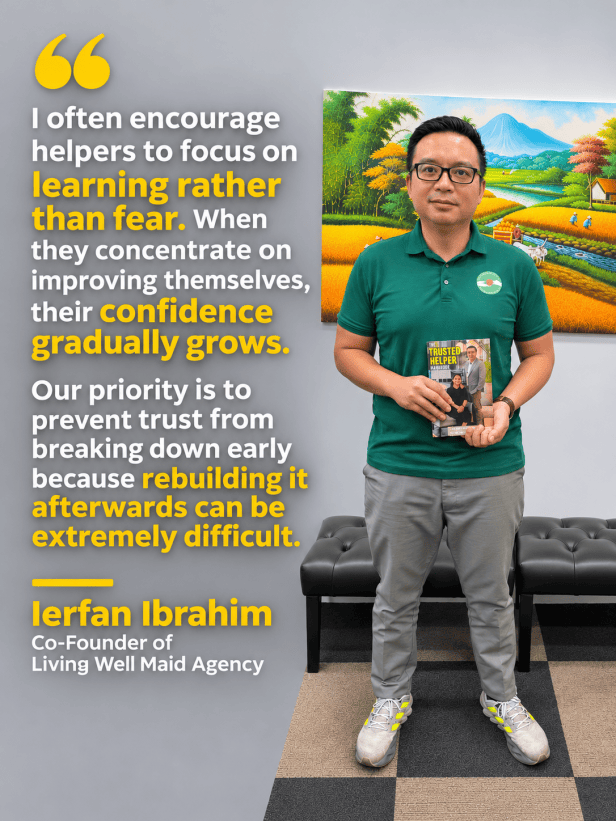
Sometimes, the underlying problem isn’t work-related. A helper may be worried about her family back home or afraid of making mistakes. I often encourage helpers to focus on learning rather than fear. When they concentrate on improving themselves, their confidence gradually grows.
Our priority is to prevent trust from breaking down early because rebuilding it afterwards can be extremely difficult.
Your agency has helped families facing challenging circumstances, including elderly care and dementia. Is there a particular experience that has stayed with you?
We have matched more than 1,000 domestic helpers, and many experiences have been memorable.
One involved a helper who wanted to resign during her first week. Previously, she had been responsible for cooking independently. However, in her new household, the employer’s wife managed the cooking while she assisted with preparation. She felt restricted because she was accustomed to making decisions in the kitchen.
We use a profiling tool which examines 16 values. Her profile suggested strong tendencies towards dominance and affection. Rather than treating the situation purely as a work problem, I tried to understand what mattered to her. During our conversation, she shared how important it was to support her children back home. I encouraged her to consider how resigning might affect their education and future.
My wife and I continued supporting her over several months. She repeatedly considered leaving and eventually interviewed with three other employers. Interestingly, after meeting them, she realised that her existing employer treated her well. She decided to stay, and both parties gradually improved their communication.
At the time of our conversation, they had been working together for almost two years. That experience reinforced my belief that understanding someone’s values can help us communicate more effectively and resolve conflicts.
With Singapore’s ageing population, how do you see the domestic helper industry evolving over the next five years?
Singapore’s ageing population will increase the demand for caregiving support. Many Singaporeans belong to the sandwich generation. They have ageing parents and young children to care for while managing full-time employment.
Domestic helpers can play an important role in supporting these families. However, I believe the industry needs more helpers with relevant caregiving skills.
We must also recognise that domestic helpers are not professionally trained nurses. Their exposure to different medical conditions is generally much more limited. Employers sometimes expect helpers to possess a wide range of skills immediately, which may be unrealistic.
Moving forward, I hope to help bridge this gap through better training while encouraging employers to be more patient and understanding.
If money, fear and other people’s opinions were no longer obstacles, what would you change about your life?
I would invest more in public education and awareness. There are many things I would like to share about managing domestic helpers, building better relationships and resolving common household challenges.
I would love to reach more people through radio programmes and other marketing channels, although these initiatives require substantial resources. Another dream is to establish a training centre in Indonesia to prepare helpers before they come to Singapore.
I believe there is a gap between employers’ expectations and helpers’ actual capabilities. Better training can help address this, but employers must also be willing to give helpers with good attitudes sufficient time to develop their skills.
What is your vision for Singapore over the next five years?
I hope Singapore becomes a society that continues striving for excellence while showing greater graciousness and empathy. I have often reflected on three characteristics that I believe are common among Singaporeans.
First, we are practical. We prefer certainty and carefully consider our decisions. While this is valuable, it can sometimes discourage us from taking calculated risks.
Second, we value efficiency. We expect things to happen quickly, which can make us impatient when others work at a different pace.
Third, we tend to conform to established systems. This helps maintain order and harmony, but it may also discourage people from speaking up or developing independent management skills.
These characteristics can influence how employers interact with domestic helpers. Singapore has achieved remarkable progress despite having limited natural resources. However, as we continue pursuing success, we must not lose our ability to understand and care for others.
My hope is that we become both highly capable and genuinely compassionate.
If you could have a superpower for one day, what would it be and why?
I would want everyone to understand and accept one another better.
As a values profiling practitioner, I believe understanding people’s personalities and motivations can improve relationships. Some people have suggested using profiling tests to select helpers with particular characteristics. However, I prefer using these tools to help employers understand and manage their helpers rather than simply filtering people according to their preferences.
In life, we will inevitably encounter people who think and behave differently from us. Instead of constantly asking why someone behaves a certain way, we should try to understand their perspective.
When people understand and accept one another, it becomes much easier to communicate, resolve differences and move forward together.
Connect with Ierfan: Instagram and TikTok.