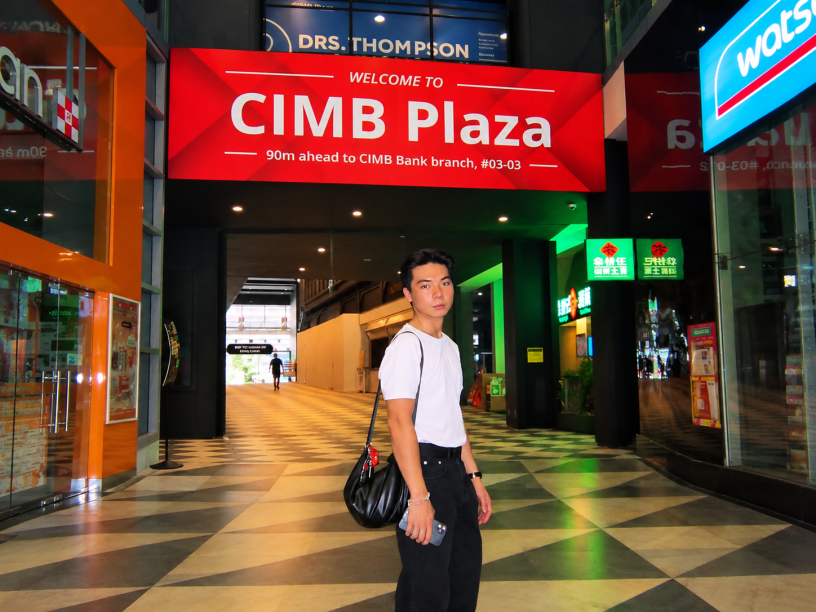
Gabriel Ang is a financial adviser who believes that financial planning goes beyond policies and products. Raised with an entrepreneurial mindset and strong family values, he developed an appreciation for personal responsibility, resilience and meaningful relationships from a young age. These principles have shaped his approach to financial advisory, where he focuses on understanding individual needs, building trust and providing solutions that make a positive difference in people’s lives.
For Gabriel, success is not simply about financial achievements but also about personal growth and the value he brings to others. He believes that every experience, whether positive or challenging, offers an opportunity to learn and improve. As artificial intelligence continues to transform the financial industry, Gabriel remains convinced that empathy, human connection and genuine care are qualities that technology cannot easily replace.
You mentioned that your personal experiences with financial planning inspired you to enter this profession. What happened, and how did those experiences shape the kind of adviser you wanted to become?
I was brought up to think with a more entrepreneurial mindset and to embrace adversity.
From a young age, my dad taught me the importance of ownership, family responsibility and thinking from a broader perspective. He encouraged me to seek mentorship from experienced people and reminded me, “To get out of the rat race is to first realise that you are in it.” My mum taught me kindness and consideration, shaping my belief in “先做人,才做事” (Be a good person before doing good work).
Through dinners with my dad and his experienced business peers, I gained valuable perspectives and learnt to build meaningful relationships through open, thoughtful conversations.
These experiences shaped the adviser I aspire to be: someone who builds trust, genuinely cares for others and believes every conversation can make a difference. Whether someone becomes my client or not, I hope they can say, “Because of Gabriel, I can see a better version of myself.”
Financial consultants often face a great deal of rejection, particularly during their early years. What was the most difficult period for you, and what kept you going?
I believe every experience, whether good or bad, offers an opportunity to learn and make better decisions. Early in my financial advisory career, I struggled to understand the value I could provide. Clarity came when I realised that my role was to be part of the solution, not the problem.
I entered this profession determined to build a lasting career, knowing that life has its ups and downs. I often remind myself, “This too shall pass,” because both good and difficult times are temporary.
My commitment is to serve my clients for as long as I can provide value. I believe everyone has a fair chance of succeeding, provided they remain committed. Ultimately, success is about running a marathon, not a sprint.
From your experience, what are some of the biggest misconceptions people have about their existing policies?
One common misconception is viewing insurance policies as “products” rather than “solutions”. My role is to understand an individual’s financial situation, identify potential problems and recommend appropriate solutions.
It is similar to visiting a doctor, who assesses your condition and medical history before recommending treatment. Ultimately, the decision to proceed remains yours.
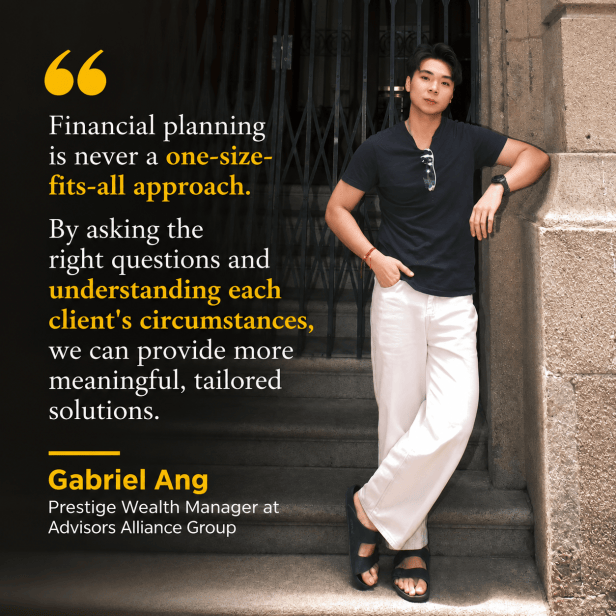
I believe some negative experiences with financial advisers arise when recommended policies fail to address clients’ actual needs. Financial planning is never a one-size-fits-all approach. By asking the right questions and understanding each client’s circumstances, we can provide more meaningful, tailored solutions.
When you meet someone for the first time, how do you determine whether they are properly insured or allocating their money wisely?
Similar to what I have shared in the previous questions, I will always want to understand how I can help, whether there is any value or perspective I can provide, and how to establish an aligned conversation.
The financial equation of money management truly varies from one individual to another, and it is my job to navigate how we can see eye to eye. Then, and only then, can I find out more about their financial views and needs regarding risk and wealth management.
AI can increasingly analyse portfolios, compare financial products and provide general financial information. What do you think a human financial adviser must offer to remain valuable in the AI era?
A very common phrase floating around these days is “Rubbish in, rubbish out.”
There is no doubt that AI is wonderful and can do all sorts of things. However, when we talk about the human touch, the ability to sense feelings, read unspoken signs and uncover hidden layers tied to the actual root of a problem is important. I think these are just the tip of the iceberg when it comes to the potential value that will keep us relevant in the AI era.
This is because human connection, the experiences gained, the perspectives learnt and knowing how it feels to share an intimate space while caring for ourselves and our loved ones are some of the essential aspects of this career that help maintain lasting relationships.
What significant experience in your life has most shaped your character, goals and the person you are today?
I believe I have had a collection of experiences that I still reflect upon to this day. Many of them have inspired me to strive for a fruitful life.
I always think about the possibilities of the multiverse and tell myself, “If I really have other versions of myself out there, I want to ensure that, in this reality, this version of myself is the best possible outcome.”
What’s your vision for Singapore in the next five years?
I think Singapore has an abundance of opportunities to grow in an effective and efficient manner.
To be very honest, I think change is always imminent. What is important to me is being adaptable to change and being a visionary. This relates more to how we can make the most out of change. When COVID-19 happened, Singapore reacted rapidly, and we unlocked many revolutionary methods to carry on with our way of life.
So, my views are optimistic. However, I am always aware of potential changes that may not work in our favour.
If you could have a superpower for one day, what would it be and why?
I think I would choose the ability to read people’s thoughts.
I like to be curious without judgement and am just “kaypoh” in general because my mind seeks new perspectives and wants to understand different views.
Connect with Gabriel: LinkedIn and Instagram.
Gabriel is a member of Rainmaker, a revolutionary movement that rallies like-minded people together based on the values of Love, Authenticity, Respect, Kindness and Youthfulness (LARKY).