Growing up in a low-income family, Desmond bought his first HDB flat at just 21, not because he had grand ambitions of becoming a property investor, but because he wanted to provide his family with a better home. That first purchase would eventually become the starting point of a property journey that saw him build a portfolio of five freehold properties by his early 30s.
After three decades in the Navy, where he eventually became Head of Maritime Security, Desmond entered real estate expecting it to be a less demanding second career. Instead, his experience as an investor and military leader helped him build another successful chapter, including growing a team of more than 100 property agents.
You bought your first HDB flat at just 21. Where did the financial mindset come from at such a young age?
To be frank, I came from a very poor family. I am the eldest of three children, with two younger sisters. My father was a school attendant at Singapore Polytechnic, while my mother was a factory worker. The five of us lived in a three-room HDB flat. My parents occupied one bedroom, while I shared the other with my sisters.
Because of our financial situation, I signed on as a regular. I wanted to relieve some of the burden on my parents while earning a stable income, and the SAF also sponsored my studies.
When I had saved enough, I was not thinking about investing or growing my assets. I simply wanted to give my family a more comfortable home. At the time, HDB allowed me to purchase a flat as the owner with my parents as essential occupiers, so I bought a five-room flat for around $100,000.
That experience taught me something important: your first property is fundamentally about meeting an essential need. It provides a roof over your head. Property prices have risen significantly since then, which makes buying that first home much more challenging for young people today.
By your early 30s, you had built a portfolio of five freehold properties. Looking back, how much of that success was good timing, and how much came from recognising opportunities that others did not see?
Timing was important. I bought my first HDB flat for around $100,000 and sold it after the Minimum Occupation Period for approximately $388,000, giving me substantial capital at a young age.
During the Asian Financial Crisis, property prices fell sharply, and I found freehold apartments selling for around $450,000. There was no ABSD then, and down payments were much lower.
My thinking was simple: if the rental covered the mortgage, the tenant was effectively helping me pay for the property. I eventually built a portfolio of five freehold properties.
Growing up poor also made me careful with money. Instead of spending what I earned, I invested much of it in property. Looking back, I benefited from good timing, but I also acted on opportunities that many others around me did not.
You spent 30 years in the Navy and eventually became Head of Maritime Security. After building such an established career, what gave you the courage to start again in property during the second half of your working life?
Property actually gave me the financial freedom to leave the Navy after 30 years, when working had become a choice rather than a necessity. I still wanted to remain active and do something meaningful, so I obtained my real estate salesperson licence. Given my own experience with property, I thought I could share what I had learnt with others.
I initially saw it as a retirement job, but things progressed much faster than expected. What began as a way to stay active eventually became a rewarding second career, both financially and personally.
What did military leadership teach you about bringing out the best in people from very different backgrounds?
My 30 years in the SAF gave me a strong foundation in leadership and team building. I was quite introverted when I was younger, but military training taught me to communicate, lead people and work towards common objectives.
When I entered property, I intended to focus on my own sales. After doing well in my first year, however, people began approaching me to join my team. It gradually grew to more than 100 agents.
My military experience helped me simplify processes, build systems and recognise individual strengths. Not everyone should be managed in the same way. Building an organisation requires leadership, training and teamwork, the same skills I had developed throughout my Navy career.
With Singapore property becoming increasingly expensive, how should younger buyers know when they are genuinely ready to enter the market?
The first question is whether there is a genuine need. When I bought my first property at 21, I did not overthink it because my family needed a better home. For young couples planning to marry, housing is usually essential. The key is to buy within their means, with an HDB flat being an appropriate starting point for some.
The bigger concern is people who delay planning because they do not see an immediate need. Property prices can change, and waiting may affect their future options.
Property can also support long-term financial planning. Building assets earlier gave me the freedom to retire from the Navy comfortably. Ultimately, buying property should be based on affordability, housing needs and longer-term retirement goals.
What is one ugly truth about success that you think others should know?
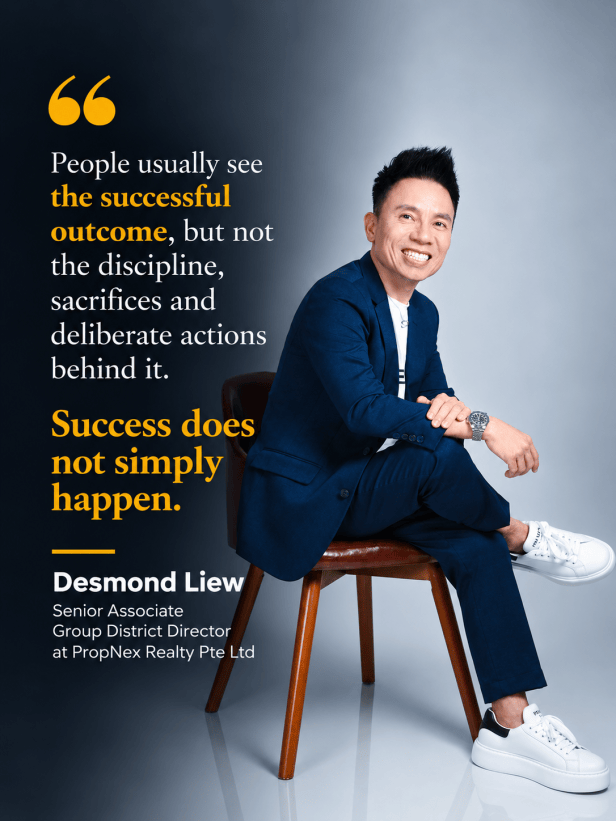
People usually see the successful outcome, but not the discipline, sacrifices and deliberate actions behind it. Success does not simply happen.
Looking back, I wish my 21-year-old self had understood the importance of planning ahead. When you are doing well financially, that is when you should remain disciplined rather than spend everything you earn. Property, for example, can act as forced savings as mortgage payments gradually build an asset.
I encourage younger clients to think further ahead. The ugly truth is that success often requires hard work, discipline, sacrifice and, importantly, time.
What is your vision for Singapore over the next five years?
Singapore already enjoys stability, security, strong infrastructure and a good quality of life. Maintaining these strengths while attracting investment and creating opportunities for Singaporeans would itself be an achievement amid growing global competition.
One concern is housing affordability for younger Singaporeans. Buying private property requires substantial upfront cash and CPF, and parental support can make a significant difference. I hope younger generations can continue progressing and building financial security while Singapore remains a stable, gracious and balanced society.
If you could have a superpower for one day, what would it be and why?
I would choose the ability to see the future. Looking back, much of my success was not the result of a master plan. I did not know when I bought my first property that prices would rise so much, nor did I leave the Navy expecting property to become such a successful second career.
Many things happened because I recognised opportunities and acted on them at the right time.
If I could see the future, I could plan accordingly and avoid certain mistakes. In some ways, that is also what I try to do today as a property consultant. I want to help clients think beyond their immediate situation and consider what their future needs might look like.
Connect with Desmond: Facebook.