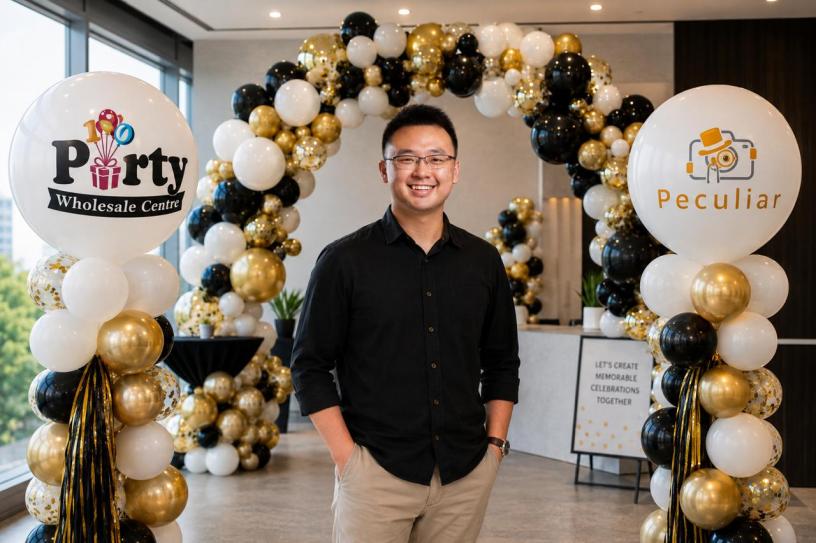
Wong Sze Xin began his career as a Financial Services Manager with Great Eastern, where he developed his experience in leadership, relationship building and helping people plan for their future. His journey later took on a more personal dimension when he became a volunteer with Make-A-Wish, working with children facing critical illnesses and their families. Through this experience, he witnessed firsthand the hardships and difficult moments that many families go through.
It was also during his time with Make-A-Wish that Sze Xin began thinking more deeply about happiness and the importance of creating moments that bring people together. This eventually inspired him to start Party Wholesale and Peculiar Booth, two businesses centred around celebrations, shared experiences and preserving meaningful memories. Across these seemingly different worlds, Sze Xin has found a common purpose: helping people protect what matters, celebrate what matters, and create memories that matter.
You run both Party Wholesale and Peculiar Booth. One helps people create celebrations, while the other helps them preserve their memories. What have these businesses taught you about what people truly value when they come together?
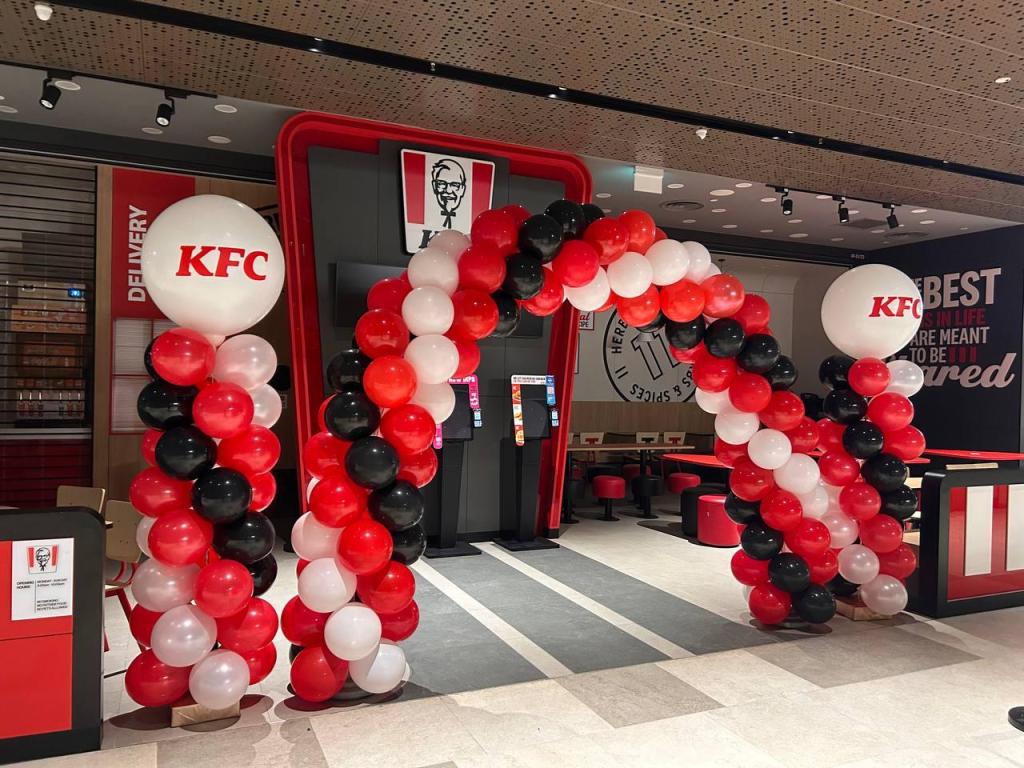
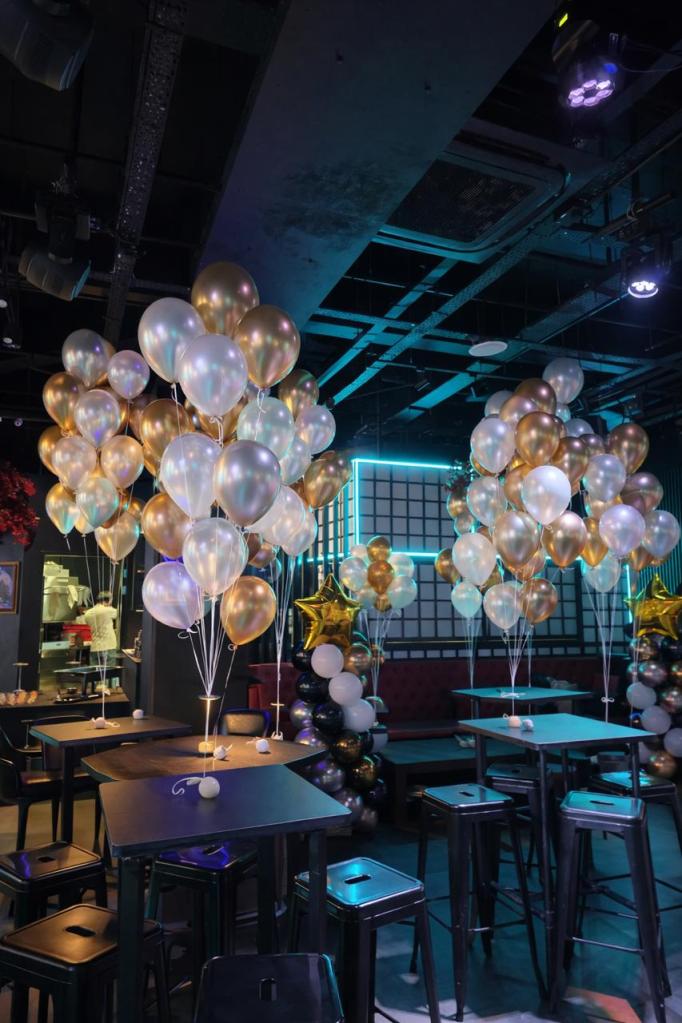
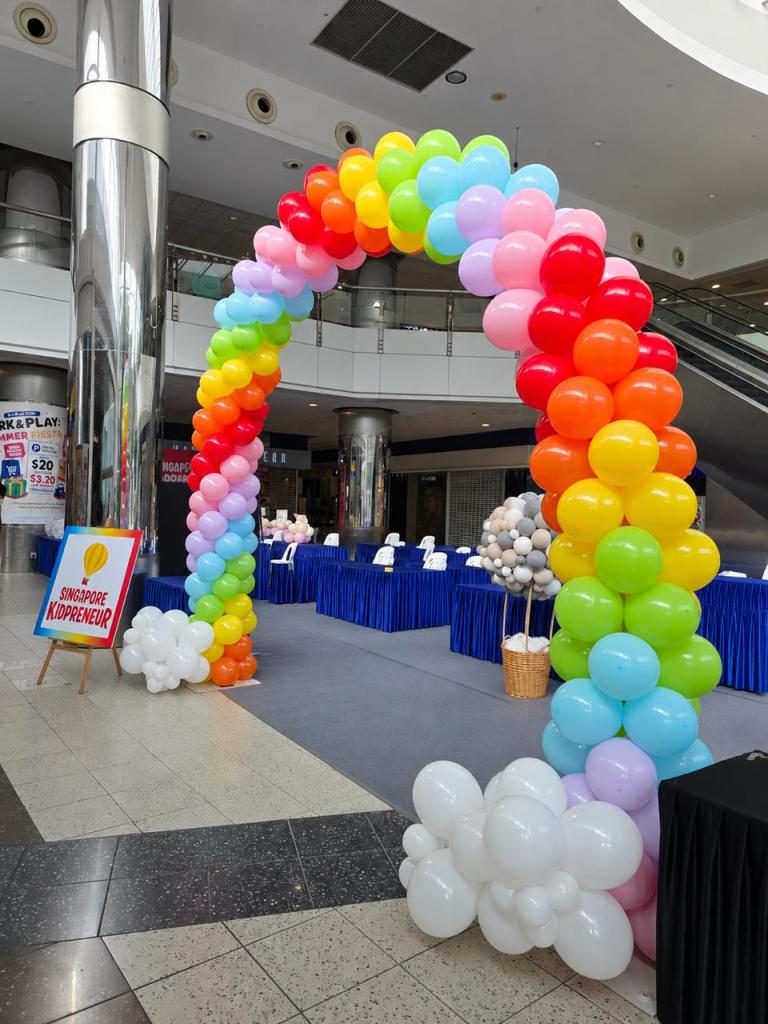
I think people value an excuse to connect. At Party Wholesale, we work mainly with balloons. On the surface, balloons are just
decoration. But when you put up a large balloon installation, something interesting happens. People naturally gather around it. They take photographs, talk to one another and smile.
The balloons aren’t really the product. The interaction they create is.
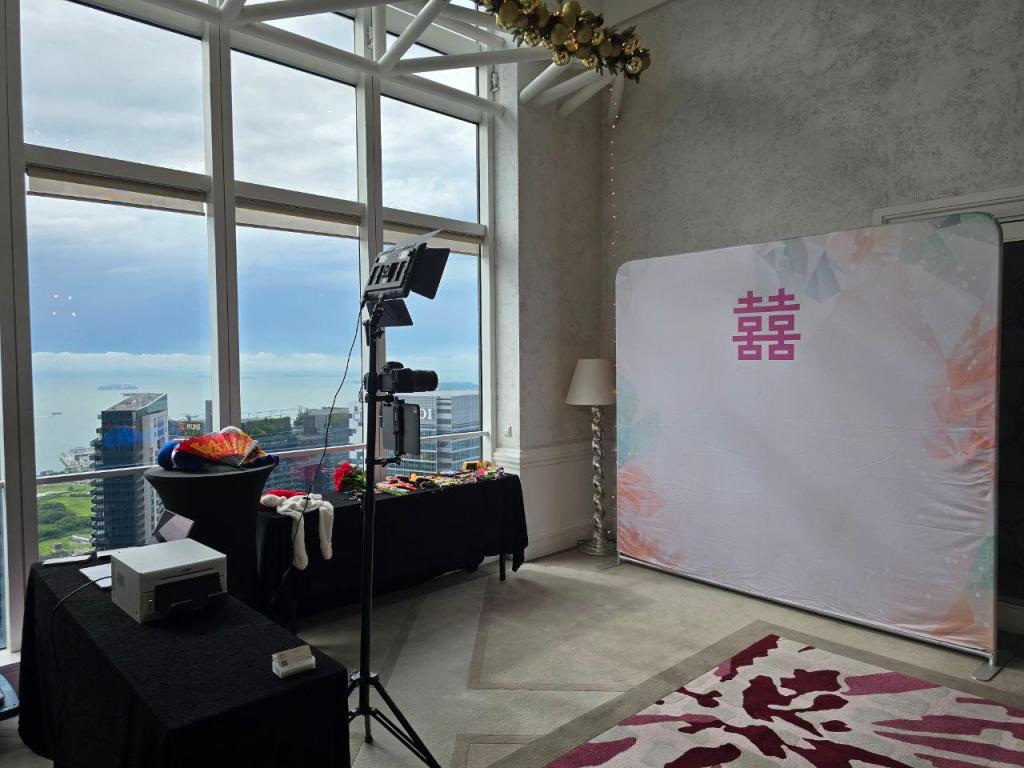
It’s the same with photo booths. At a cocktail event, the photo booth often becomes a social hub. People queue together, decide on poses, laugh at one another and sometimes do ridiculous things just to get a memorable photograph. So I have learnt that people don’t necessarily need more things.
They need more opportunities to interact. And creating the right environment is enough to make that happen.
Party trends, technology and customer expectations have changed dramatically over the years. What has surprised you most about how people celebrate today compared with when you first started?
The interesting thing is that while technology keeps changing, what people value hasn’t changed as much as we think. When I first started, people mainly wanted a standard 4R photograph. Then came film strips, card-sized prints and square photographs.
Interestingly, we are now seeing people return to more traditional physical prints.
What has changed is the experience. Previously, a photo booth was basically a camera, a backdrop and a printer. Today, people
expect AI, instant transformations, beauty filters, different outfits and completely new ways of interacting with the photograph. So I think people still want something tangible to remember the moment by. They just want a more interesting way to create it.
What are the biggest challenges you have faced while growing both companies?
Manpower and systems. The events industry doesn’t fit neatly into a nine-to-five structure. When a client arrives at an event at 9am and sees everything beautifully set up, they don’t see that our team might have started working at 3am.
That’s challenging because the business has to operate around the event, not around conventional working hours. We have therefore had to become creative with our manpower model, particularly by building a strong team of part-timers.
But I think the bigger lesson is that a business cannot depend forever on the founder simply working harder. At some point, you have to build systems that can function without you.
That’s something I’m still learning as an entrepreneur.
You are also a Financial Services Manager with Great Eastern, leading a team of agents. What are the biggest leadership lessons you have learnt?
Two things stand out.
The first is that silence protects comfort, while tough conversations protect the team. It’s very easy as a leader to avoid saying something difficult because you don’t want to hurt someone’s feelings. But sometimes, by avoiding the conversation, you’re actually doing the person and the team a disservice.
If something needs to be said, say it honestly with the intention of helping.
The second is humility. I have learnt that being a leader doesn’t mean you have to be the smartest person in every room. Sometimes, the best thing I can do for someone is to say, “I’m probably not the right person to help you with this. Let me connect you with someone who is.”
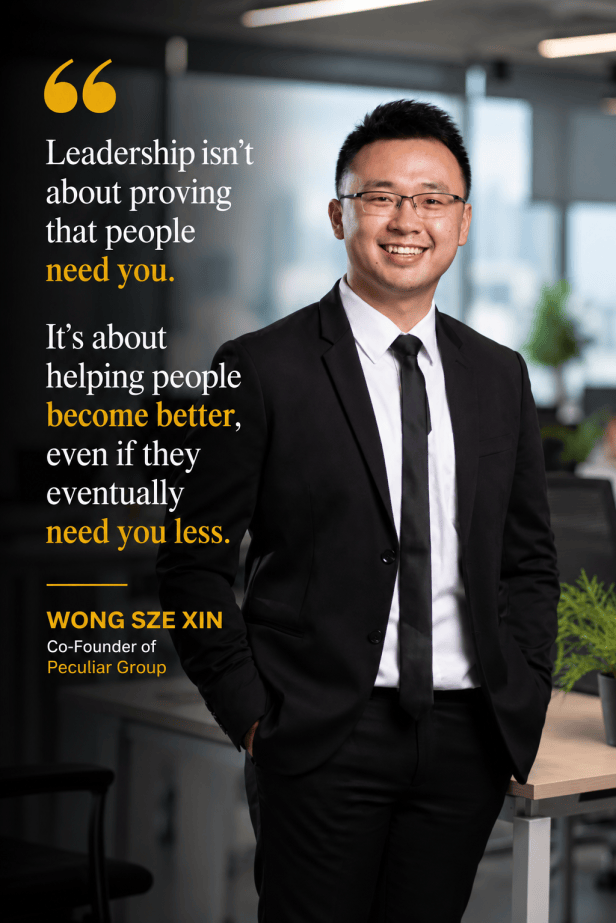
Leadership isn’t about proving that people need you. It’s about helping people become better, even if they eventually need you less.
I understand that you are also involved in voluntary work. Can you share more about what you are currently involved in?
I volunteer with Make-A-Wish in two main roles.
The first is as a wish granter. Make-A-Wish grants wishes to children with critical illnesses, including those who are undergoing treatment or have completed it. The purpose is to give them hope and something meaningful to look forward to during their journey.
As wish granters, we speak with the children to understand their “one true wish” and then work towards creating an extraordinary experience for them. We organise and coordinate everything required to make that special day possible.
More recently, I also became a community partnership volunteer, the first in Singapore in this role. I connect Make-A-Wish with businesses and explore creative ways they can collaborate through fundraising, outreach and sponsorships.
I enjoy this because it brings together something I naturally enjoy and that is connecting people who can create value for one another.
If you knew today was the last day of your life, what would you do?
I am a very simple person. I would go to my parents’ home with my wife and siblings and have a meal together. I would want to eat my mother’s fried bee hoon and my father’s kaya. There is nothing particularly elaborate about them, but they represent the tastes and memories of my childhood.
My father used to be a business owner and ran a coffee shop many years ago. His kaya is something our family still talks about today.
If it were my last day, I would simply want to spend it with my family, enjoying those familiar things that remind me of home. Because when everything else is stripped away, the things that matter most are usually the things we have had all along.
What is your vision for Singapore over the next five years?
I hope Singaporeans become more willing to speak up for themselves instead of constantly hiding their emotions or thoughts.
When people keep things inside, problems are rarely solved. Instead, those feelings can accumulate and become even more difficult to address.
I would like to see people become more comfortable expressing themselves honestly, communicating their concerns and having meaningful conversations rather than allowing issues to remain unspoken.
If you could have one extraordinary ability for a day, what would it be and why?
I would want the ability to give people clarity.
Many people already have the ability and potential to achieve something meaningful, but they may lack clarity about what they actually want. As a result, their abilities can sometimes go to waste.
If I could help someone gain clarity about their direction, decisions or priorities, even for just one day, that is the ability I would choose.
Connect with Sze Xin: PeculiarBooth, PartyWholesale and Instagram.