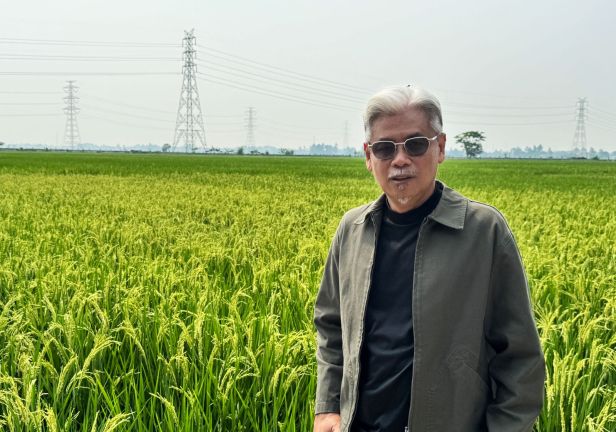
For more than two decades, Matthew built his career helping brands tell compelling stories through photography, filmmaking and visual storytelling. Today, however, he is focused on a different narrative—one that could shape the future of humanity: restoring soil health, strengthening food security and creating a more sustainable world.
As the co-founder & CEO of Bio Ark Global, Matthew is transforming organic waste into regenerative soil solutions that help farmers improve crop yields while healing the land. His mission extends beyond agriculture; it is about preparing a healthier planet for future generations and proving that commercial success and environmental stewardship can go hand in hand.
What inspired you to start Bio Ark, and what problem is it trying to solve that conventional agriculture has overlooked?
For over 20 years, I worked in the creative industry, helping brands tell stories through photography, filmmaking and branding. Over time, however, I felt compelled to tell a much more urgent story—one about food security, soil health and the future of our planet.
In 2018, I worked with local authorities in China on agricultural poverty alleviation projects. That experience transformed my perspective. I realised agriculture is not just about feeding people; it is about caring for the land, supporting farmers and safeguarding future generations.
Conventional farming has focused on increasing yields, often at the expense of soil health. Decades of heavy chemical use have weakened soil fertility and reduced the nutritional value of our food.
At Bio Ark, we believe soil is not just dirt. It is a living ecosystem. We rebuild soil infrastructure by transforming organic waste into nutrient-rich regenerative inputs, allowing nutrients to return to the soil and restoring its natural cycle. Rather than simply telling this story, I wanted to become part of the solution.
What have been the most difficult moments since founding Bio Ark?
One of the biggest challenges has been communicating our mission across cultures, particularly while working in Indonesia. Coming from Singapore, many questioned what we could contribute to agriculture. Language and cultural barriers also made it difficult to build trust.
Agriculture requires patience. Farmers need to see results, partners need confidence in the process, and the business must remain commercially viable. These experiences have taught me resilience, empathy and patience. In learning to restore the soil, I have also found myself growing as a leader.
You transform organic waste into nutrient-rich soil inputs. Can you explain the process in simple terms?
We collect organic waste such as animal manure and agricultural by-products before valuable nutrients are lost through decomposition.
Using proprietary biotechnology and beneficial microbes, we recover those nutrients and stabilise them through a controlled fermentation process. The nutrients are then blended with biochar and activated carbon to produce a high-density solid fertiliser.
In simple terms, we collect waste, treat it, enrich it and return it to the soil. It is a closed-loop system that turns waste into valuable resources.
What gives you hope despite the environmental challenges we face?
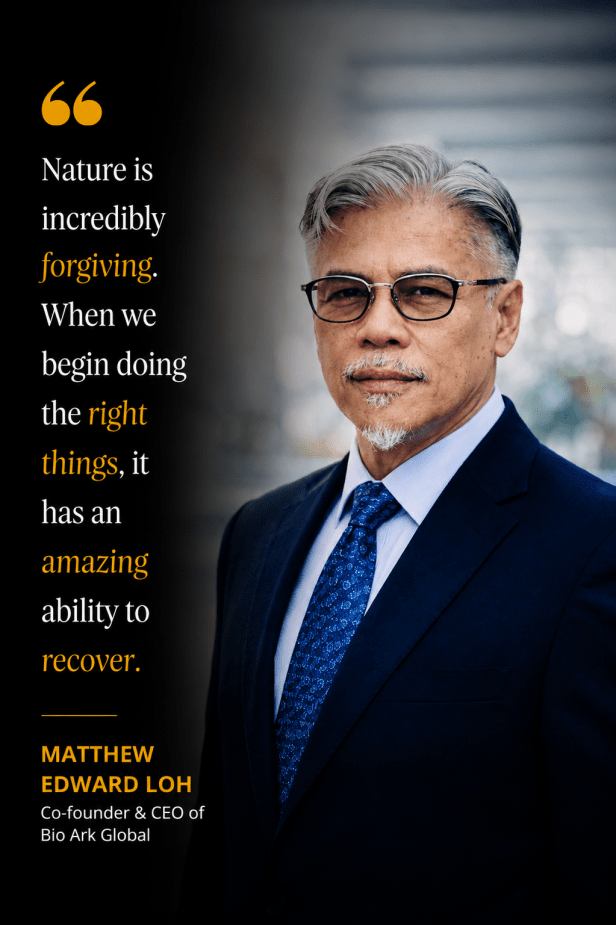
Nature is incredibly forgiving. When we begin doing the right things, it has an amazing ability to recover.
I have seen soil improve within a single growing cycle, crops become healthier and farmers regain confidence as they learn to care for the land rather than simply extracting from it.
Environmental challenges are serious, but I believe restoration is possible. Seeing farmers embrace their role as stewards of the land gives me hope that meaningful change can happen.
How do you balance commercial realities with a long-term environmental vision?
I do not believe business and environmental sustainability have to compete.
Many assume environmental solutions require sacrificing profitability, but our goal is to create value for both. We help farmers transition towards regenerative agriculture without compromising crop yields or their livelihoods.
Our field trials in Indonesia have shown that our products can deliver equal or better harvests while improving soil health and reducing environmental damage.
Purpose must be practical. A mission without a sustainable business model cannot scale, while a business without purpose eventually loses direction. Our approach aims to create value for farmers, partners, investors, communities and the environment alike.
What is one belief you have held for years that most people still disagree with?
I believe we should not only prepare a room for the next generation—we should prepare the Earth for them. Parents spend months preparing nurseries, yet we often overlook the world our children will inherit: clean air, healthy soil, nutritious food and safe water.
Several years ago, I even told my daughter not to have children until I had done my part to improve the world. It may sound extreme, but I believe future generations deserve more than our good intentions. They deserve a healthier planet.
That belief continues to drive everything we do at Bio Ark.
What is your vision for Singapore in the next five years?
Singapore has become a global leader because of its strong infrastructure, governance and long-term planning.
My hope is that we apply those same strengths to soil health and sustainable agriculture across Southeast Asia.
Although Singapore has limited farmland, we possess world-class expertise in biotechnology, governance and innovation. I believe we can become a regional leader in circular agriculture, soil restoration and sustainable food systems.
Singapore can serve as the knowledge hub while helping neighbouring countries restore soil, strengthen food resilience and transform waste into valuable resources.
If you could have a superpower for one day, what would it be and why?
I would love people to see the microscopic world beneath the soil. Beneath our feet is an extraordinary ecosystem of microbes, fungi, roots and countless living organisms that sustain all life above ground. Because we cannot see them, we often ignore their importance.
If everyone could witness this hidden world, I believe they would think very differently about farming, food, waste and environmental stewardship.
People protect what they can see. My hope is that seeing the living world beneath the soil would inspire more people to protect it.
Connect with Matthew: BioArk, Facebook and YouTube.