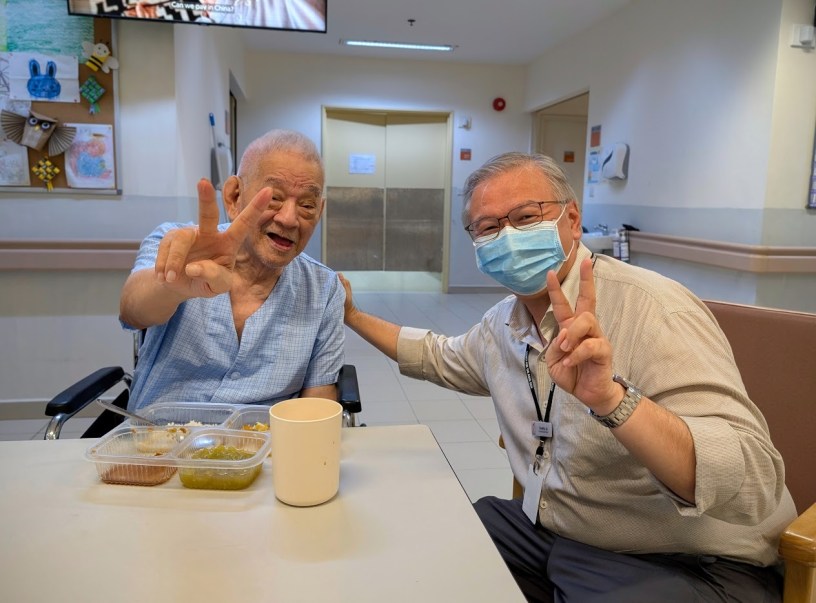
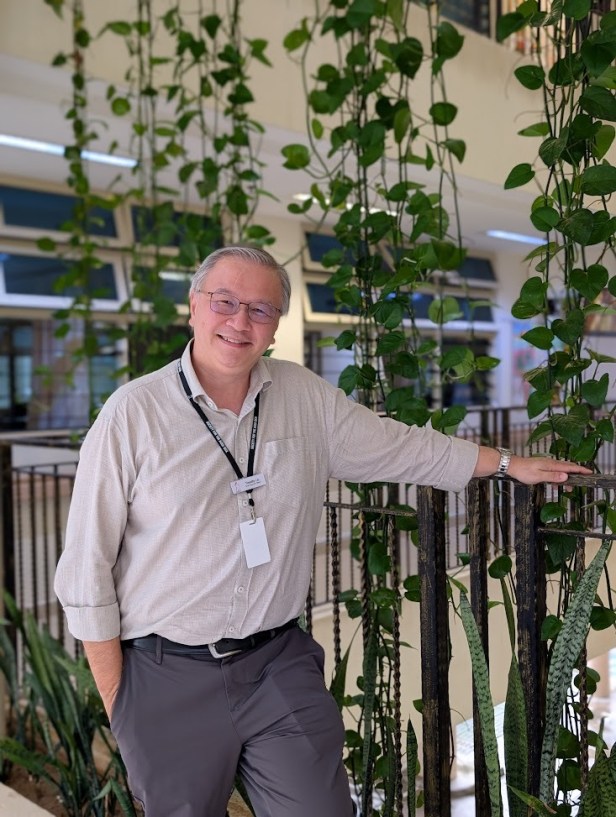
Meet Timothy. His journey into healthcare did not begin in the medical field. After years in regional sales and business development within the engineering and technology industry, his life took a different direction when both his parents fell seriously ill. With his mother diagnosed with Alzheimer’s disease and his father diagnosed with a liver tumour, Timothy made the difficult decision to leave his corporate career to care for his family. That turning point eventually led him into hospice care, mental health, and eldercare leadership.
Today, as CEO of the Society for the Aged Sick, Timothy brings together his experiences in hospice care, mental health, and community healthcare to advocate for dignity, compassion, and meaningful support for the elderly. His work centres not only on medical care, but also on restoring humanity, connection, and purpose to those navigating ageing and illness.
You have held leadership roles across hospice care, mental health, and now as CEO of the Society for the Aged Sick. What has been the most defining experience in your journey so far?
The most defining part of my journey was really my own parents falling ill and ageing. My mother had Alzheimer’s disease, while my father, who was her primary caregiver, was later diagnosed with a liver tumour. At that point, I left my corporate role in engineering and technology because I could no longer travel frequently. By what I would call divine opportunity, I joined Dover Park Hospice, and that became my entry into healthcare.
Another defining moment that stayed with me happened during my time in hospice care. I saw a patient sitting outside along a naturally ventilated corridor on a very hot day. I asked him why he was sitting outside instead of staying in the cooler room. He told me, “I’ve been in an air-conditioned room for months, and sweating makes me feel alive.”
That moment changed me deeply. We often complain about discomfort, but for someone nearing the end of life, something as simple as sweating became a reminder of being alive. I realised that the true meaning of life is often found in the simplest moments.
You worked closely with patients at the end of life. What did that experience teach you about life itself?
Working in hospice care taught me that life is about far more than career success or material achievement. Nobody nearing the end of life tells you they wished they had worked harder or earned more money. Instead, many regret not spending enough time with their loved ones or not cherishing their relationships more deeply.
I remember one patient who was estranged from his daughter. We even tried helping him reconnect with her, but unfortunately it did not happen. Experiences like these remind us that relationships and human connection matter far more than external achievements.
My faith is very important to me. I believe every person is made in the image of God, regardless of their condition, mental state, or life history. That belief reminds me that every individual deserves dignity, care, and compassion.
Singapore is ageing rapidly. What are the biggest challenges we face in caring for the elderly over the next decade?
There are several major challenges. One is the changing expectations around care. The current generation of elderly Singaporeans are generally very resilient and content with basic needs being met. However, the younger ageing generation will likely expect more dignity, meaning, engagement, and quality of life in their later years.
Another challenge is manpower. Many of our caregivers come from neighbouring countries. However, these countries are also experiencing ageing populations, and their own families increasingly require care. We are already seeing many caregivers return to their home countries to care for their ageing parents. This means Singapore will need to find more sustainable ways to support eldercare locally.
At the same time, with rising living costs and smaller family units, both spouses often need to work, making home caregiving more difficult. Families will increasingly face difficult decisions between caring for loved ones at home or placing them in care facilities.
Having served at the Institute of Mental Health, what are some overlooked mental health challenges among the elderly today?
Loneliness and social isolation are major challenges among the elderly today, especially for seniors who live alone or feel left behind by rapid digitalisation. Many elderly people struggle to remain socially connected, and this can significantly affect their mental health.
That is why community engagement is so important. Active ageing centres, grassroots organisations, and faith communities all play a role in helping seniors stay connected. Beyond programmes and activities, it is really about creating genuine human relationships and ensuring nobody feels abandoned or forgotten.
You have led both operational and strategic roles. What makes healthcare leadership different from leadership in other industries?
In many industries, success is largely measured by profitability and financial outcomes. Healthcare is different. While financial sustainability is important, healthcare is fundamentally a social service. The true outcomes are dignity, quality of life, emotional well-being, connectedness, and meaningful human care.
These things cannot always be measured in dollars and cents. Once we reduce healthcare entirely to numbers and metrics, we risk losing the very humanity that healthcare is supposed to protect.
What keeps you grounded when dealing with emotionally heavy work?
My faith is very important to me. I believe every person is made in the image of God, regardless of their condition, mental state, or life history. That belief reminds me that every individual deserves dignity, care, and compassion.
Even when people are at their lowest or most vulnerable, there is still worth and humanity within them. That perspective keeps me grounded and helps me continue serving with compassion.
What is your vision for Singapore in the next five years?
I hope Singapore becomes a more compassionate society towards both ageing and mental health. There is still significant stigma surrounding these issues. We often see ageing as a burden rather than a natural process of caring for those who once cared for us.
Singapore is highly pragmatic, and while pragmatism has helped us succeed economically, we sometimes reduce everything to productivity and financial value. I hope we can learn to value things that cannot be measured in dollars, such as dignity, compassion, relationships, and community care.
If you could have a superpower for one day, what would it be and why?
I would want the ability to heal people — physically, mentally, and emotionally. There is so much suffering in the world, not just physical illness but also emotional pain and brokenness. If I could help heal people and restore hope, even for one day, that would be my greatest wish.
Connect with Timothy: LinkedIn.
Timothy is a member of Rainmaker, a revolutionary movement that rallies like-minded people together based on the values of Love, Authenticity, Respect, Kindness and Youthfulness (LARKY).