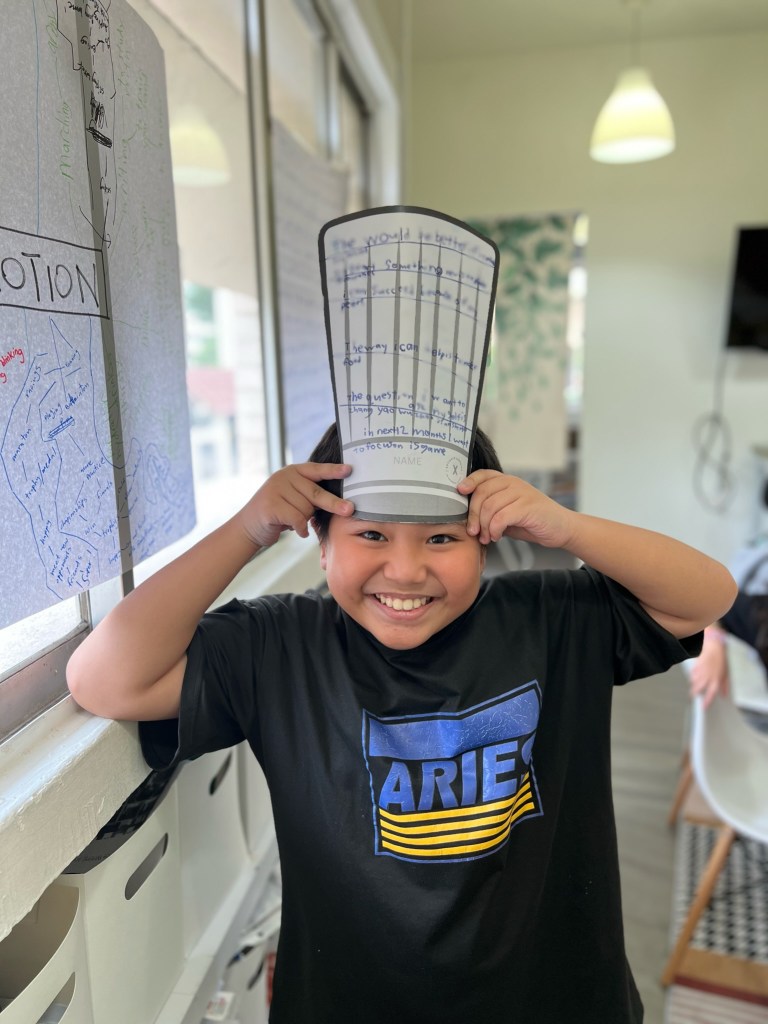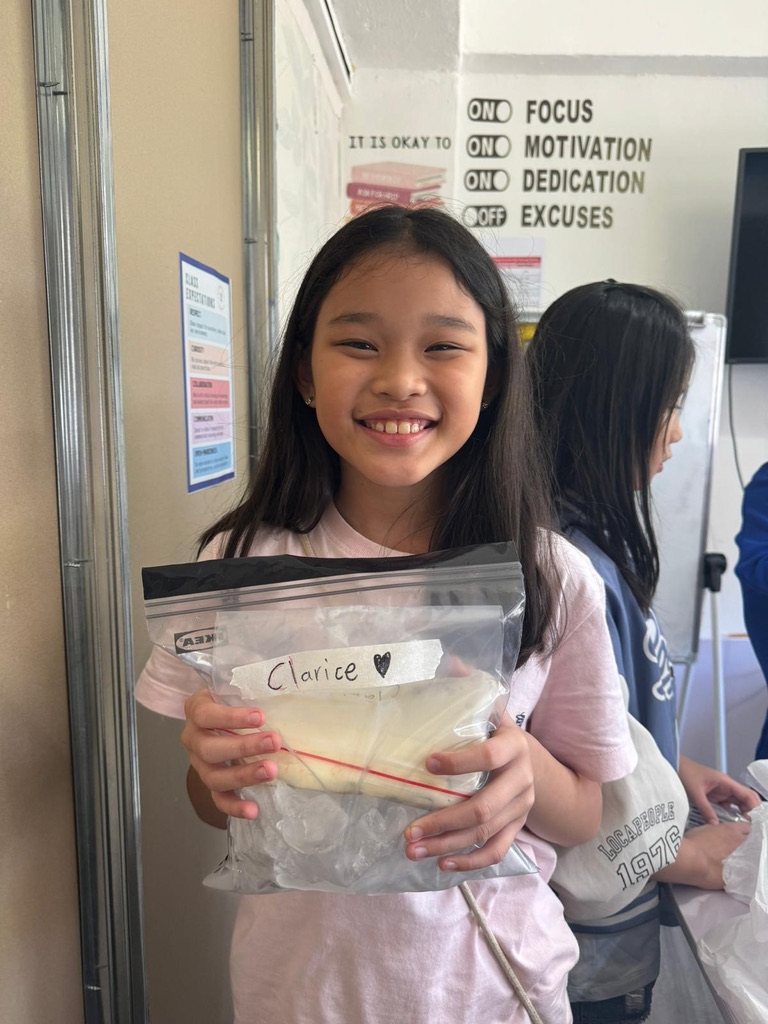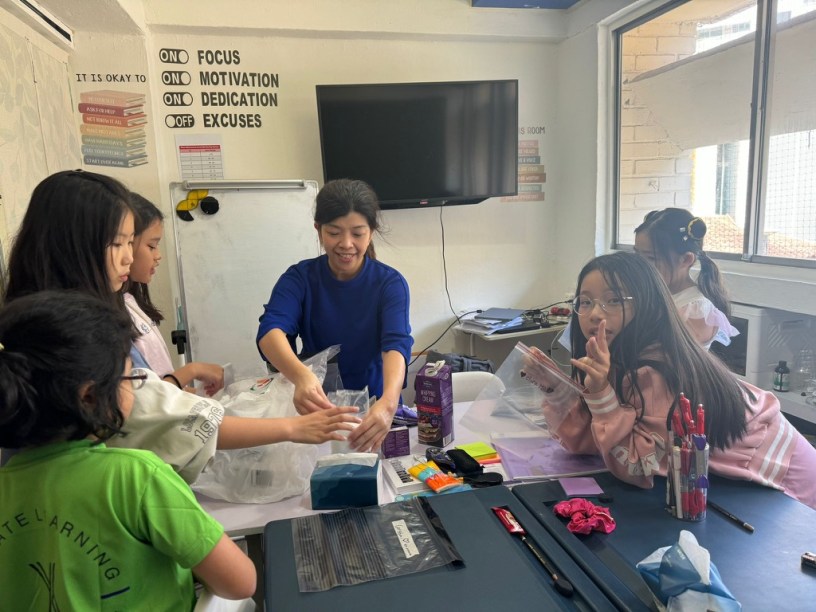
Meet May. As the driving force behind Edtivate Learning, she is building a next-generation learning centre whose focus extends well beyond exam results. Recognising that students will graduate into a world shaped by artificial intelligence, the centre has built its programmes to impart transferable thinking skills such as analytical reasoning, metacognition, and making inferences. Rather than drilling students on fixed formulas and model answers, tutors coach students to become independent thinkers and confident communicators.
May believes that academic performance is just one dimension of development. That’s why Edtivate Learning tutors are trained to “teach the whole person”. Edtivate Learning’s holistic teaching strategies aim to strengthen students’ confidence, resilience, self-awareness, social, and communication skills. The end goal is to empower each student to thrive beyond the classroom and be ready to navigate the uncertainties of the AI-driven world.
For many students, learning is associated with rote memorisation. What led you to focus on teaching students how to learn instead?
I paid attention to what was not working. I saw students who memorised solutions, yet froze when a question changed slightly. These were often the most hardworking students. That showed me they were not lacking effort, but transferable thinking skills.
For example, a student might practise multiple compositions and perform well, but struggle when a question requires a different perspective. The issue is not content, but the ability to adapt their thinking. At Edtivate Learning, we help students explore alternative pathways to the right answer. Instead of asking, “Did you get it correct?”, we ask, “How did you arrive at this?”
Many parents prioritise grades. How do you help them see what lies beyond academic results?
I am not against prioritising grades, because grades can be an indicator of concept mastery. Grades are outcomes, but the critical success factors are varied, such as how a child thinks, handles mistakes, and responds under pressure. Two students may score the same grade, but lose marks for different reasons. One may be due to carelessness, while another may misunderstand the question. Without analysing this, we risk solving the wrong problem.
We focus on reviewing scripts, identifying thought processes, and diagnosing the root cause before prescribing solutions. We ask open-ended questions that require synthesis across topics. We analyse before we remediate, because grades alone do not tell the full story.
With AI becoming more powerful, what skills will matter most moving forward?
The value of knowing is decreasing, while the value of thinking is increasing. Apart from AI fluency and literacy, what matters now is the ability to ask precise questions, interpret information, communicate clearly, and adapt to uncertainty.
It is less about “knowing everything” and more about being able to work with AI while supplying the parts AI lacks: context, taste, judgment, and accountability.
At Edtivate, we guide students through a structured thinking process by asking what they know, what they need, and how the two connect. “What they know” is the factual base, prior knowledge, and evidence already available. “What they need” is the goal, missing information, constraints, or decision criteria. “How the two connect” is the thinking process: identifying the bridge between current understanding and the next useful move.
When students learn to direct their thinking, they can also leverage AI effectively.
We also hold learning bootcamps that teach real-world skills. At our content lab, students can pick up personal branding and social media content creation. We also hold bootcamps on visual storytelling, as well as drama writing and film editing. These help students apply what they have learnt and connect learning to real-life scenarios.


Metacognition is simply being aware of how you think. A student with strong metacognition skills can step back and observe their mental processes, noticing how they learn, why they’re confused, or whether their understanding is solid. People with strong metacognition tend to learn faster and problem-solve better.
Metacognition is a key part of Edtivate Learning’s pedagogy. How would you explain this concept to parents?
Metacognition is simply being aware of how you think. A student with strong metacognition skills can step back and observe their mental processes, noticing how they learn, why they’re confused, or whether their understanding is solid. People with strong metacognition tend to learn faster and problem-solve better. This is important because, in the AI era, it’s less about knowing things, but knowing how to assess, adjust, and adapt.
There is a difference between saying, “I do not get it” and “I do not get it because I misunderstood this part.” When students reach that second level, they are able to stop waiting for help and engage in self-directed learning. As they study, they might ask themselves: “Do I understand this?”, “What strategy am I using, and is it working?”, and “Where did my thinking go wrong?”
It’s about noticing what’s happening in your mind and adjusting based on that awareness. Rather than rushing students towards answers, Edtivate tutors are trained to help students develop the self-awareness to catch and plug their own knowledge gaps. This reflects what learning research shows: students who can monitor their own understanding outperform those who simply put in more hours.
What mindset shifts do tutors need today?
Tutors should move from “I explain, you copy” to building thinking skills.
The goal is to empower students to think critically and take ownership of their learning. This means designing lessons that build problem-solving, curiosity, and resilience, not just coaching for the next test or exam.
Instead of giving better answers, tutors must design better questions that require evaluation and synthesis. For instance, instead of “What were the causes of the fall of Singapore in 1942?”, a better question is: “How do these three conflicting primary sources challenge the traditional narrative of the fall of Singapore?”
In the AI era, the goal is not to teach students how to get an A, but to navigate ambiguity and complexity. Instead of providing the solution, they should think of their work as “designing a quest” to trigger inquiry-based learning. This requires patience and allows students to struggle productively.
Often, pausing and asking the right question is more powerful than immediately providing the solution. At Edtivate Learning, tutors are guided by five core principles – diagnose before you prescribe, question before you explain, build process and not dependency, protect productive struggle, and teach the whole person.
For us, the ultimate mark of our success is when a student no longer needs us. When they can judge how well they have understood something, adjust their studying based on their self-assessment, and know when to ask for help, we know they have learnt how to learn.
Where do you see your work heading in the next three years?
I see Edtivate Learning evolving into a learning ecosystem where students, tutors, and systems are aligned around building transferable thinking skills.
By investing in our tutors’ professional development, they are empowered to develop students’ critical thinking, problem-solving, analytical thinking, creative thinking, and adaptability.
Our students will become independent thinkers who can direct their own learning, tackle problems with confidence, and communicate well.
What is your vision for Singapore in the next five years?
Singapore is already strong academically. The next step is helping students become more comfortable with uncertainty, willing to try, fail, and adapt. If we can move in that direction, we will not just produce high-performing students, but resilient, adaptable individuals who can thrive in unfamiliar situations.
If you could have a superpower for one day, what would it be and why?
I would want to be invisible in a room, simply to observe. I want to see the moment a student figures something out, a parent shifts from worrying about grades to trusting the process, and a teacher allows space for thinking to happen.
Thinking often happens in silence, and sometimes the most powerful thing we can do is step back and allow it to unfold.
Connect with May: EdtivateLearning and LinkedIn.