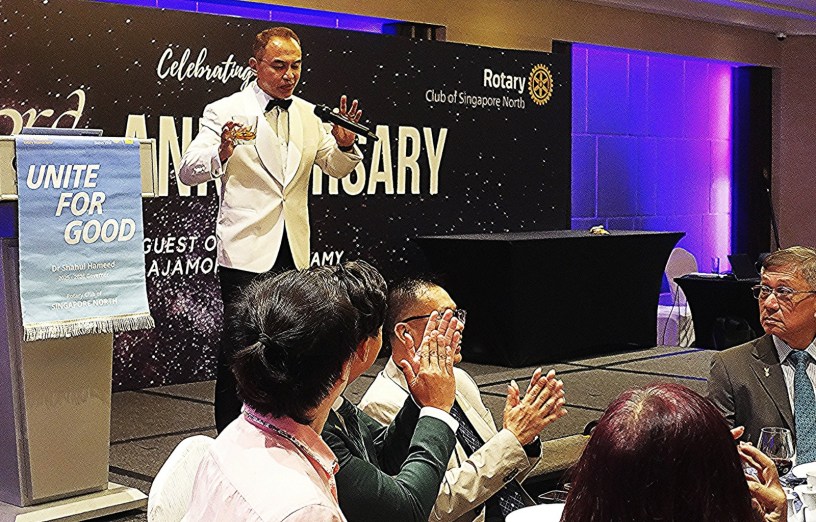
Meet William, the co-founder of Adams and Marshall, a modern law firm established during the COVID period with a clear mission: to break away from legacy legal practices and build a more responsive, technology-driven firm centred on client access and value. With over three decades of legal experience, William brings a pragmatic, commercially grounded approach to law, focusing not just on legal theory but on real-world outcomes.
Beyond commercial disputes and cross-border transactions, William is also deeply involved in Islamic family legacy planning under the Shafi’i school of Islam, an area that requires both legal precision and cultural sensitivity. Known for treating law as both a discipline and an art, he believes the best legal solutions are rooted in understanding people, psychology, and context, not just statutes.
What inspired you to start Adams & Marshall, and what gap in the legal industry did you aim to address when you founded the firm?
Adams & Marshall was established during COVID in 2022. One key realisation from that period was that many law firms were still operating in legacy modes, heavily reliant on paper, hard copies, and outdated administrative systems.
COVID forced us to rethink how law firms should operate. We saw an opportunity to build a firm that was more tech-driven, responsive, and closely connected to clients. Clients can access their lawyers more directly compared to larger traditional firms, and we deliver expertise comparable to top-tier practices but at better value.
By leveraging technology to reduce overheads, we pass that efficiency on to clients.
Your team handles a wide range of commercial contracts. What are the biggest mistakes SMEs make when drafting or signing contracts?
The biggest mistake is not thinking contracts through at the outset. This applies not only to SMEs but to businesses of all sizes. Many SMEs conclude agreements informally, sometimes even through WhatsApp, without considering scenarios such as delays, changes in scope, termination, or disputes.
Contracts should at least cover the basics: scope of work, timelines, pricing, variations, termination rights, and dispute mechanisms. The best time to negotiate these points is at the beginning, when relationships are cordial. Rushing into deals often leads to far more expensive problems later.
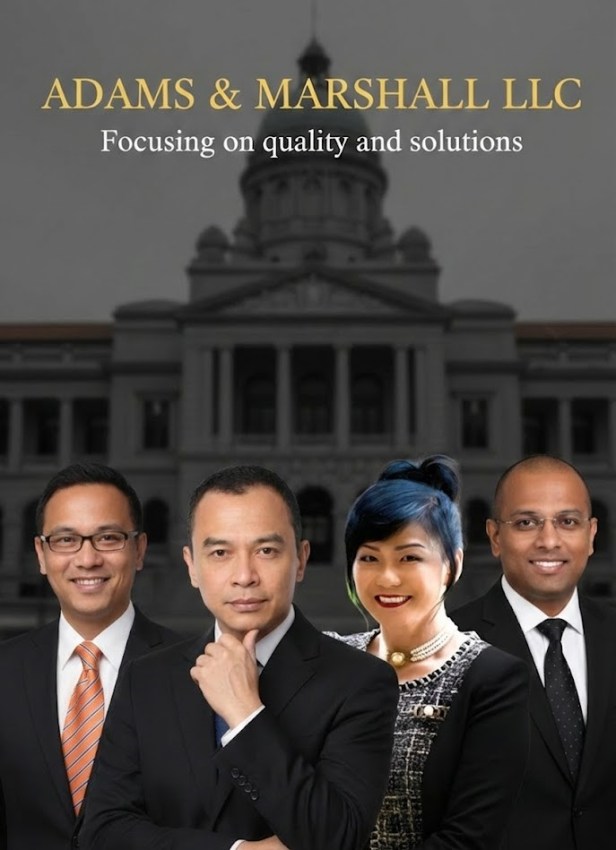
COVID forced us to rethink how law firms should operate. We saw an opportunity to build a firm that was more tech-driven, responsive, and closely connected to clients.
Adams & Marshall offers mediation, negotiation, and litigation. How do you decide which route is best for a client facing a dispute?
Litigation may be the most profitable for lawyers, but it is rarely the best first option for clients. Our role is to put the client’s interests first. That requires understanding the client’s business, objectives, constraints, and the personalities involved on the other side.
Lawyering is not a science; it is an art. In one case, a client had signed a billion-dollar contract with unfavourable terms and had already paid a large sum. Litigation would have been difficult, but through strategic negotiation backed by the threat of litigation, we recovered most of his money.
Litigation, mediation, and negotiation are simply tools to achieve the client’s goals, whether those goals involve cost, time, reputation, or preserving relationships.
You specialise in Islamic family legacy planning governed by the Shafi’i school. What challenges do Muslim families face with inheritance laws?
Islamic inheritance law is structured and practical, administered through the Syariah Court in Singapore. Shares are clearly defined under Faraid, which reduces disputes. However, challenges arise when families have no male heirs. In such cases, a portion of the estate may go to Baitulmal, potentially up to 50 percent.
This can force families to sell assets like HDB flats. Muslims cannot override Faraid through a will, so planning must be done during one’s lifetime using lawful mechanisms. This is a complex area with limited case law, making early advice essential.
How do you balance legal risk with business ambition in cross-border or high-stakes transactions?
In practice, ambition usually wins. Clients are driven by commercial opportunity and profit, and every deal carries risk. Our role is to explain those risks clearly, including legal, cultural, and operational factors. In one cross-border case involving Brazilian and Chinese parties under Singapore law, the dispute arose not from legal structure but from cultural and operational misunderstandings.
Through negotiation and mediation rather than arbitration, we preserved the business relationship. Risk can be managed through neutral venues, governing law clauses, and dispute resolution mechanisms, but ultimately the commercial decision rests with the client.
What makes you special as an individual?
I do not see myself as particularly special. I have simply had varied experiences that shaped my perspective. Over time, I have learned that we do not know everything and must remain open to learning. What defines me is pride in doing things well.
Whether in law or life, if I take responsibility for something, I do it properly. That standard comes from my parents, especially my father, who taught me that if something is worth doing, it is worth doing well.
What’s your vision for Singapore in the next five years?
Five years is a short time, but I hope Singapore remains peaceful, compassionate, and more closely connected as a society.
If you could have a superpower for one day, what would it be and why?
I would give everyone the ability to pause and think before speaking or making important decisions, considering how their actions affect others. Not to make everyone saints, but to encourage empathy, responsibility, and thoughtful action so we can live richer, calmer lives together.
Connect with William: Adams&Marshall, LinkedIn and Facebook.
William is a member of Rainmaker, a revolutionary movement that rallies like-minded people together based on the values of Love, Authenticity, Respect, Kindness and Youthfulness (LARKY).