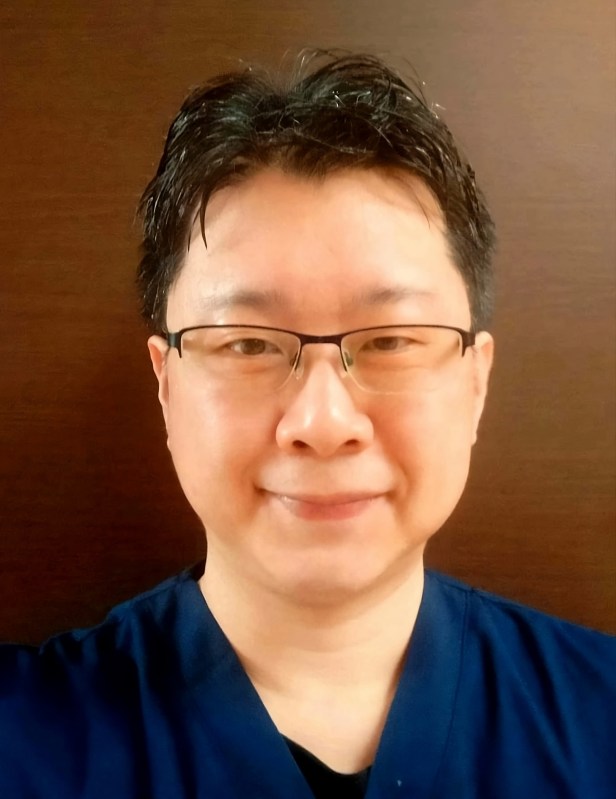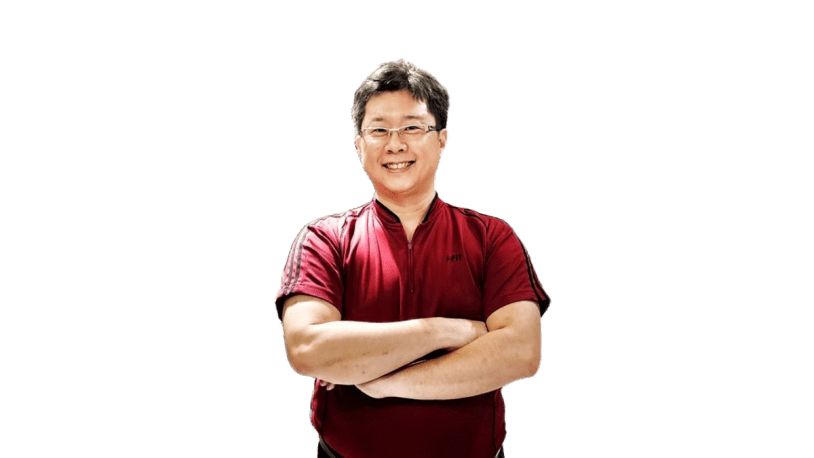
Meet Dr. Runway, who learned the value of perseverance early in life while being raised in a single-parent household. After completing his Diploma in Product Design in 1997, he served 30 months of national service, where he developed leadership, discipline, and empathy while working closely with detainees and military canines. Following his service, he remained committed to helping underprivileged communities—making frequent trips to Thailand while saving rigorously for his studies. His dedication paid off when he pursued a degree in Australia, completing it in just two semesters with advanced standing.
Returning to Singapore in 2004 with little more than a degree and determination, Dr. Runway spent the next 17 years building a career marked by grit, innovation, and service. Transitioning from design to MedTech, he earned recognition for his contributions and was conferred an honorary Ph.D. by a UK university in 2021. Today, he sits on multiple boards by invitation and shares his expertise on topics such as career development, cryptocurrency, real estate, and investment strategies—continuing his mission to uplift others through knowledge and service.
What inspired your pivot from product design into the MedTech and healthcare industry?
What caused me to pivot was actually quite accidental. Some friends were starting their own business in MedTech and wanted help with fundraising. I said OK, let me call up some friends to see if they were interested in taking a stake.
A buddy who was a developer said, “Since I have the space, you guys can move into my building.” After observing the business for a period, he invested a cool six-digit sum into it. When the shareholding was restructured, I was invited to take up a directorship role in the business. I left my corporate job to ensure that the friend who invested would get a good return. I had no prior exposure to developing medical devices before joining this industry.
As a product designer with a decade of experience, I believed there were areas where I could contribute—whether in packaging, product design, or manufacturing. That’s how I landed in this field and have remained here ever since.
With over 20 years in design and regulatory compliance, what are some of the biggest changes you have observed in the medical device landscape?
Over the years, we’ve seen many changes across different countries in terms of regulatory requirements, driven by significant advancements in technology, safety concerns, and harmonisation efforts. There are now stricter requirements for clinical evidence and new rules governing software. Quality management systems have been revised to cover a broader scope, especially for higher-risk devices, software, and AI-driven technologies. However, for some well-established devices, clinical trials are waived in certain countries.
We’ve also seen local regulatory systems tighten in the interest of public health. During the haze in 2013, I wrote to the regulatory body to raise my concern about the unauthorised distribution of masks by hit-and-run vendors—even in central parts of the city. When essential items are distributed without proper control, it presents a serious security risk—terrorists could exploit such opportunities to cause harm. That thought chilled me, and I felt compelled to raise it with the authorities. It was acknowledged, and a swift response was taken.
When we went through COVID-19 as a nation, it was a dark time. Some factories manufactured and distributed masks locally without obtaining the proper manufacturing licence. These factories were eventually convicted under the Health Products Act and fined.
Security and compliance are matters close to my heart—I served as a military policeman during my national service. This sense of duty has carried through into my work in regulatory affairs. I ensure that all products are properly registered and compliant, with all the necessary documentation in place before we proceed to the next stage of registration and distribution.
What challenges have you faced transitioning from hands-on design work to board-level leadership and strategic decision-making?
Product design and board work are actually quite different, though both impact the company in various capacities. A product concept on paper must go through an entire design and manufacturing process before it hits the shelf. This involves working with many different stakeholders with technical expertise.
On a board, my role is more strategic—you’re engaging with just a few directors, and together you set the company’s direction. Board work requires a significant shift in mindset and skill set. It is no longer just a perspective and execution driven by innovation, but a collective build-up of a whole slew of different skill sets. I had the privilege of developing these skills over a decade in various capacities, including representing the interests of major and minor shareholders at different phases of the business. These new skills include financial literacy, governance, long-term strategies, and business acumen.
My perspective on innovation is paired with risk oversight. I may or may not be the one executing the plan, but I present my views on problem-solving and how they impact the company, whether it’s about launching a new product or planning company expansion.
I’m grateful for the trust and privilege to be invited to serve on multiple boards. As a board member of Sovereign Wealth Management Pte Ltd, I am involved in sovereign fund-level work that is tech-driven. This exposure provides me with deep insight at a macro level, which influences technical and economic trends. The most recent board appointment in another MedTech business in Malaysia helps me understand the market and bring solutions to meet their needs.
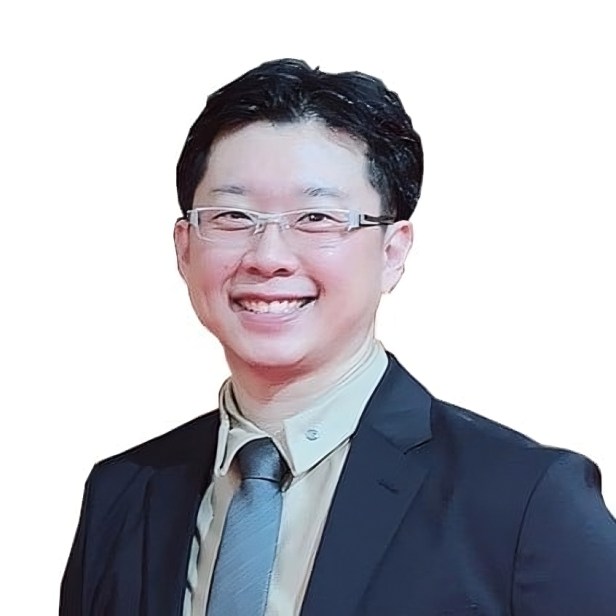
Board work requires a significant shift in mindset and skill set. It is no longer just a perspective and execution driven by innovation, but a collective build-up of a whole slew of different skill sets.
Among the four businesses you currently serve, how do you manage and prioritise your time and responsibilities across such diverse sectors?
During the weekdays, I primarily dedicate my time to my work in the MedTech industry, which is quite demanding. My responsibilities encompass various areas including manufacturing, distribution, regulatory compliance, and innovation. To contribute effectively to the different boards I am part of, I keep myself informed about current events, business developments, and technological advancements. The evolving trends and progress in technology are intriguing.
I consistently ponder how to connect these insights in a way that aligns with the specific needs of each board I serve. Teleconferencing has made it easier to participate in board meetings without needing to be physically present. Prior to accepting invitations for additional roles, I clearly communicate my level of involvement and commitment. The chairperson is aware of my primary focus on addressing public healthcare needs.
Board meetings across different companies take place regularly, which simplifies management. Balancing several directorships at once can be difficult, particularly with fluctuating tariffs and swift shifts in the present climate, but the circumstances also offer chances for business expansion.
Receiving an honorary doctorate is a significant milestone. What does this recognition mean to you?
This is a big deal for me because it shows that I’ve been doing well over the years. It shows that my achievements in life have been recognised by a well-known university. Looking back, I realise that I had to learn a lot of things from scratch. Moving from design to MedTech is like switching from using your right brain to your left brain, combining design knowledge and leadership skills.
Having this title makes me want to keep learning so that I can give useful feedback that looks at the whole picture. As someone with a doctorate, I know that what I say during private counselling with friends and in board sessions is important. I always try to make sure that the things I say are good ideas and that the other people on the board appreciate them.
We live in a challenging environment, so I try to be well-read, up to date, and fair in my advice to the board or anyone who asks for it.
What advice would you give to aspiring entrepreneurs or professionals looking to break into technology and healthcare?
Breaking into this sector is not as easy as it looks. One will need to have expertise in material, manufacturing, and regulatory know-how to communicate the needs and impact of the innovation from pen to product. Rolling out a medical device takes time—especially invasive products, which require intensive clinical trials and must clear many regulatory hurdles.
Entrepreneurs must first understand the niche they are addressing. What specific problem does their innovation solve? There are over two million medical devices in the world, each targeting to improve, diagnose, or even provide data on different health conditions. You need to develop your passion to become a professional in a specific area so that you can have the insights to identify and contribute towards solving a specific problem.
For instance, if you have a background in rehabilitation, that may be your area of growth. If you’ve been a caregiver, perhaps you’ll find ways to innovate via a device or structure to improve the process for other stakeholders in that situation.
A surgeon might focus on improving efficiency in the operating theatre. In this MedTech company, we handle more than 600 products across both medical and non-medical categories. It’s a completely different ballgame.
What do you think makes a good leader?
Leadership is multifaceted, but I summarise it with the acronym L.E.A.D.E.R.
L is for Lead and Learn—a good leader not only leads but also learns constantly to stay informed and credible.
E is for Execute—someone who delivers what is expected and communicates effectively.
A is for Aim high and Appreciate—leaders should set ambitious goals while appreciating their team, regardless of generation.
D is for Discipline and Discernment—in managing time and resources wisely.
E is for Emotional Quotient—a good leader manages relationships with high EQ, especially when dealing with high-IQ individuals.
R is for Recognise—being aware of changing business trends and offering sound advice while also being receptive to others’ views. A strong board member contributes with professionalism and balanced judgement.
What’s your vision for Singapore in the next five years?
Singapore is a forward-thinking nation. In the next five years, AI will rise in its prominence in society. Even now, we are seeing various forms of AI applications being taught in schools at various levels. There will be adoption and implementation across different sectors including manufacturing, education, healthcare, defence, and finance.
AI predictive models can provide accurate insights when fed with specific data. That will be beneficial for progress and planning in healthcare management. However, the use of AI must be implemented responsibly, without undermining human creativity or breaching security. I believe AI should support, improve, and enhance human capability rather than replace it entirely.
In the next five years, I also foresee an increase in the adoption of AI as a driver for productivity in commercial activities, such as cryptocurrency trading, tokenisation of real-world assets, and risk management. Singapore will stay at the forefront of such developments to keep our competitive edge.
In the work I do with Sovereign Wealth Management Private Limited, there’s growing interest in these areas, and I believe they will shape Singapore’s future as a smart, resilient, and globally relevant economy.
Connect with Dr. Runway: LinkedIn