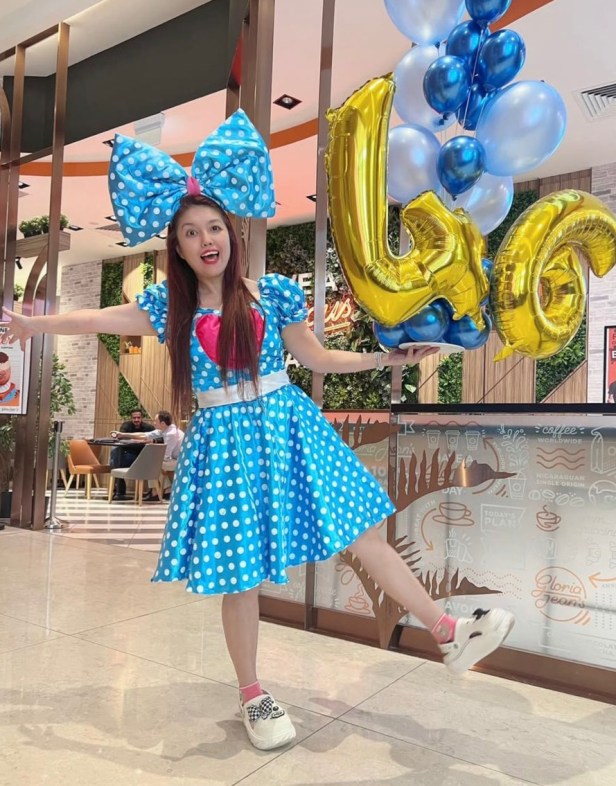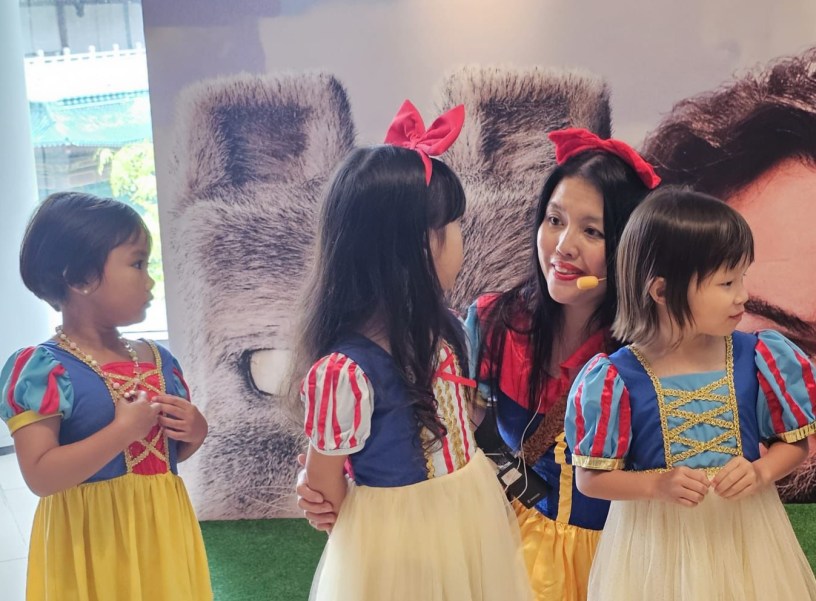
Meet Vivien, who at just 17, transformed a love for performance into a pioneering career—becoming Singapore’s first female professional clown, ventriloquist, and founder of a one-stop entertainment company. What started as a barter performance to sell her poetry book quickly evolved into a bold leap into theatre, mime, and eventually clowning, balloon sculpting, and event entertainment.
With over 10,000 live shows under her belt, including performances for royalty and regional conventions, her journey reflects the power of creative courage, resilience in a male-dominated industry, and an unwavering passion for bringing joy to children and families alike. Here’s Vivien’s story.
What inspired you to become a clown at such a young age, and how did a company come to life when you were just 17?
When I was 16, I wrote a book of poetry and sold it at The Substation. In order to get free rental at The Substation to sell my book, I had to do this barter trade thing where I performed and got the space in return. When I first started, I was performing Shakespeare and soliloquies.
Later on, I started doing more things. One day, I completely lost my voice, so I did mime instead—and the mime was very well received. A clown saw me and said, “You should be a clown, you’re so funny!” So I became a clown.
At 17, I started a theatre company called Zephyhdom. Our roots were in theatre. We did a theatre production supported by NAC (National Arts Council), and after that, we realised it was more fun to perform at events. So we shifted focus.
I transformed the theatre company—originally made up of 12 people—into an events and entertainment company. I began marketing fellow clowns, balloon sculptors, and myself as a mime.
One day, my clown friend broke his leg and asked me to cover a birthday party for him. I did it and enjoyed it so much that I started doing more birthday parties. That’s how it all started.
We then ventured into balloon art—we were the first in Singapore to build large balloon sculptures.
As Singapore’s first female professional clown and ventriloquist, what challenges did you face breaking into a male-dominated space?
Payment. That was the biggest issue—collecting payment. In the beginning, many people owed me money because they thought I was just a kid. I was 17 and they didn’t take me seriously, especially since I was clowning around.
Getting shows was easy—I had a lot of newspaper coverage, and Channel News Asia and Channel 5 featured me on several programmes. But getting paid was tough.
You’ve performed in over 10,000 live shows. Can you share one performance that was especially memorable to you?
The most memorable one was with this little boy who kept shouting vulgarities. He was 8 years old, from a popular school, and wasn’t even the birthday boy—just one of the guests. I was shocked because all the other kids were learning bad words from him.
So I told him, “You have a nice loud voice—why don’t you come up and help me with the show?” He was thrilled. I said, “Since your voice is so loud, help me keep everyone else quiet.” He ended up staying quiet and helping me throughout the show with magic and balloons.
His mum came up to me afterward and said, “This is the first time I’ve seen him so well-behaved at a party. Can you do his birthday party too?” A few weeks later, I did his party. I told him how proud I was of him for using his loud voice positively. His mum said that ever since the first show, he had stopped using vulgarities at home and in school.
A year later, she hired me again and told me he had become class monitor. That show really stood out because it helped change his behaviour and boost his confidence.
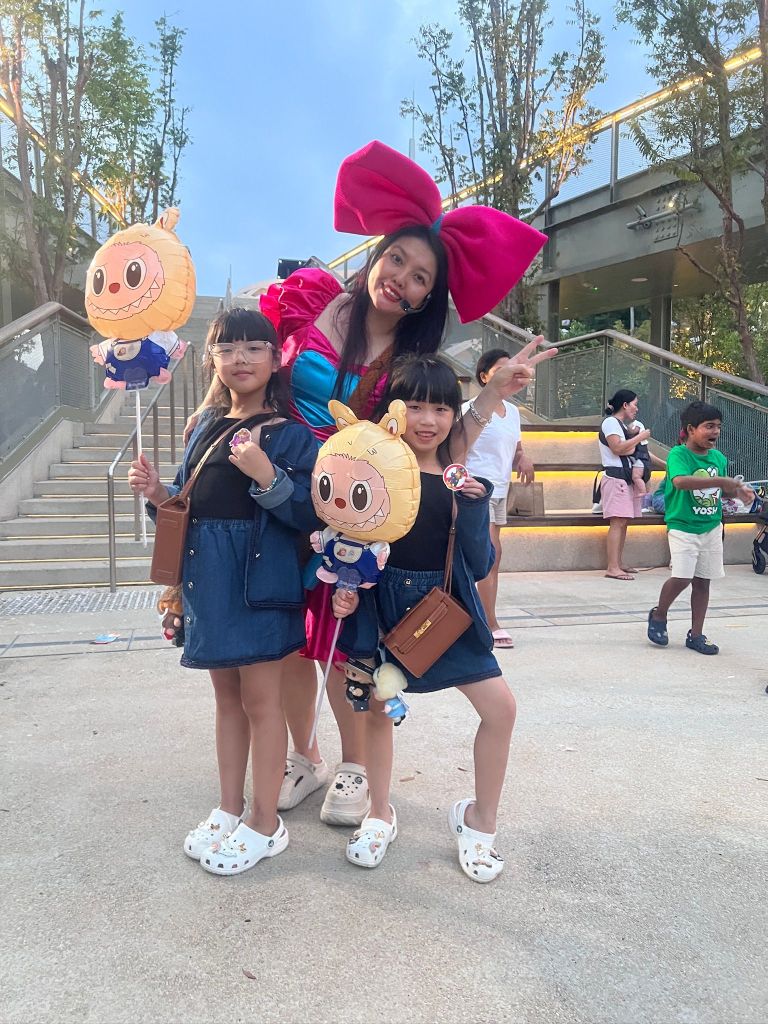
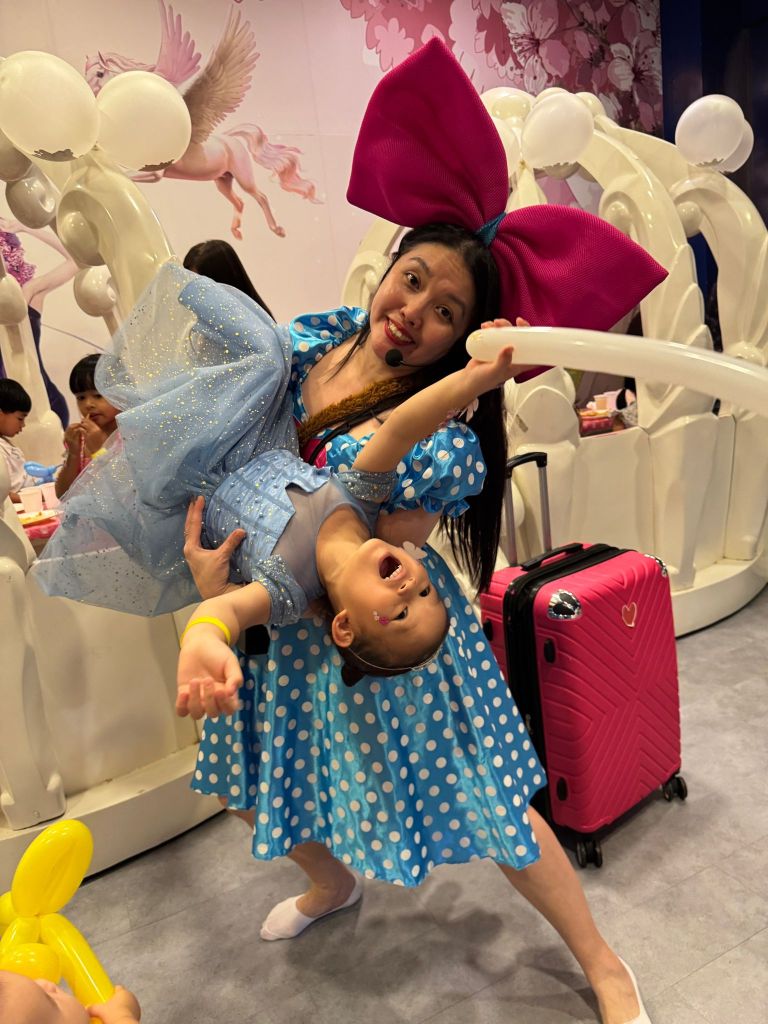
That was the biggest issue—collecting payment. In the beginning, many people owed me money because they thought I was just a kid. I was 17 and they didn’t take me seriously, especially since I was clowning around.
How has your work as a clown, ventriloquist, and balloon sculptor evolved over the years, especially with changes in the entertainment industry?
My company is a one-stop talent source. In 1995, there was no Internet. After the Internet and Facebook became common, people started finding talents on their own. I noticed a huge drop in business.
So I built a website and focused on search engine optimisation. We became more of a curation service—recommending the best entertainers for each type of event. For Family Days, we suggest clowns, jugglers, stilt-walkers, popcorn and candy floss stations.
For dinner and dance events, we suggest emcees, dance shows, singers and comedians. Beyond adding new props to my shows, the backend of my work has changed tremendously with tech.
What was it like being the youngest and first Asian trainer at the Australian Balloon Convention, and how did that experience shift your career?
It was very exciting. We were building large balloon sculptures when very few people were doing that. We developed a method to build frameless sculptures, which changed the industry.
We also marketed a new balloon called the Link-O-Loon—balloons with two ends that can be tied together. Thanks to this invention by a friend, we travelled globally to teach others how to use it to build massive sculptures without using internal frames.
We were the first to build giant sculptures at World Trade Centre in 1997 and 1998. That was a long time ago—probably before you were born!
How do you see the role of live entertainment and clowning in children’s development and learning?
It plays a huge role. Children learn through play and interaction. During COVID, I did many livestream shows, but something was missing—interaction. You couldn’t see or respond to the kids.
Live shows are still very relevant, even with today’s tech. They help kids connect, laugh, and grow.
What advice would you give to young women who want to pursue unconventional creative careers?
Just do it. I know it’s cliché, but don’t listen to the naysayers. Before I turned 18, my company was registered under my mum’s name. She used to threaten to close the business if I didn’t study or get into NUS. I did get into NUS, and once I legally changed the company back to my name, I dropped out in Year 2.
Now I’m learning a lot about AI—how to automate processes and scale my business. You have to evolve with the times.
What’s your vision for Singapore in the next five years?
I think the next five years will be exciting. Politically, we’re lucky to have Lawrence Wong. His comments on China’s tariffs went viral internationally—he made sense, and global netizens noticed.
Even China’s perception of Singapore has improved in the past few years. I’m glad Singapore has strong leadership. No matter our political leanings, we must unite behind those in charge so the country can move forward.
I believe Singapore will expand globally—more cultural exchanges, more companies scaling abroad. Singapore has worked hard to get the fundamentals right, but we’re still lacking a cultural footprint. Look at how Hong Kong became famous through films and drama. We can do the same.
Right now, non-Singaporeans are watching “How to speak Singlish” videos. That’s a form of cultural export. I believe we’ll see more of that in the next five years.
Connect with Vivien: Zephyhdom, Facebook and TikTok.