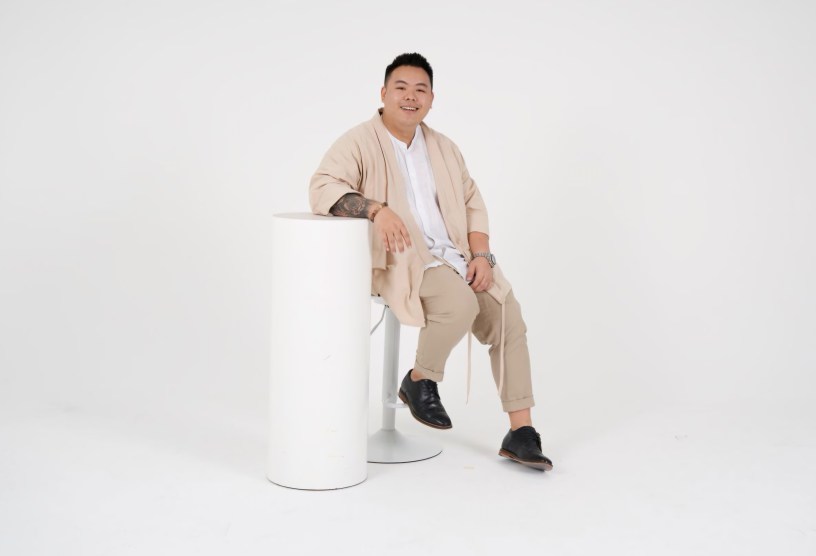
Meet Kelvin, a dynamic entrepreneur and visionary creative whose journey spans multiple industries. As the founder of a thriving content creation company Double Up, he has been instrumental in producing impactful and engaging media.
Kelvin also founded and led a successful interior design firm, where his innovative approach earned widespread recognition. Now venturing into the world of filmmaking, he recently directed his first movie, Aunty LIKE, Aunty SUBSCRIBE!《Aunty 当网红》, showcasing his passion for storytelling and creative expression. His entrepreneurial spirit and artistic pursuits continue to inspire and captivatue audiences across various platforms.
How do you balance managing two distinct businesses, one in content creation and the other in interior design?
We started both businesses around the same time in 2019 or 2020. I can’t remember exactly, but it was about the same period. Initially, the media side of the business wasn’t generating income, so it wasn’t a priority.
Therefore, we scheduled shoots and edits in between our other commitments, which mainly revolved around the interior design business at that time. Interior design was our staple business that provided income and stability.
However, around 2023, there was significant growth in the media space, and profits became rather decent. I had to strategise to ensure that the interior design business could run autonomously. My core team, which had been with me since 2019, eventually took over the company’s management, while I remained as Chairperson and CFO, overseeing only the financial aspects.
What do you think sets Double Up apart from other talent management companies in Singapore?
To be honest, this is a small market, and we happened to be in the right place at the right time. As a talent and media agency what sets us apart is our genuine approach to management. Most talent agencies have rigid roadmaps for their creators, dictating how they should be perceived and the type of content they should produce.
In contrast, we prioritise what the creator wants to do and assess whether it is suitable for monetisation. If a creator wants to pursue something that isn’t monetisable, we work out alternatives. Conversely, if we think the creators are suitable for something but they don’t want to do it, we keep reviewing until we find a sweet spot.
While monetisation is important to us, we want creators to stay true to themselves. We don’t hide who we are or put up a front like many agencies. That authenticity makes us one of the most genuine talent agencies in Singapore.
What was the most challenging project or campaign you have handled at Double Up, and how did you overcome it?
One challenging experience involved a big project, but not as talent—instead, as a production house. Typically, we manage both talent and production hand in hand, which gives us creative control. However, this project involved multiple layers of communication.
The pitch came from one agency, which reported to another agency, which in turn reported to the client. This layered communication was problematic because I usually work directly with key decision-makers. As a production house without full creative control, it was tough.
We are used to flexibility in social media projects, but this was a rigid, large-scale project that we decided to try out. Let me tell you—it was the toughest project of my entire career. The alignment of objectives and communication with multiple stakeholders was challenging.
I don’t think their operating standards were wrong; they exist for valid reasons. However, my creative process operates differently. Unfortunately, the project lost money, and I went through a few very difficult days.
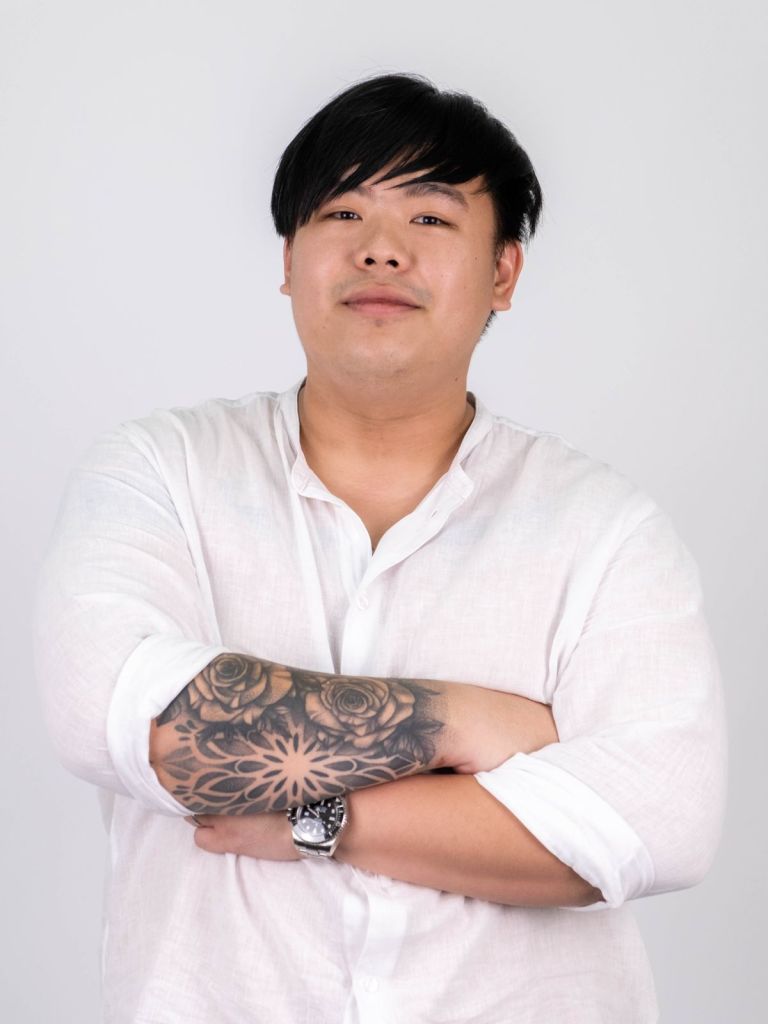
While monetisation is important to us, we want creators to stay true to themselves. We don’t hide who we are or put up a front like many agencies.
You’re also directing your first movie. Can you share some challenges you face as a movie director?
A lot of challenges. In Singapore, especially in the movie industry, it’s a very small market. The cinema business is declining because everyone’s watching Netflix, Disney Plus, and other streaming platforms. There aren’t many companies willing to produce or invest in movies.
Everything in the film industry is budget-focused. We submitted our full script for a grant. In Singapore, most movies need grants to mitigate costs. However, we didn’t get the new director grant. When the film company pitched it to their usual investors or sponsors, no one took us up because they didn’t know us, and we had no film experience.
It was perceived as a tough project. I had to make a decision—to wait for one more year or find funding. Fortunately, I managed to raise a decent sum to kickstart the project. These investors were people who had benefited from social media, either through business growth or as existing clients in that space.
We don’t have the luxury of a large population or a big market. Not everyone goes to the cinema since there are so many other options. Making movies is already tough, and it’s slightly tougher in our Singapore market.
What are your future plans for Double Up?
We are going to continue producing Mandarin-focused content because that’s our niche and positioning in the market. Because of this, we get many job inquiries since there aren’t many options for Mandarin content creators.
We will continue producing movies. Our first co-production is with MM2, and we have two more in the pipeline. We will minimally complete three movie projects with MM2. We also want to expand our talent pool. In the next 2-3 years, we have two more big projects before deciding whether to expand into another country.
What do you think makes a good entrepreneur?
I’ve been trying to run my own business since I was 15. Now I’m 33, so it’s been quite a while. From all the years of experience I’ve garnered, I believe a good entrepreneur is someone willing to fail. That’s really important because the number of failures teaches you valuable lessons along the way.
A good entrepreneur knows how to re-strategise and conduct internal reviews of their strategies. If someone keeps failing without learning from it, there’s no point. But if someone succeeds or fails and identifies their strengths and weaknesses, they can go far.
Where do you see yourself and what’s your vision for Singapore in the next five years?
For myself, I want to bring Singapore films overseas. Regionally, I want to be the first director to bridge cultures and bring entertainment to the crowd. Although there are projects where Singapore collaborates regionally, there hasn’t been one that found huge success. The closest we got was Crazy Rich Asians, but that was a Hollywood project.
I think the next five years are critical for us as a country because we have a new generation of leaders. This is a testing period for them, and I’m rather certain they will do well because times are different, and we need a different form of leadership.
As a country, we need to improve our value and quality since we don’t have much land for manufacturing. We should focus on high-tech or high-quality services to attract global funds. I think Singapore positioning herself in the international space is very smart.
Connect with Kelvin: DoubleUp, TikTok and Instagram.