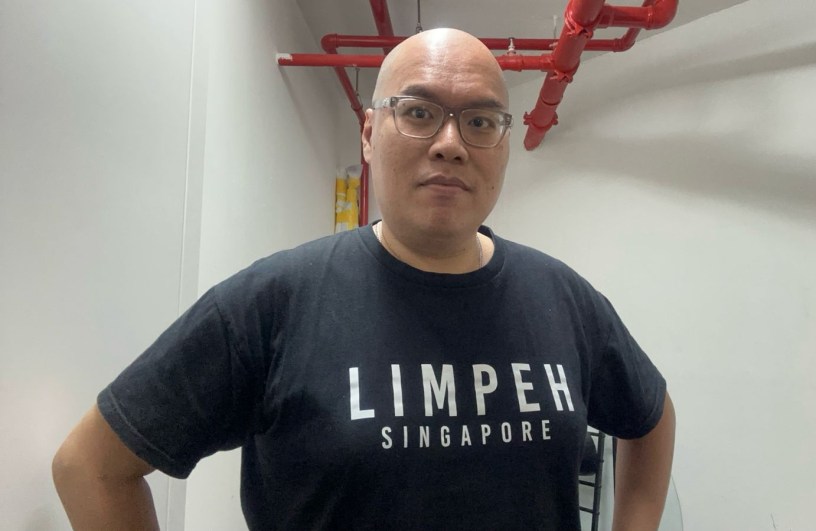
Meet Anntonii, a talented social media content creator who manages multiple successful Facebook pages such as The Royal Singapore, Mediacock and We are Majulah, helping brands connect with their audiences in meaningful ways. With a keen eye for engaging content and a deep understanding of digital trends, he also specialises in social media marketing for small and medium-sized enterprises (SMEs), empowering businesses to grow their online presence.
By creating impactful videos and strategic content, Anntonii helps SMEs stand out in a competitive market, driving brand awareness and customer engagement with every post. How did he get started? Here’s his story.
What inspired you to start your company, focusing on crafting impactful social media content strategies?
I think content creation started as a passion with SGAG. We were playing with content that engaged the general public. Then we thought about how to use content to help businesses. That was the founding catalyst—using content to help businesses grow.
At that point, I think it was also due to frustration at work and being forced by circumstances. So there’s this story: when I was working, I interviewed this guy—a 55-year-old man. I looked at his resume, and his first job lasted about 26 years before he was retrenched. The second job lasted three years, and he was retrenched again. Then, in his third job, he worked for just one year and was retrenched. His last drawn salary was $3,000 at the age of 55.
I asked myself, “What would I do ten years later if I were him?” That interaction was really a wake-up call for me. It spurred me on to quit my job at the age of 39 and start my entrepreneurship journey full-time, running my own agency.
How do you identify the need for businesses to have tailored social media strategies, and what was your approach in addressing the gap?
Basically, when we talk to businesses, I think the keyword is understanding their target audience. I always say that every individual business has different needs. It comes down to their target audience, their spending power, and what kind of USP (Unique Selling Proposition) they have.
Understanding the business you work with is the most important and the first step we take. We sit down with the client, we run through their goals, and sometimes the client doesn’t even know what their USP is. Our job is to talk to them, help them discover their USP, or design one for them.
Can you share some of the challenges you faced early when establishing your business?
I think, like every business out there—especially when you’re providing a service—the biggest challenge is gaining people’s confidence. This is especially true if you are someone with minimal experience and business owners might hesitate to trust you with their marketing.
That lack of confidence created many challenges for us. To overcome this, we offered very low-cost entry points. We told businesses, “We’ll charge you less—just give us a try and let us gain some experience in managing your social media.”
What are the key elements that make social media content successful in today’s digital-first world?
I always mention that, as a content creator, you need to have empathy. Empathy is the number one criterion for a content creator because you need to step into the content consumer’s point of view.
I call them “content consumers” because they’re the ones viewing your content. You have to design the content as if you’re in their shoes—thinking about what it means to them. That is the most important element.
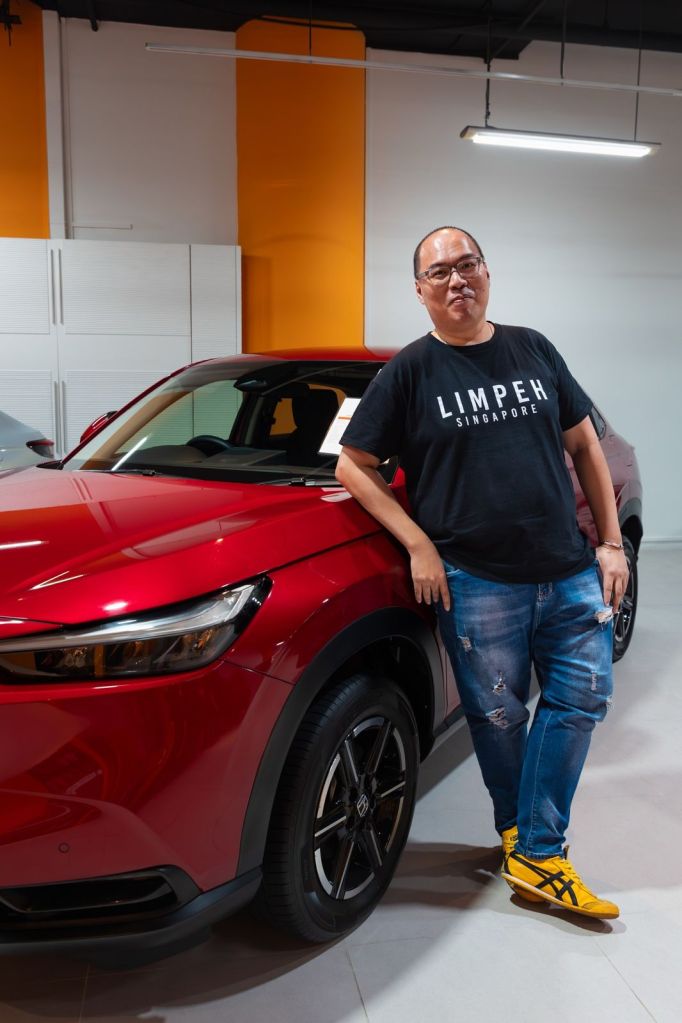
I always mention that, as a content creator, you need to have empathy. Empathy is the number one criterion for a content creator because you need to step into the content consumer’s point of view.
What advice would you give to businesses struggling to see tangible results with their current social media efforts?
I usually tell businesses that the first thing to look at is platforms. They should be on all relevant platforms: Google, Facebook, Instagram, TikTok, Xiao Hong Shu, WeChat—whatever is possible.
Even platforms like TripAdvisor can help. For example, if you’re in a tourist-heavy area like Orchard or Bugis, TripAdvisor might surprise you with its ability to bring in tourists. That’s the first thing. Then, businesses need to think outside the box. In this new content world, everyone’s looking for fresh and engaging content. It’s no longer about showing only wok hei or fire-frying a dish.
Now, people want to see engaging content involving your staff because your staff can become the face of your shop. When customers come in and say, “I’ve seen you in a video before!”—that kind of recognition creates interest and connection.
Can you share one success story where your strategies significantly impacted a client’s growth or brand presence?
I worked on a campaign with one of Singapore’s biggest 24-hour spas. Initially, they tried to target taxi drivers and PHV drivers for their late-night hours, from 11 PM to 6 AM. But when they brought me in, I realiaed those drivers are working at that time—they aren’t the target audience to spend money and time on a spa.
So we changed the strategy and renamed it “Staycation”. The idea was simple: for $38, customers could enjoy a 12-hour spa stay from 11 PM to 12 PM the next day. We showcased what customers could do during those 12 hours—take a dip in the hot pool, eat supper, rest on the couch, and even have breakfast and lunch before leaving.
We marketed it as an alternative to expensive hotel stays, which cost around $150–$180 per night. The results were phenomenal. The campaign video got about 1 million views and 9,000 shares, and it was featured on Mothership and other platforms. The queue started forming at 10:30 PM for the 11 PM promotion, and the spa became overcrowded at night. Even though some regular members were unhappy, it was a happy problem. Their sales increased by 400%. That was one of our best campaigns.
What are the future plans for your company, and how do you plan to expand its reach in the coming years?
I think company expansion depends on two factors: the quality of clients we get and the quality of people we hire. If you ask me where I see the company in the future, I can’t say for certain. But I believe we’ve managed to work with very good people and attract high-quality clients.
For me, the goal is to grow the company to a point where everyone is comfortable doing the job they’re supposed to do while earning what they deserve. That’s enough for me.
Where do you see yourself, and what’s your vision for Singapore in the next five years?
For myself, I will continue to grow this business but will take a backseat and start delegating tasks to my team. I hope to build even better relationships with my clients.
In the next five years, content creation in Singapore or even around the world will continue to evolve. Videos will be short, organic, and increasingly AI-driven. With the rise of AI, people are looking for ways to use it to create short-form videos.
Whether it’s because talent is hard to hire or because setting up scenes is costly, AI will play a bigger role. I won’t be surprised if, within five years, AI can generate one-minute reels. It could even mimic business owners or chefs.
Connect with Anntonii: AwesomeGroup
