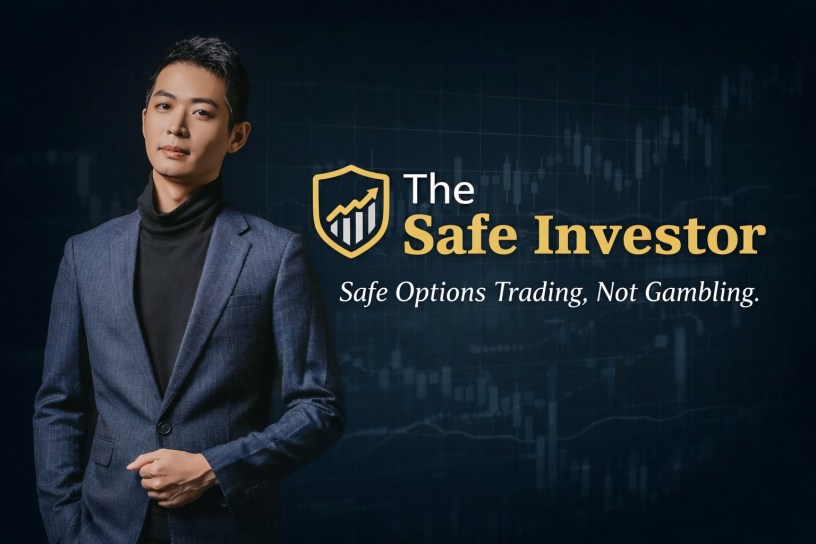
Meet Ken Ku, widely known as “The Safe Investor”, who challenges the common perception that options trading is purely high risk. Drawing inspiration from legendary investors like Warren Buffett, Ken focuses on one principle above all: protecting capital before chasing returns.
Today, through his programmes and teachings, Ken helps everyday investors navigate volatile markets with discipline and clarity. His approach centres on risk management, long term thinking, and building sustainable cash flow, offering a more grounded path to wealth in an often unpredictable financial landscape.
You brand yourself as “The Safe Investor”, which is interesting in a field often associated with high risk. What does “safe” actually mean in options trading?
If you look at most options trading courses in Singapore, they often emphasise profit and opportunity. While that is true, if you study investors like Warren Buffett and Charlie Munger, you will realise that the most important factor is not profit, but risk management.
Profits come naturally when risk is managed well. Before entering any trade, I always ask: what is the maximum loss? Whether it is a call option, put option, butterfly, or iron condor, every trade must have a defined risk.
If I know the maximum loss is something I can accept, only then will I enter the trade. This approach ensures that every trade is controlled, even though some will win and some will lose. Safety always comes first.
Many people see options as gambling. What is the biggest misconception about options trading that you want to correct?
The biggest misconception is that options are designed for speculation. In reality, options were originally created for capital protection. For example, a call option allows you to lock in a purchase price, while a put option protects against market downturns.
Selling options can also help reduce risk by allowing you to enter positions at better prices or exit at higher prices. When used correctly, options are tools for managing risk, not gambling. If you focus on protecting your capital, profits will follow naturally.
You have built programmes like Options 360 to teach others. What motivated you to move into education instead of trading privately?
It came from personal experience. In 2017, I lost a significant amount of money trading Bitcoin. I turned $10,000 into $40,000, but then watched it drop all the way down before cutting my losses. If I had simply held on, things would have turned out very differently.
That experience showed me how important education is when dealing with volatile assets. I also saw others make costly mistakes, such as misunderstanding options strategies and facing margin calls. I realised that options can be very powerful if used correctly, but dangerous without proper knowledge.
That is why I created Options 360, to teach a structured, risk-first approach to trading.
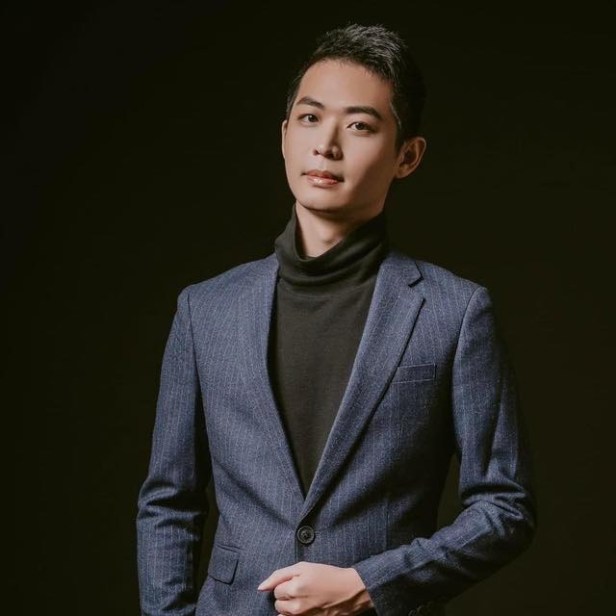
Profits come naturally when risk is managed well. Before entering any trade, I always ask: what is the maximum loss? Whether it is a call option, put option, butterfly, or iron condor, every trade must have a defined risk. If I know the maximum loss is something I can accept, only then will I enter the trade.
In volatile markets, what separates those who panic from those who profit?
The key difference is understanding what you are investing in. Successful investors stay within their circle of competence, a concept emphasised by Charlie Munger. If you truly understand a company, you will have the confidence to hold or even buy more when prices fall.
Those who panic usually do not fully understand their investments. They sell at the bottom and miss the recovery. The ability to stay rational during market downturns is what separates successful investors from the rest.
What is the most painful investing lesson you have personally experienced?
I have had two major lessons. The first was my experience with Bitcoin, where I exited too early. The second was trading forex. Forex can amplify both gains and losses significantly.
It is like entering a casino where even a small bet can wipe out your entire capital. That taught me the importance of managing leverage and focusing on safer, long-term strategies instead.
If you could give one piece of advice to someone starting their investing journey today, what would it be?
If you are new and not confident in picking stocks, invest in index funds. They provide diversification and are managed to include strong-performing companies while removing weaker ones. Over time, they tend to grow consistently because they are backed by real businesses.
Even Warren Buffett recommends index funds for most investors. If you do pick individual stocks, choose companies you understand and use personally.
What is your vision for Singapore in the next five years?
I believe Singapore will continue to grow as a major financial hub in Asia. With global uncertainties, more investors and capital are flowing into Singapore due to its stability and strong governance. Our banking sector is also performing well, offering both growth and attractive dividends.
This positions Singapore as a very attractive place for investors in the coming years.
If you could have a superpower for one day, what would it be and why?
I would choose the ability to turn back time. If I could go back, I would simply invest in index funds early and hold them long term without overtrading. That is one of the most proven ways to build wealth.
What is one question you would like me to ask the next interviewee?**I would ask: are you focusing enough on cash flow in your investments? Many investors focus too much on capital gains and neglect cash flow. However, consistent cash flow is what sustains you during market downturns and provides long-term financial stability.
Connect with Ken: TikTok, Facebook and Instagram.
Ken is a member of Rainmaker, a revolutionary movement that rallies like-minded people together based on the values of Love, Authenticity, Respect, Kindness and Youthfulness (LARKY).
