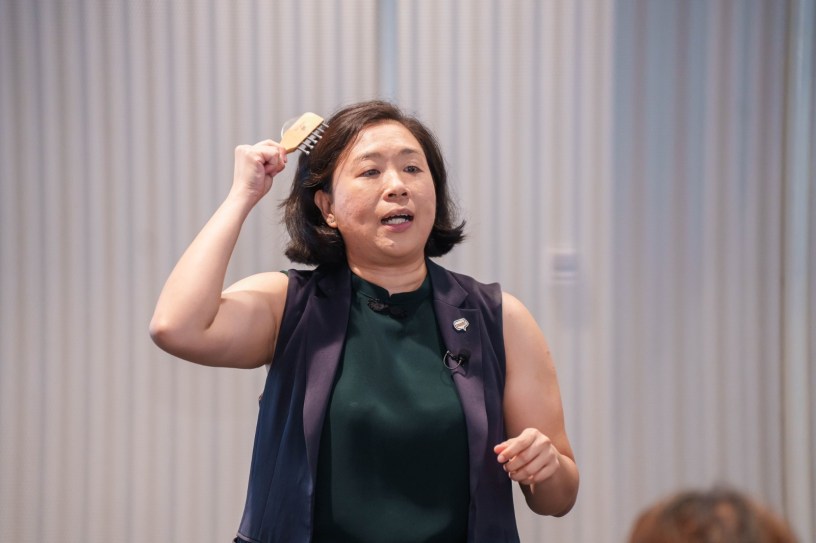
Meet Hui Fang. She bridges two seemingly different worlds, human resources and Traditional Chinese Medicine (TCM), but at their core lies a common belief: people are the most valuable asset. While HR focuses on people within organisations, her work in wellness centres focuses on something even more fundamental: health as the foundation of everything we build in life.
Today, Hui Fang channels this philosophy into practical, accessible wellness practices through her workshops, helping individuals and organisations integrate simple self care into their daily routines. Her mission is clear: to empower people to live healthier, more balanced lives, and ultimately, to age without pain.
You initially studied human resources because you believed employees are the most important asset of any organisation. How did that path eventually lead you into the wellness and TCM space?
It was not a direct transition, but both fields share a common belief that people are the most important asset. In HR, the focus is on people within organisations. In TCM and wellness, the focus is on the individual.
Health becomes the most important asset because without it, everything else such as career, family, and achievements loses its meaning.
Your workshops often involve acupressure, qigong, and herbal knowledge. Why are these practices particularly relevant for modern lifestyles today?
Modern lifestyles are highly stressful, so we focus on practices that are simple, immediate, and sustainable. Everything we teach can be applied easily. For example, acupressure requires no tools. You can use your fingers to massage specific points.
For herbal practices, we recommend ingredients that are easily available, such as goji berries and chrysanthemum, which can be made into simple herbal teas. For qigong, instead of long routines, we break movements into bite sized exercises that take about 30 seconds and can even be done at your desk to relieve tension.
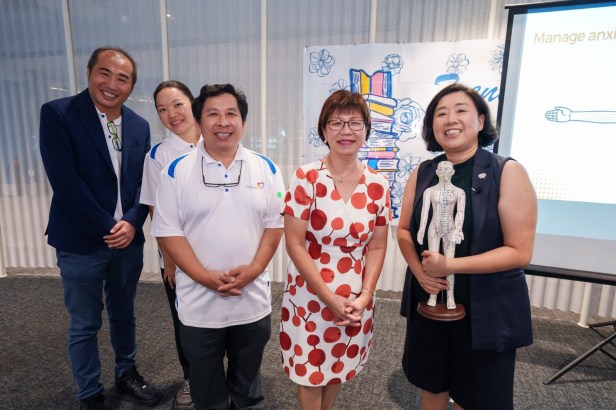
I truly believe that ageing without pain is possible, but it requires starting self care early. If we neglect our bodies, aches and discomfort will naturally appear as we age.
You often say that we can “age without pain.” What does that philosophy mean in practical terms?
I truly believe that ageing without pain is possible, but it requires starting self care early. If we neglect our bodies, aches and discomfort will naturally appear as we age. I recently had a 77 year old participant in one of my senior courses who was completely free from pain, which shows that this is achievable.
We follow the O.U.C.H framework—Observe, Understand, Care, and Harmonise. First, observe your body and its signals. Then understand what those signals mean, such as brittle nails indicating internal imbalances.
Next, practise self care through massage, herbal support, and qigong. Finally, harmonise these practices into your daily lifestyle.
Many companies today are investing in employee wellness programmes. Why has workplace wellness become so important, and how do your workshops help employees deal with stress and burnout?
Workplace wellness has become essential because modern work environments are demanding and often stressful. Our workshops focus on simple and practical techniques that employees can apply immediately, helping them manage stress, fatigue, and tension in a sustainable way.
From your sessions with seniors under initiatives like HeritageCares, what health concerns do senior adults most commonly face?
The most common concerns among seniors are insomnia and chronic pain, particularly knee pain and back pain. These are recurring issues that significantly affect their quality of life.
What is a meaningful experience you have had that had absolutely nothing to do with your work?
One of the most meaningful experiences in my life was caring for my late father. Life had been relatively smooth for me, but caregiving brought a completely different challenge. It was physically and emotionally demanding, but also deeply meaningful.
While I could not change his condition, I could ensure that he was comfortable and supported throughout his journey. This experience also taught me the importance of self care for caregivers, so they can continue to care for others effectively.
What is your vision for Singapore in the next five years?
Singapore already has a strong healthcare system. My hope is that the community aspect of health will continue to grow, with more structured programmes and sustained engagement rather than one off activities.
As we move towards a super aged society, it is important to invest in professional led programmes that support long term well being. With better structure and engagement, I believe more people can truly age without pain.
If you could have a superpower for one day, what would it be and why?
I would choose teleportation, like the door in Doraemon. It would allow me to be there instantly for my loved ones whenever they need me.
From a practical perspective, it would also save time travelling between appointments, allowing me to focus more on helping people rather than commuting.
Connect with Hui Fang: LinkedIn and Instagram.
Health Advice Disclaimer
The information provided on this platform is for educational and informational purposes only. It is not intended as medical advice, diagnosis, or treatment, and should not be relied upon as a substitute for professional medical consultation, advice, or treatment from a qualified healthcare provider.
In Singapore, all health-related content is to be understood as general wellness information and not a substitute for medical consultation. Individuals are encouraged to seek advice from a registered medical practitioner under the Ministry of Health (MOH) before making any healthcare decisions.
