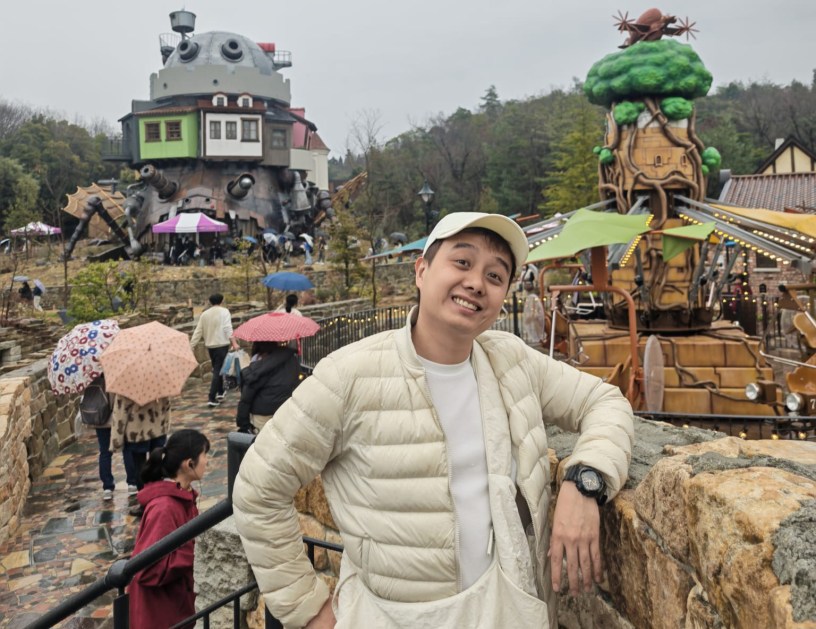
Meet Adrian. His journey challenges the labels that society often places on young students. Once placed in the EM3 stream during primary school, he grew up confronting early assumptions about academic ability and future potential. Instead of allowing those labels to define him, Adrian chose a different path, one focused on practical learning, resilience, and real world problem solving.
Today, he is the founder of AT Smart Home which helps homeowners simplify technology and design smarter living environments. Drawing from lessons in the military and entrepreneurship, Adrian believes that success is not about where you start, but about the mindset you develop along the way.
You were placed in the EM3 stream during your school days, which can be challenging for many students. How did the experience shape your confidence and mindset growing up?
When I was placed in the EM3 stream in Primary Four, I did not fully understand the impact. At that time, I simply thought I had played too many games and had not studied hard enough. I felt a little discouraged, but I told myself that perhaps I could improve later on.
As I grew older, I began to realise that society often labels people quite early. When I moved into secondary school, there was already an assumption that students like us would not follow the academic route. Instead, we were taught more practical skills and even attended courses such as waiter training. That experience shaped my mindset.
I began to see that academic success was not the only path in life. I focused more on practical skills, problem solving, and improving myself through hands on learning. In many ways, it helped me develop resilience and humility. It taught me that everyone grows at a different pace, and sometimes a slower start can lead to a more meaningful destination.
After school, you signed on with the Air Force. What were some of the biggest lessons the military taught you about discipline, leadership, and resilience?
The military instils a strong sense of accountability and reliability. You learn to do things properly even when no one is watching. During my time in the Air Force, I was involved in servicing Navy helicopters. In that environment, mistakes can have serious consequences. If something goes wrong with an aircraft, a pilot’s life could be at risk.
We were also working with heavy machinery, so safety was critical for everyone involved. That experience taught me the importance of teamwork, clear communication, and taking responsibility for my role.
Those lessons continue to shape how I run my company today. I believe strong systems, proper training, and teamwork are essential if you want a team that performs consistently well.
Leaving a stable career to start a business is never easy. Why did you decide to take the leap into entrepreneurship?
It was definitely not an easy decision. The Air Force offered a very stable career. Even during the COVID period, salaries continued as usual, which shows how secure the role was.
However, at one point I began noticing how technology was changing everyday life. At the same time, I had suffered injuries to my ligaments and was on crutches for a while. During that period, I started exploring smart home technology.
Initially, I thought smart homes were expensive and complicated. But as I researched different solutions, I realised that many systems were actually quite simple once you understood the key principles. I also noticed that many homeowners felt confused or intimidated by smart home technology.
That was when I saw an opportunity. Instead of simply selling devices, I wanted to help people understand how to design a smart home properly. That idea became the foundation of my business.
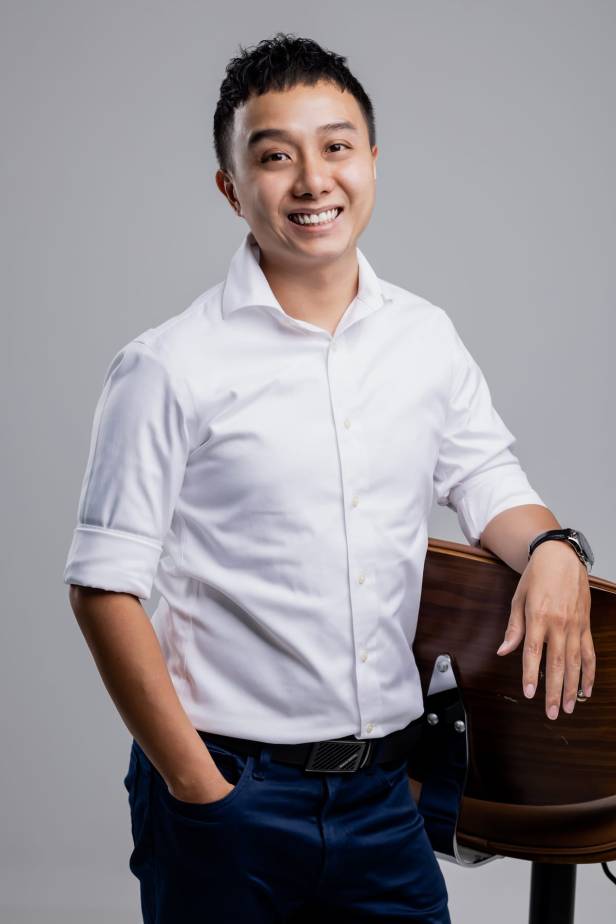
When I was younger, success probably meant financial stability and building a business. Today, my definition has evolved. Success now means creating something meaningful that improves people’s lives.
How would you explain what your company does, and why is it important today?
Many people hear the term “smart home” and immediately think of complicated technology. My role is to simplify those concepts. A smart home is simply a home where devices such as lights, appliances, and curtains can work together automatically based on your lifestyle.
For example, when you arrive home, the lights can turn on, the curtains can open, and the air conditioning can start cooling the room. When you go to bed, one button can turn everything off. The real value lies in convenience, comfort, and efficiency.
Technology should make life easier, not more complicated, and that philosophy guides how we design solutions for homeowners.
How has the demand for smart home technology changed over the years?
When I started about five years ago, many people viewed smart homes as a luxury. Homeowners often asked whether they even needed a smart home. Today, the conversation has changed significantly. People are more aware of automation, energy efficiency, and convenience.
Technology has also become more affordable and user friendly. Instead of asking what a smart home is, many homeowners now ask how they should design their smart home properly. It has been interesting to watch this shift in awareness.
What does success mean to you today?
When I was younger, success probably meant financial stability and building a business. Today, my definition has evolved. Success now means creating something meaningful that improves people’s lives.
In our case, it means helping homeowners enjoy their homes more comfortably and conveniently. That sense of impact feels very real to me. In the military, I believed I was contributing to something important, but it was difficult to see the impact directly in everyday life.
Now I can see how the solutions we create improve people’s homes and routines, and that gives my work a deeper meaning.
What is your vision for Singapore in the next five years?
Compared with many countries, Singapore is very forward looking when it comes to technology. Over the next five years, I believe we will see deeper integration between technology and daily living, especially in areas such as smart homes, energy efficiency, and automation.
Our population is becoming increasingly digitally connected, and homes will likely become smarter, more efficient, and more personalised. I also hope Singapore continues to encourage innovation and entrepreneurship so that more people can build solutions that improve everyday life.
If you could have a superpower for one day, what would it be and why?
I would choose the ability to pause time. Entrepreneurs often feel that twenty four hours in a day is not enough. There are always more ideas to explore, more tasks to complete, and not enough time to rest.
If I could pause time for a day, I would finally be able to catch up with everything.
Connect with Adrian: ATSmartHome, Instagram and TikTok.