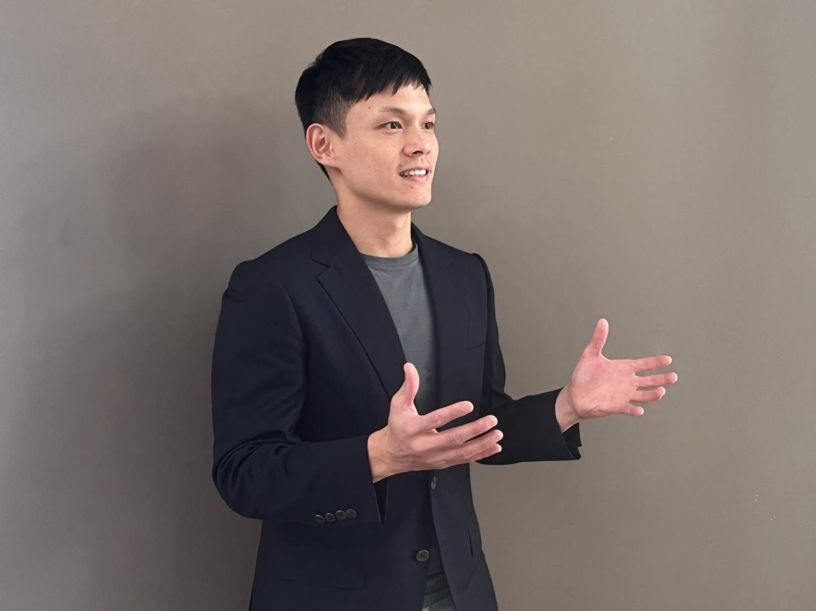
Meet Martin, whose mission is rooted in personal experience and professional mastery. Having once faced what he calls “height regret” as a teenager, he transformed that disappointment into a lifelong pursuit of understanding human growth.
Today, as a specialist in paediatric height optimisation, he integrates Western pharmacology, Traditional Chinese Medicine, and Sports Fascial Science to offer children customised, non invasive growth solutions. His approach goes beyond centimetres; it is about restoring confidence and preventing lifelong regret.
What first inspired you to specialise in paediatric height optimisation?
My mission is deeply personal. Growing up, I experienced what I call “height regret.” At 13, I was growing rapidly, about 6 to 8 cm each year, and felt invincible. By 15 or 16, I realised I had not grown an inch in nearly three years. As someone who lived and breathed basketball, that “height ceiling” was devastating.
That regret became my fuel. I later studied Pharmacy in Taiwan, where we mastered both Western Pharmacology and Traditional Chinese Medicine (TCM). This dual training was my “aha” moment. I realised that combining Western precision with TCM’s holistic wisdom could achieve far more than simply letting nature take its course.
After years researching nutrition, anatomy, and Sports Fascial Science, I understood that every child is a unique puzzle. There is no one size fits all solution. I founded my company so no child or parent would live with the same regret. My goal is to provide customised keys to unlock each child’s true growth potential.
Most height clinics rely on growth hormone injections or supplements. Why did you choose a strictly non invasive path?
That is a great question. In clinical reality, only a very small percentage of children, usually those with specific pituitary or neurological conditions, suffer from true Growth Hormone Deficiency (GHD). For these rare cases, medical intervention is necessary.
For most children, however, “stunted growth” is not a brain issue but an environmental or systemic imbalance. Think of growth like a plant. If it is not thriving, you check the soil, water, and sunlight before adding chemicals.
In our practice, we look for hidden barriers such as gastrointestinal issues affecting nutrient absorption, incorrect diets, improper high impact exercise when fascia is tight or misaligned, and poor sleep habits that disrupt growth cycles.
By taking a non invasive approach, we address these root causes and optimise the body’s internal environment, allowing natural growth potential to unfold without synthetic hormones.
In your view, what are the most common misconceptions parents commonly have about height growth?
The most common mistake I see is parents relying on “universal” advice such as drinking more milk, jumping rope, and going to bed early, without recognising that every child’s biological makeup and environment are different.
Some children, depending on climate and constitution, struggle to process dairy. For them, milk can cause inflammation or digestive issues that hinder growth. Similarly, children with fascial tension or imbalances may become tighter from excessive jumping, with fascia acting like a tight suit that restricts bone lengthening.
Regarding sleep, many parents say, “My child will not sleep,” but the issue is often internal imbalance. You cannot force sleep; you must address the biological causes of restlessness.

My proudest moment is not about personal accolades or business growth. It was the moment I realised my work could rewrite a child’s destiny. Seeing that boy grow from despair at a projected 157 cm to standing confidently at 173 cm, with growth plates still open, is my greatest pride.
What warning signs suggest a child’s height growth may need professional evaluation?
The biggest warning sign is procrastination. Many parents wait until puberty to “chase” growth. By then, there is only a one to three year window before the growth plates close.
I ask parents to consider the mathematics. If a child loses just 2 cm a year starting from primary school, by the time they reach sixth grade, they are 12 cm shorter than their potential. That gap is extremely difficult to close later. We need to monitor and support growth from a young age.
Do not wait for the puberty growth spurt to start paying attention. By then, you are already playing catch up against a ticking clock. Waiting too long often leads to a lifetime of regret.
As someone integrating TCM and Western medicine, how do you bridge the gap between tradition and science?
I bridge the gap by using Western science for precise diagnostics and TCM for holistic optimisation. In my practice, we review Western medical data such as bone age X rays and growth hormone levels to understand the current status. For solutions, we draw on the systemic wisdom of TCM and Sports Fascial Science.
For example, Western medicine may identify under growth, but TCM helps us understand why internal energy flow or digestion is sluggish. We then use fascial release to address structural tension that Western medicine might overlook. It is a synergistic approach: Western science provides the map, and our integrated method provides the engine for growth.
Can you share a memorable case where your approach significantly changed a child’s growth trajectory?
One case that remains etched in my heart involved a fifth grade boy in Taiwan. His parents came to me in despair after he was diagnosed with a bone age 4.5 years advanced, and the specialist predicted he would stop growing at 157 cm. The boy broke down in tears and suffered nightmares for a week before they sought my help.
We did not use injections but focused on customised systemic adjustments. In the first year, we slowed bone age advancement to three years ahead, and in the second year, to just two years ahead.
When they returned to the same specialist, the prediction was revised from 157 cm to 171 cm. Two months ago, his mother shared that he is now 173 cm, with growth plates still open and projected to reach 175 or 176 cm. We did not just give him centimetres; we gave him a future without regret.
What is the one thing in your life that has made you feel the most proud?
My proudest moment is not about personal accolades or business growth. It was the moment I realised my work could rewrite a child’s destiny. Seeing that boy grow from despair at a projected 157 cm to standing confidently at 173 cm, with growth plates still open, is my greatest pride.
When parents tell me their child now has the confidence to chase their dreams, it reminds me why I dedicated years to studying pharmacy and growth science. It is not just about helping children grow taller; it is about restoring hope where it was once lost.
If you could have a superpower for one day, what would it be and why?
If I could have a superpower for one day, it would be “Growth Vision.” I would want the ability to instantly see a child’s hidden growth potential and how much time remains before their growth plates close.
So many families live in a state of waiting until it is too late. With this power, I could show them the ticking clock and give them clarity to act immediately. I would spend that entire day travelling to as many families as possible, giving them the truth and the roadmap to act before the window closes.
Connect with Martin Hung: Facebook (Taiwan) and Facebook (Singapore & Malaysia).
Health Advice Disclaimer
The information provided on this platform is for educational and informational purposes only. It is not intended as medical advice, diagnosis, or treatment, and should not be relied upon as a substitute for professional medical consultation, advice, or treatment from a qualified healthcare provider.
In Singapore, all health-related content is to be understood as general wellness information and not a substitute for medical consultation. Individuals are encouraged to seek advice from a registered medical practitioner under the Ministry of Health (MOH) before making any healthcare decisions.
