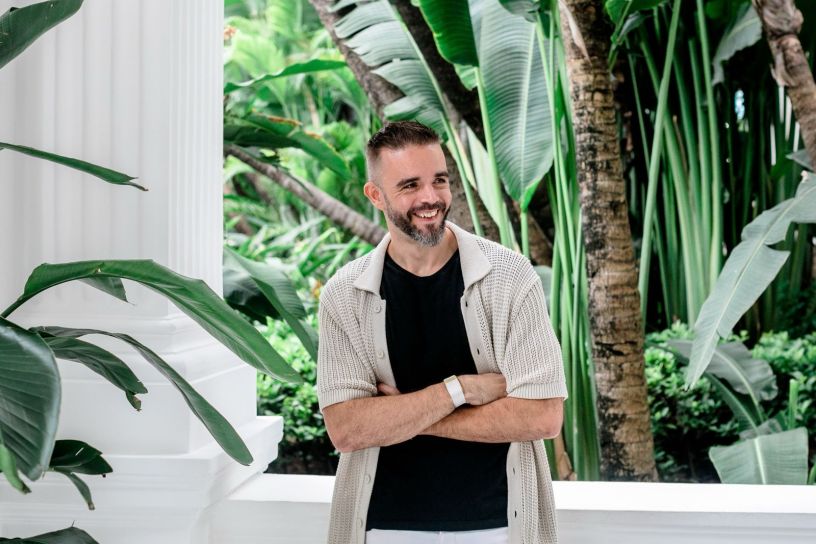
Meet Remko. From fire safety consultant to Head of Insights and Data Analytics for LinkedIn’s Talent Solutions across Southeast Asia, China, and Japan, Remko’s journey is anything but conventional. With a background in construction engineering and a passion for problem-solving, he brings a unique systems-thinking approach to the world of data.
But what truly sets him apart is his emphasis on values, people, and purpose. In this thoughtful conversation, Remko shares how he translates big data into meaningful insights, builds inclusive and high-performing teams, and envisions a future-ready Singapore powered by AI, reskilling, and community-driven wellness.
You started a career in construction engineering and project management before moving into data analytics. What motivated the transition and how has that diverse background shaped the way you approach data today?
When I was studying in the early 2000s, data was not a major topic yet. I pursued construction engineering because I enjoyed the complexity, logical thinking, and problem-solving involved. Before transitioning into data analytics, I was working as a fire safety consultant for a local government. One day, the leadership team noticed I was quite good with computer systems. Coincidentally, someone who was managing their CRM system was leaving, and they asked me to take over the project.
I renewed my contract with them, now split between fire safety and application management. That was my first time acting as a bridge between business and IT, which I found very fulfilling. I had to work with data and reporting too, and I enjoyed translating business needs into technical solutions.
Even though my career path seems diverse, the core skills are actually quite similar. They involve logical thinking, system thinking, and structured problem-solving. This background now shapes how I identify talent. I don’t necessarily look for people with a pure data background.
I look for those who can break down unfamiliar problems, analyse them logically, and ask the right questions. Especially with AI now supporting syntax and code generation, human skills like problem-solving, contextual thinking, and curiosity have become even more important.
As Head of Insights and Data Analytics for Talent Solutions across Southeast Asia, China, and Japan, what does your role involve on a day-to-day basis and what makes it especially challenging at a regional level?
My role is quite varied. I start with one-to-one meetings with my direct reports and leadership team to align on strategy, career development, and projects. I also engage regularly with cross-functional stakeholders across sales, customer success, marketing, and more across Japan, China, ASEAN, and Korea. We collaborate on market-relevant strategies and prioritise accordingly.
Globally, my team is part of a larger function, so I also sync with colleagues globally, sometimes via Teams recordings, with AI-generated notes to follow up. Operationally, I focus on skill development and coaching, both for the team and myself. I’m often involved in projects too, like driving innovation through AI or automation.
The key challenge is adapting global priorities to suit local contexts. Our markets across APAC are incredibly diverse, from emerging to mature. Standardised global approaches often don’t fit every market equally. Fine-tuning and contextualising these strategies for local relevance is essential to delivering real value.
LinkedIn has access to one of the world’s most powerful professional data sets. How do you translate big data into practical, actionable insights for clients making real talent decisions?
I always start by understanding the client’s business objective and challenge. Once we have the bigger picture, we form one or two hypotheses. These guide what data is needed and help shape the narrative. The goal is to move from raw data to actionable insight, not just “what is happening” but “so what” and “now what.”
For example, once you confirm or disprove a hypothesis, you can clearly articulate what action the client can take. It’s not about showing impressive dashboards; it’s about helping clients understand how the insight moves the needle. So, to summarise: start with the business problem, form a hypothesis, identify the right data, analyse, and bring back clear, relevant insights clients can act on.
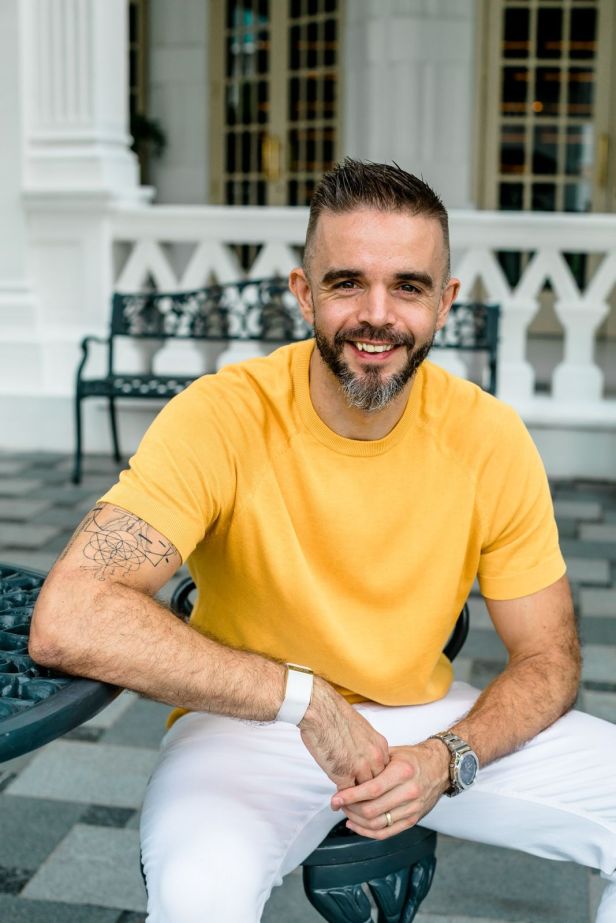
At LinkedIn, we have strong values that are actively lived, not just words on a wall. These values shape how I hire and lead. For example, values like integrity and collaboration—what we call “One LinkedIn”—guide decision-making when no one is watching. I also look for people who are great at building relationships, a crucial skill to influence and move things forward.
You lead high-performing teams across APAC. What qualities do you look for when building and nurturing a strong analytics team?
At LinkedIn, we have strong values that are actively lived, not just words on a wall. These values shape how I hire and lead. For example, values like integrity and collaboration—what we call “One LinkedIn”—guide decision-making when no one is watching. I also look for people who are great at building relationships, a crucial skill to influence and move things forward.
Problem-solving ability is a must. Creativity, communication, stakeholder management, and the ability to prioritise findings are also key. I test for integrity in interviews. Not knowing everything is fine, but making things up is not.
I also assess future potential. I’m not just hiring for now; I want to see how someone can grow into bigger roles. Interestingly, I don’t focus as much on hard technical skills. Yes, a base level like SQL is needed, but soft skills, which I call “human skills”, are harder to teach and often more important in the long term.
Diversity, equality, and inclusion are close to your heart. How do you help organisations move beyond intent and towards giving everyone an equal opportunity to succeed?
Personally, I try to be aware of my own biases and be intentional about inclusion. Professionally, we help clients with data insights, particularly around gender and generational diversity.
For example, we can benchmark gender diversity in a company’s current workforce, hiring pipeline, and even analyse how job descriptions may affect application rates by gender. We can also highlight whether companies are messaging diverse talent pools effectively.
A memorable moment for me was when I showed a client that many highly qualified candidates didn’t have master’s degrees. As a result, they dropped that requirement, broadening their talent pool and promoting equal opportunity. These are small but meaningful changes that data can help drive.
What excites you most when you wake up every morning?
First, my slow mornings. I enjoy my coffee, journalling, a bit of meditation and breathing. Then it’s time with my daughter. I’m the morning person at home, so I get her ready. Her hugs and our little routines always bring joy to my day.
What’s your vision for Singapore in the next five years?
Singapore stands for cultural harmony, progress, and competitiveness. I believe it has the potential to become a global benchmark for adaptive talent ecosystems, leading not just in attracting talent but in reskilling it too.
With AI adoption accelerating, Singapore is already at the forefront in Asia, with a growing AI startup scene and strong regulatory efforts. I also believe Singapore has the chance to enhance its “Blue Zone” attributes such as promoting longevity and quality of life. With green spaces, community hubs, walkability, and safety, Singapore could further innovate on urban wellness and help citizens live better and longer lives.
If you could have a superpower for one day, what would it be and why?
I would choose the ability to instantly learn deep skills in minutes—like in The Matrix, where Neo downloads kung fu into his brain. I would spend the whole day absorbing as many advanced skills as possible, massively expanding my abilities in a short time.
Connect with Remko: Instagram.
Remko is a member of Rainmaker, a revolutionary movement that rallies like-minded people together based on the values of Love, Authenticity, Respect, Kindness and Youthfulness (LARKY).

