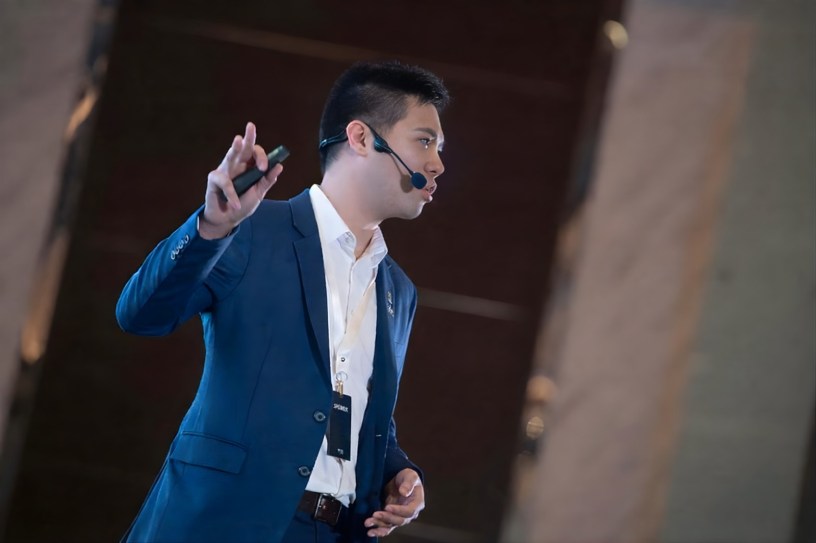
Meet Joshua, the founder of AiWorkFlo, an AI automation agency helping SMEs streamline operations and deliver exceptional customer service. With a background spanning engineering, finance, and coding, Joshua combines deep technical know-how with a passion for solving repetitive inefficiencies.
From building piping systems to developing algorithmic trading tools, Joshua’s journey has always been rooted in automation. Today, he empowers businesses to scale smarter by integrating AI with a human touch, freeing teams from routine tasks so they can focus on what truly matters: relationships, impact, and growth.
What inspired you to start AiWorkFlo, and how did your background influence your approach to AI automation for SMEs?
AiWorkFlo started as a childhood dream, heavily influenced by my uncle. He’s the only entrepreneur in my family, who was also the least formally educated.
He was a self-starter and a visionary, and I found that inspiring. I have always been a systems guy. I hate repetitive work. AI automation wasn’t my first field. I started out as a mechanical engineer, building piping systems and doing technical calculations.
Later, I moved into asset management and finance. Even then, I constantly looked for ways to automate tasks, whether it was building spreadsheets or plugging in Excel tools for investment analysis.
In my finance days, our team used to manually key in data from five years’ worth of annual reports. I streamlined that by developing Excel plugins to fetch financial data with a single click. Eventually, I hit limits and had to learn how to code.
That is when we shifted to a fully algorithmic, systematic investment process that went from taking two weeks to mere minutes. I have been familiar with OpenAI’s GPT since version 2, but the real “aha” moment came with GPT-3.5. Its capabilities unlocked broader potential, not just in finance, but across industries.
That was when I knew the time was right to launch my own AI automation business. People were constantly asking me how to prompt, build, and implement. I knew there was demand.
AiWorkFlo blends AI and human elements in customer service. How do you ensure the human touch isn’t lost in your automated systems?
We learned this the hard way. I have spent two years on the ground implementing AI solutions, especially for clinics. I was often the de facto customer service guy at the start, shadowing operations, answering WhatsApp messages, and learning how each business runs.
Two key lessons emerged. First, just because we can automate something doesn’t mean we should. Early on, we flooded customers with reminders and feedback prompts to reduce no-shows. It backfired. We eroded the human connection and damaged relationships.
Second, even with automation, humans still crave emotional connection. A product or service isn’t enough. People want to feel understood. Understanding the customer journey is essential. For new leads who don’t know your brand, the interaction is purely informational, such as product details, pricing and appointments. This can be automated.
But once someone walks into your retail shop or tuition centre, everything changes. That is when human interaction becomes key. For example, once someone has a favourite teacher or a regular therapist, they expect familiarity and emotional resonance.
In short, we use AI to handle repetitive, emotionless tasks, freeing up staff to focus on deepening relationships. Ironically, AI, when done right, enhances the human touch. As automation becomes more common, genuine human connection will become a rare and valuable asset.
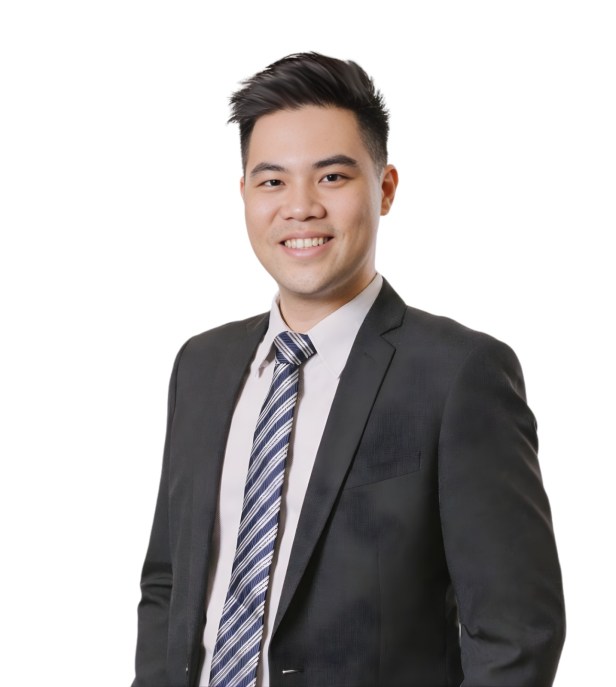
First, just because we can automate something doesn’t mean we should. Early on, we flooded customers with reminders and feedback prompts to reduce no-shows. It backfired. We eroded the human connection and damaged relationships. Second, even with automation, humans still crave emotional connection. A product or service isn’t enough. People want to feel understood.
Could you share a success story where your company transformed a client’s operations or customer experience?
I remember walking into one of our first client clinics. The atmosphere was tense. Staff were buried in their phones, frantically replying to leads. The pressure to respond quickly, especially during marketing campaigns, was immense. If they didn’t close a lead, they would get scolded by management for wasting ad dollars. As a result, in-person customers were often ignored or greeted without warmth. Staff were overwhelmed by messages, appointment reminders, and rebooking requests.
After we implemented our systems, the transformation was dramatic. Now, when I walk in, staff are smiling, making eye contact, and greeting customers warmly. They have the bandwidth to build rapport and offer more personalised care.
One customer review even mentioned how a therapist sat down for 10 to 15 minutes just to listen. That level of presence builds real loyalty, and it is only possible because repetitive operational tasks were offloaded through automation.
Many SMEs assume growth means spending more on ads, but most leakage actually happens after the lead comes in.
In 2025, our customer service AI supported approximately SGD 8 million in combined revenue across our clients, by improving response speed, follow-up consistency, and lead handling quality. This helped clients increase conversion rates without increasing ad spend unnecessarily.
The real shift is understanding that automation is not about replacing human touch, but protecting it by removing friction where it does not add value.
What are the top misconceptions SME owners have about automation, and how do you help shift their mindset?
The first misconception is that every company needs automation. Not true. If there’s no volume, or if the tasks don’t require scale, it may not be worth the effort. We have turned down clients where automation would have become a white elephant.
Second, people often think automation is a silver bullet, but it’s really a multiplier. If your systems are broken, automation only scales the chaos. If your SOPs are solid, it will scale your efficiency. AI doesn’t come with context. It can’t replace situational awareness or human judgement.
Third, some business owners think they can fully hand off tasks to AI. That’s dangerous. AI can handle 80–90% of repetitive tasks but still needs human supervision for exceptions, edge cases, and emotional nuance.
What advice would you give to fellow entrepreneurs who want to leverage AI in their business but don’t know where to start.
Start by asking: what repetitive work is taking up your team’s time and doesn’t require human judgment or emotional engagement? That’s your starting point. Focus on one simple workflow, like appointment rescheduling or invoice reminders and expand from there.
Always track ROI. After implementation, monitor time savings and customer feedback. Most AI projects take around three months to learn, adjust, and stabilise. Don’t DIY everything, just like you would hire an aircon technician or car mechanic. It pays to work with someone who knows what they are doing.
Get advice from those who have built and broken workflows. It will save you time and costly mistakes.
What do you think makes a good entrepreneur?
Three things: grit, pattern recognition, and humility. Grit keeps you going through setbacks. Pattern recognition helps you understand customer behaviour and improve your systems. And humility, especially in listening to clients and your team, is crucial. Feedback is your fastest route to improvement. Shut it down, and you shut down growth.
What’s your vision for Singapore in the next five years?
Singapore is one of the best places to launch a business, thanks to government support and infrastructure. I believe it can become the AI automation capital of Southeast Asia. I envision a future where SMEs no longer burn out replying to messages late at night.
AI will manage the front desk 24/7. It is both multilingual and efficient. Businesses here will be more profitable, efficient, and customer-centric. The same staff can now 10x their output with AI support. Human connection will become a premium and AI frees us to focus on it.
If you could have a superpower for one day, what would it be and why?
I would want the power to instantly transfer context and understanding—like in the movie The Matrix, where Neo plugs in and says, “I know kung fu.” It would revolutionise communication, training, and learning. No more miscommunication, no lengthy onboarding, just direct knowledge transfer. With that, we could build faster and create even more impact.
Connect with Joshua: Facebook and Instagram.
Joshua is a member of Rainmaker, a revolutionary movement that rallies like-minded people together based on the values of Love, Authenticity, Respect, Kindness and Youthfulness (LARKY).