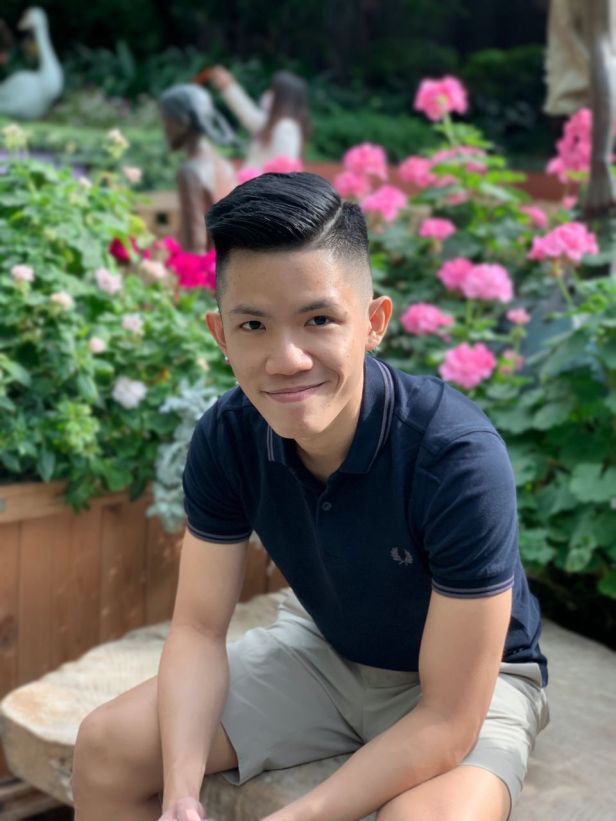
Meet Admond, a physicist turned data scientist and startup founder who has experienced both failure and acquisition within his entrepreneurial journey. After leaving a stable career during COVID to build his first startup, he went on to co-found and exit his second venture within eight months, gaining rare, hard-earned insight into what truly makes startups succeed or fail.
Today, Admond is the founder of The Runway Ventures, a weekly newsletter that dissects startup failures across Southeast Asia. By applying first-principles thinking and deep pattern recognition, he helps founders avoid costly mistakes and stay in the game long enough to win, redefining what it really means to be a top 1% founder.
You started your journey as a physicist and later became a data scientist. How did scientific thinking shape how you approach startups and decision-making today?
My background in physics fundamentally changed how I think and solve problems. The biggest takeaway is first-principles thinking, breaking problems down to their most fundamental truths and rebuilding solutions from there. This approach influences how I build startups and make everyday decisions.
For example, with The Runway Ventures, most people only talk about startup success stories, IPOs, and large fundraises. Yet, despite all these success cases, 99 percent of startups still fail. When you break this down to first principles, the reality is that founders keep making the same mistakes.
If sharing failed startup stories can help even one founder avoid dying with their startup, then the problem is worth solving. This mindset comes directly from my physics training: break problems down, understand the root cause, and rebuild from there.
Quitting your job during COVID to build your first startup was a bold move. Looking back, what motivated that decision and what was the biggest assumption you got wrong with your first startup, STAQ?
Quitting my job during COVID was definitely unconventional, especially when everyone else was trying to secure employment. Fundamentally, I had always wanted to build something of my own that could help others, and corporate life no longer felt aligned.
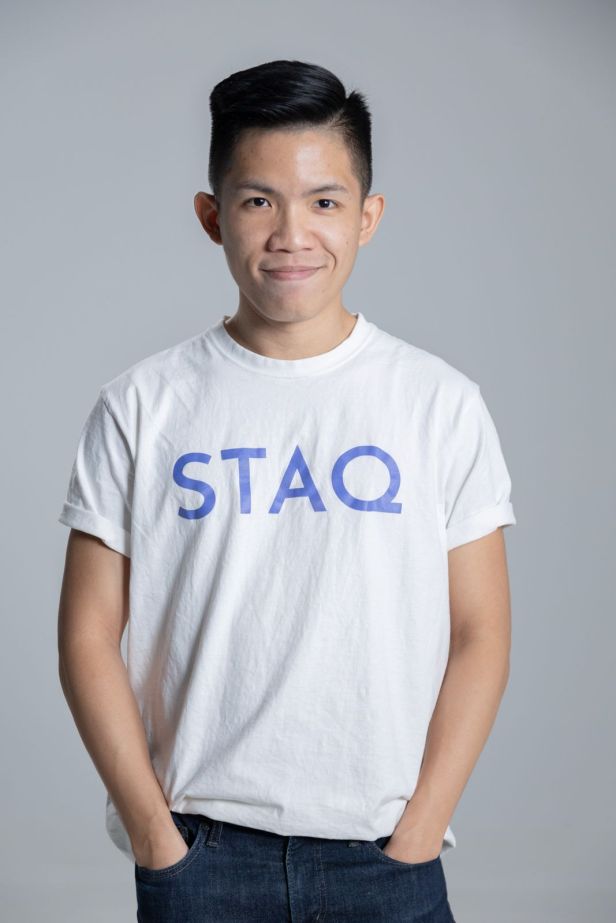
A major factor was Entrepreneur First, an incubator that offered a stipend to de-risk the leap and help founders find co-founders. That gave me the confidence to quit and take the risk. STAQ was a fintech startup that helped digital lenders access SME financial data more efficiently.
We assumed that a model working in the UK, used by a company called Codat, would work in Southeast Asia. We essentially copied the model without validating the core behaviour of SMEs here. The biggest mistake was assuming SMEs would be willing to share sensitive financial data. They were not.
Trust was the missing factor, and because we did not validate this assumption early, the business ultimately failed two and a half years later.
Your second startup, Leadgram, was acquired within eight months. What did you do differently the second time that made a meaningful impact?
The biggest difference was revenue focus. My first startup made no money and relied entirely on funding. With Leadgram, I cared less about vision size or becoming a unicorn and more about whether clients would pay to solve a real problem.
Leadgram helped brands generate leads through targeted Instagram DM automation, and we quickly found paying customers. Timing also played a role. Our acquirer, The Smart Local, was looking to expand its tech media capabilities regionally, and Leadgram fit that need. Within eight months, the acquisition was completed.
The quote I live by is “If not now, when?” It reminds me of urgency and accountability. Time passes quickly, and waiting for the perfect moment usually means missing the opportunity entirely.
With The Runway Ventures, you analyse failed startups every week. What common mistakes do you see repeatedly across industries and stages?
After analysing over 100 startup stories across Southeast Asia, I see five recurring reasons why startups fail. First, they grow too fast, hiring aggressively and spending heavily before generating revenue. Second, they spend too much, often because first-time founders struggle to manage large sums of VC money responsibly.
Third, they pivot too slowly, dragging on with failing ideas to avoid disappointing investors. Fourth, they operate unsustainable business models, spending more to earn less, especially in a tighter post-COVID funding environment.
Finally, there is a lack of governance. Poor financial controls, inflated numbers, and weak oversight have caused even unicorns to collapse. These five mistakes appear repeatedly across markets and industries.
What does being a “top 1% founder” mean to you beyond revenue, funding, or exits?
We do not lack successful founders in terms of numbers. What we lack are founders who can stay successful without making costly mistakes. To me, being a top 1% founder means staying in the game long enough to win.
Mistakes are inevitable, but costly mistakes are avoidable. The biggest leverage founders have is learning from other people’s failures, which is why I built The Runway Ventures.
What is the quote you live by, and how has it supported your life?
The quote I live by is “If not now, when?” It reminds me of urgency and accountability. Time passes quickly, and waiting for the perfect moment usually means missing the opportunity entirely.
This mindset has helped me take action and achieve many of my goals.
What’s your vision for Singapore in the next five years?
I hope Singapore’s startup ecosystem becomes more mature, with founders solving meaningful problems rather than building businesses purely for quick profits.
There are many deep societal problems that can be addressed with technology and AI, but founders often choose the easiest paths instead. More founders taking risks, building value-driven solutions, and creating jobs will benefit society as a whole.
If you could have a superpower for one day, what would it be and why?
Storytelling. Storytelling moves emotion, and emotion drives decisions. Facts alone rarely inspire action. By mastering storytelling through writing and speaking, I believe it is the most powerful tool to build communities, align people, and achieve meaningful impact.
Connect with Admond: TheRunwayVentures and LinkedIn.