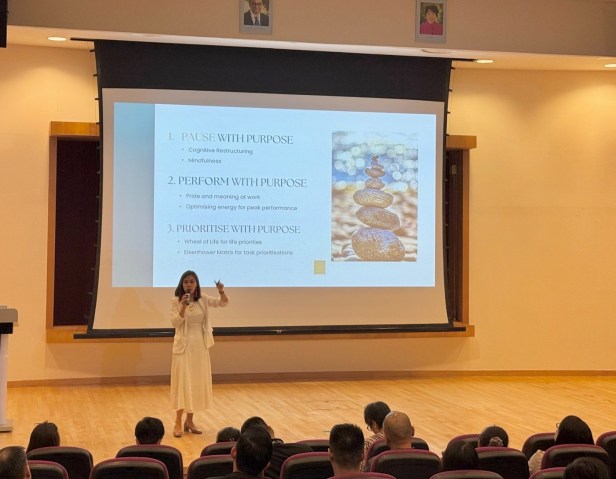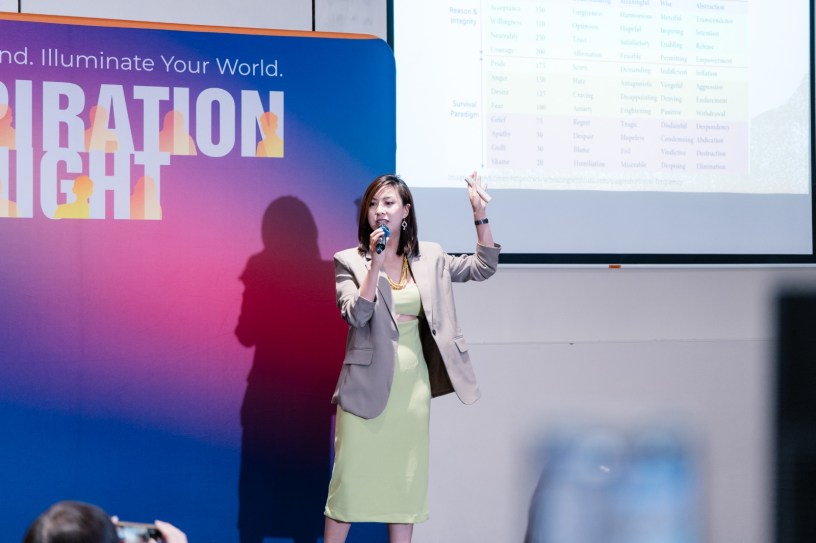
Meet Jasmine, who spent years building her career in corporate education and training, never imagining she would one day start her own organisation. Outwardly functional and accomplished, she quietly struggled with emotional overwhelm, a challenge that intensified when she became a mother. What began as a deeply personal journey to understand her own emotions eventually reshaped her purpose and direction in life.
Today, Jasmine is the founder of The Umbrella Connection, an organisation centred on emotional intelligence and relational well-being. Drawing from lived experience, professional training, and years of personal growth, she now supports parents, couples, and individuals in developing healthier emotional patterns, stronger relationships, and greater self-awareness.
What inspired you to start The Umbrella Connection, and how did the journey begin?
I have always worked in education and training, but only within corporate settings. I never imagined myself as an entrepreneur and assumed I would remain in corporate for life. What changed was a personal and emotional journey.
From young, I knew I was emotionally intense. When my emotions weren’t channelled in healthy ways, they became overwhelming. I could function well externally, but behind closed doors, I often lost control.
Motherhood magnified everything. The stress and anxiety of being a first-time mum added to the pressure. As my child grew and began expressing his emotions, I found myself melting down alongside him instead of anchoring him. One day, I saw my son reacting in the same way I had just weeks before and I realised he was mirroring me.
The turning point came one night after a long day. I kissed my kids goodnight, saying “I love you.” My son replied, “Good night, Mummy. I love you. Don’t always be so angry, okay?” That moment hit hard. I realised the legacy I was leaving wasn’t the good memories. It was my anger. I knew I had to understand why I was wired this way and make a change.
I chose learning over quick fixes and enrolled with Six Seconds, the world’s largest emotional intelligence network. What began as self-discovery turned into a five-year healing journey. As I learnt to regulate my emotions, my relationship with my children transformed.
After a year of side projects like a podcast and peer mentoring, I decided to leave corporate life. That’s how The Umbrella Connection was born.
Running a support organisation comes with many hurdles. What has been the most difficult challenge, and how do you overcome it?
The biggest challenge was shifting from a corporate mindset to wearing every hat in a business. I had to think strategically like a CEO, manage operations, and handle marketing and sales, all as a one-person company.
Balancing this with family life was particularly difficult because entrepreneurship has no clear start and end times. I had to learn to set firm boundaries and become my own accountability partner.
Even when I wanted to keep working, I had to recognise when it was time to stop and prioritise family. This discipline has helped me avoid burnout and preserve the quality time that motivated me to pursue entrepreneurship in the first place.
Your work touches many lives across vulnerable and underserved groups. How would you describe the core mission of The Umbrella Connection?
The Umbrella Connection is built on helping people become smarter with their emotions. Every person has emotional intelligence and the ability to regulate and navigate emotions, but many struggle to unlock it.
While humanity has progressed rapidly in intellectual and technological development, our emotional capacity has not evolved at the same pace. Our hearts still break the same way they did thousands of years ago.
Our mission is to help individuals recognise their emotional capabilities, develop self-awareness, and improve relationships. Emotional intelligence is an innate power, and The Umbrella Connection exists to help people access and use it to become better versions of themselves.

The turning point came one night after a long day. I kissed my kids goodnight, saying “I love you.” My son replied, “Good night, Mummy. I love you. Don’t always be so angry, okay?” That moment hit hard.
Can you share a story where your work had a transformative impact on an individual or family?
A mother who had been a full-time housewife for years struggled with confidence and frequent emotional outbursts that affected her children and self-image. Despite therapy, she felt stuck in guilt and self-blame.
Through coaching, we uncovered deep-rooted emotional patterns from her childhood. As she worked through them, she began staying calm in moments that once triggered her. Her child responded with improved communication, something she had never experienced before.
We focused on progress, not perfection, celebrating each small win. Supporting her reminded me of the immense responsibility and privilege of shaping a child’s emotional world.
What is one simple mindset change that can help couples who are close to breaking up or divorcing?
There is rarely a simple or immediate fix, but the most important starting point is asking the right questions. The first question is whether both parties genuinely want to fix the relationship. Without desire on both sides, no tools or techniques will work.
Once that desire is clear, couples must define where they want the relationship to go.
I use a framework called CALM. The first step, Categorise, involves naming the emotion being felt. Naming an emotion reduces its power. Appraise follows, where individuals explore what the emotion is trying to communicate.
Link then aligns the current situation with the shared goal, identifying where misalignment exists. Finally, Move focuses on taking intentional action, because emotions drive behaviour.
This framework helps couples move forward with clarity rather than reacting impulsively.
What is one lesson you have learned from the people you work with that has deeply shaped your own life?
Every parent, couple, and individual I work with reflects something back to me, either as a reminder of my own experiences or as new wisdom. This shared learning creates a virtuous cycle where we grow together.
Working with others continually reinforces lessons about empathy, resilience, and the power of emotional awareness in everyday life.
What’s your vision for Singapore in the next five years?
While Singapore continues to advance rapidly in technology and economic output, I hope we also place greater emphasis on emotional health and well-being. Anxiety, suicide rates, and strained relationships are rising despite material progress.
My hope is that we grow emotionally alongside our intellectual achievements, creating healthier households, workplaces, and communities that positively shape the nation and beyond.
If you could have a superpower for one day, what would it be and why?
I used to wish for the ability to read minds, but now I would choose a calm reset. The ability to instantly surrender control and access inner peace whenever stress arises would be incredibly powerful.
Connect with Jasmine: TheUmbrellaConnection, Instagram and TikTok.