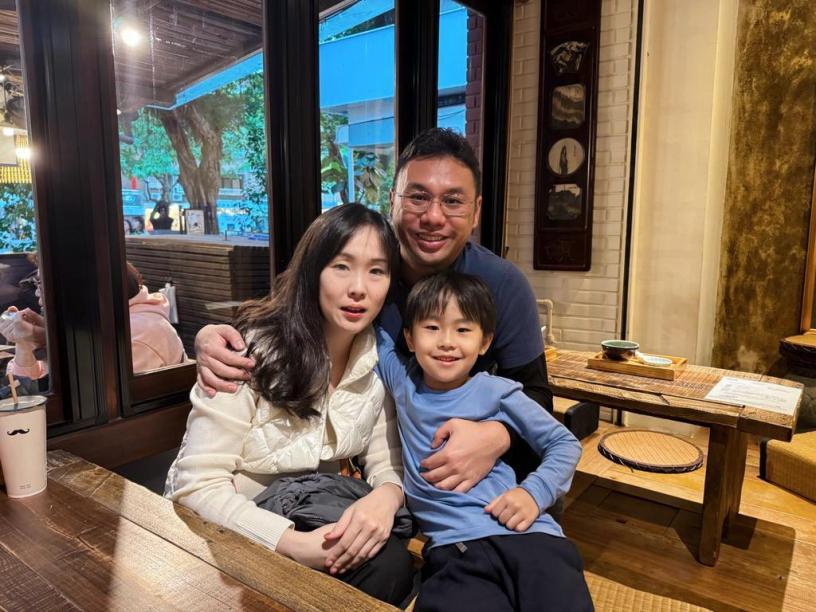
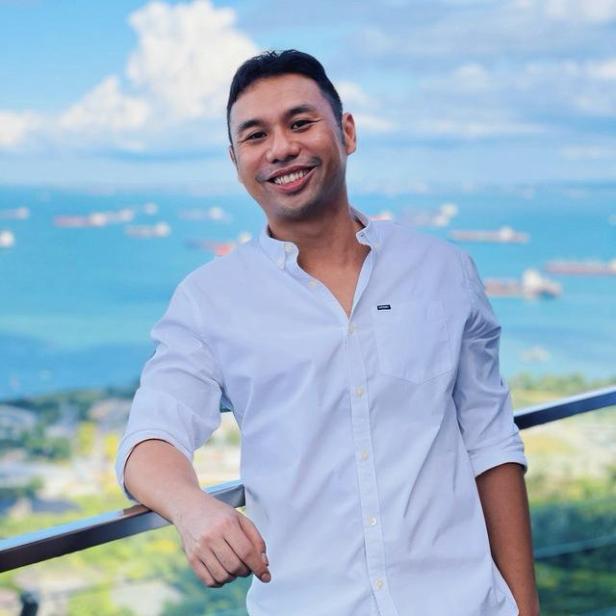
Meet David, who has seen both sides of the business world—corporate boardrooms where strategies are debated on paper, and the gritty reality where founders execute under pressure. After years in banking, consulting, and advisory roles, he made a decisive shift into entrepreneurship and angel investing, driven by a desire to move beyond theory and into real-world impact. For David, business is not just about numbers or deals; it is about translating ideas into companies that create genuine value, solve meaningful problems, and grow sustainably.
Today, David works closely with SME founders as an investor, mentor, and strategic partner, bringing hard-earned lessons shaped by both successes and costly mistakes. From insisting on values alignment and founder accountability to building data-driven platforms like TrustShield that help industries manage risk more intelligently, David’s approach is grounded, pragmatic, and deeply human. His journey reflects a belief that resilient businesses are built not just with capital, but with character, clarity, and the courage to learn from failure.
You have worked across banking, consulting, and advisory roles before becoming an entrepreneur and angel investor. What was the turning point that allowed you to step into entrepreneurship full-time?
What I did in banking, consulting, and advisory was intellectually engaging, but over time I recognised a gap between pushing papers and real-world execution.
Real-world execution requires reconciling strategic plans with on-the-ground realities such as constraints, human behaviour, imperfect information, and constant trade-offs. That is the environment entrepreneurs navigate every day.
I found greater fulfilment and challenge in building businesses that turn ideas into reality, create value for customers, solve meaningful problems, and generate sustainable profit.
You actively invest in SMEs and work closely with founders. What are the top qualities you look for when deciding whether a business is worth investing in?
The most important quality is alignment of values — 三观吻合(世界观、价值观、人生观) , meaning alignment in worldview, values, and life philosophy, as well as the founder’s 人品 (personal character).
I think that’s crucial when choosing founders or business partners. This shared foundation shapes how we view problems, make decisions, weigh trade-offs, and resolve challenges, and it is what makes long-term collaboration possible.
Of course, we also evaluate the business model: is it scalable, and can it be profitable in the long run? We also assess the systems and processes — can the business operate even when the founder is not present? That’s a critical factor. In the past, we have worked with founders who were dishonest or unethical, and we lost money as a result. Now, we are more cautious.
Another key learning: the founder must have “skin in the game.” We once invested 100% of the capital while the founder contributed nothing. He later behaved irresponsibly and did not take ownership of problems. Now, we insist founders contribute financially, even if it means borrowing, because when challenges arise, they must be just as committed to solving them.
Many SME owners struggle with scaling or succession planning. From your experience in M&A advisory, what are the most common blind spots you see among SME founders?
Many SMEs are still very founder-centric. The founder is the pillar of the business. Without them, the company could collapse. This is understandable, as SMEs often face manpower issues and lack quality talent. Many founders are multi-talented and capable, which is why the business exists in the first place.
But the biggest blind spot is not replicating themselves through systems, SOPs, or delegating to key team members. It’s easier said than done. Yet, this is often why investments fall through, because no one will invest in a business that cannot survive without its founder.
That was when a hard truth became clear: when things go wrong, some people do not take ownership. They always look for someone else to blame. What frustrated me was not the business failure, but that a goodwill gesture was turned against me. I was unpaid, yet became a convenient scapegoat.
Angel investing often requires more than just capital. How do you typically support founders beyond funding, and what role do you play after investing?
After we invest, we often have to fight fires with them. Founders run their day-to-day, but when issues arise that they struggle to solve, we step in. We brainstorm, open our networks, and work through problems together.
We typically assess the situation, identify available options, weigh the pros and cons, assign tasks, gather more information, and return to refine our options. Maybe a new option emerges. Then we align and commit to the best path forward. It’s hands-on, and this collaborative problem-solving is the most challenging and rewarding part of angel investing.
What has been one investment or business decision that taught you the most, even if it didn’t go as planned?
We often learn the most from failure. When we make money, our systems, structure, processes, and SOPs appear to be working. Failure, however, exposes blind spots that success tends to hide.
One such lesson came from providing goodwill Chief Financial Officer (CFO)-type support to a private credit client. As a gesture of goodwill, I helped with capital budgeting, resource allocation, and cash flow planning to support sustainable growth—free of charge. I did so because the client knew I had been running my own accounting firm for over 12 years, and he trusted my business experience and exposure.
When the client later struggled to repay its working capital loan to my private credit firm, he blamed my cash flow forecasts and advice. That was when a hard truth became clear: when things go wrong, some people do not take ownership. They always look for someone else to blame.
What frustrated me was not the business failure, but that a goodwill gesture was turned against me. I was unpaid, yet became a convenient scapegoat.
Since then, I’ve been far more careful with goodwill services. If additional support is needed, I refer clients or investees to independent third-party professionals, or advise them to engage one directly.
It was a difficult experience, but an important one. One that reshaped how I draw boundaries between goodwill, responsibility, and accountability.
What message would you give your 2026 self, and what’s one thing you would do differently?
I believe strongly in income diversification. COVID taught us that some industries suffer during crises while others thrive. What if next time, the sector I’m in is hit hard? So in 2026, I want to continue diversifying my income streams.
That’s why I invest in new businesses like TrustShield, and after I scale it up, I would like to explore another venture.
What major pain points in the vehicle rental and hire-purchase industry led you to realise there was a need for a risk intelligence platform like TrustShield?
TrustShield was built upon a 15-year-old database used by companies in the vehicle rental, leasing, and hire purchase sectors. These companies face serious challenges. Drivers or hirers often default on payments, abandon vehicles, or even get into accidents and refuse to pay the excess, which can run into thousands.
Some even make threats. Recovering losses from such individuals is extremely difficult, as they often have poor credit histories. Rental losses of $1,000 to $4,000 are common; accident-related losses can go up to $20,000.
This is where the legacy database comes in. It tracks individuals with poor payment or conduct records, allowing companies to screen potential customers, just like a credit bureau. I saw immense value in this. Coming from a private credit and SME advisory background, I understand the importance of data in credit assessments.
By taking over the platform, I brought independence, improved data integrity, and introduced enhancements. My goal is to get more major players onboard and make TrustShield the go-to risk intelligence platform in this industry.
If you could have a superpower for one day, what would it be and why?
Time manipulation. I would go back in time and avoid making poor investment decisions. I would retain the experience but avoid the financial losses. That would be ideal, wisdom without the pain.
Connect with David: Facebook and Instagram.
David is a member of Rainmaker, a revolutionary movement that rallies like-minded people together based on the values of Love, Authenticity, Respect, Kindness and Youthfulness (LARKY).
