
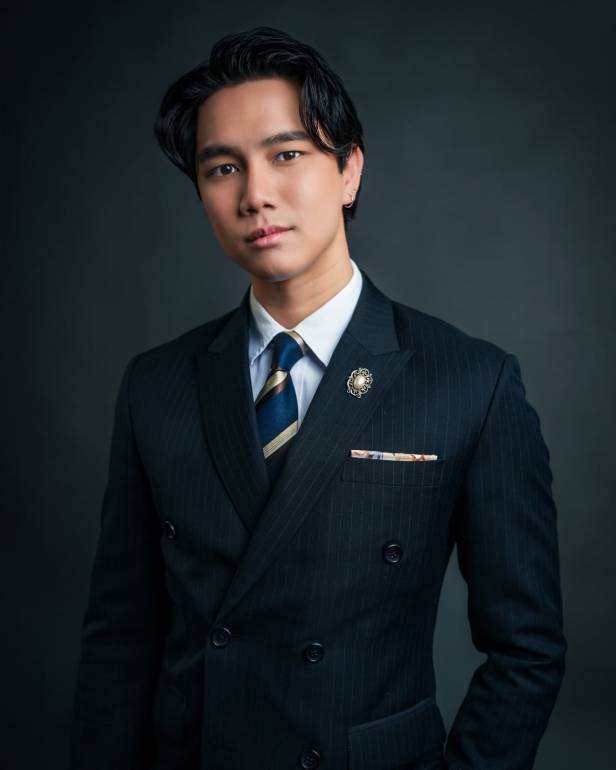
Meet William Archery, a specialty insurance strategist who helps founders, creators, and institutions safeguard what truly matters, from IP and platforms to priceless artefacts and productions. In an economy powered by digital assets and creative innovation, protecting the invisible has become the new frontier.
Through his expertise in niche risk, William is reframing how we think about insurance, not as a back-office formality, but as a strategic shield for growth, trust, and continuity. Whether you’re scaling a start-up or staging a world-class exhibition, he believes the real advantage lies in foresight, not fear.
You specialise in niche and complex risks. Why is specialty insurance becoming increasingly important in today’s digital and creative economy?
Today’s businesses are increasingly intangible—software, data, intellectual property, brands, platforms, and reputation are their biggest assets. Traditional insurance was built for physical assets like buildings, property, and vehicles. But in today’s digital and creative economy, these invisible assets can cause catastrophic damage when compromised.
Companies scale globally and operate across jurisdictions, so specialty insurance is essential. It fills the gap where standard policies fall short, covering issues like cyber incidents, IP disputes, platform failures, and even director and officer liabilities. It’s no longer a question of if something happens, but how prepared you are when it does.
Many founders assume cybersecurity tools are enough. At what point does insurance become a necessity rather than an option?
This is something I see often, where business owners sweeping risks under the rug. Insurance becomes a necessity the moment a business holds data or is entrusted with responsibilities that affect others. The moment clients, users, or partners rely on you, the risk becomes shared.
Cyber tools reduce risk, but insurance handles the residual risk and recovery. It becomes critical when downtime, lawsuits, or breaches threaten business survival. It’s not about fear, but it’s about resilience and continuity.
Intellectual property is often a company’s biggest asset. What kind of IP risks do businesses commonly underestimate?
Many assume IP disputes only happen to large companies, but that’s not the case. Ownership clarity is often overlooked. Who really owns the core designs or content? Disputes can arise between employers, employees, and contractors.
There are also risks of accidental infringement and unexpected legal costs, especially when disputes cross borders. IP insurance isn’t just about defending against claims; it’s about protecting your right to operate and move forward with your ideas.
Business owners need to stop seeing insurance as a cost and start seeing it as strategic infrastructure. Ironically, insurance is often the first thing cut during economic downturns.
You also insure museums, auction houses and entertainment productions. What makes insuring such priceless artefacts or major events so complex?
This is one of the most fascinating parts of my work. These assets and productions are often irreplaceable, such as one-time events, unique items, or once-in-a-lifetime performances.
The complexity lies in their subjective value, provenance, and exposure to various risks such as transport, storage, handling, crowd interaction, weather, and even political threats.
For us, insurance in this space is about precision, not volume. Every detail matters to ensure that every party involved has peace of mind. In productions, it’s even more layered – tight timelines, reputational risks, and multiple stakeholders. It’s expensive to insure, but given the stakes, it’s essential.
What mindset shift do business owners or creatives need to make when thinking about risk and protection?
Business owners need to stop seeing insurance as a cost and start seeing it as strategic infrastructure. Ironically, insurance is often the first thing cut during economic downturns. But I believe risk management enables creativity. When there’s a safety net, founders feel more freedom to scale, collaborate, and innovate.
The right question isn’t “what’s the cheapest cover?”, but it’s “what failures can I not afford?” That shift in thinking can change the trajectory of a business.
If you could turn back time, what is one thing you would change or choose not to do?
I would stop trying to do everything alone. Asking for help, seeking mentorship, and embracing collaboration took me further than the solo grind ever could. There’s truth in the saying: “If you want to go fast, go alone. If you want to go far, go together.”
That lesson has shaped how I advise clients too. It’s better to share your risks and get support than shoulder everything yourself.
What’s your vision for Singapore in the next five years?
I see Singapore strengthening its position as a trusted hub for digital, creative, and cross-border businesses. Cyber resilience, IP protection, and white-collar services will become more vital, with increased collaboration across tech, finance, and creative industries.
It’s a move towards innovation with safety, not recklessness. Singapore is a model for secure, sustainable growth, and I believe more companies will look to us as a base for scaling with confidence.
If you could have a superpower for one day, what would it be and why?
It would be the ability to fully understand perspectives, seeing risks, tensions, and blind spots before they surface. Essentially, empathy and foresight. It’s the ultimate risk management superpower: to sense what could go wrong, and act before it does.
Connect with William: Instagram and LinkedIn.
William is a member of Rainmaker, a revolutionary movement that rallies like-minded people together based on the values of Love, Authenticity, Respect, Kindness and Youthfulness (LARKY).