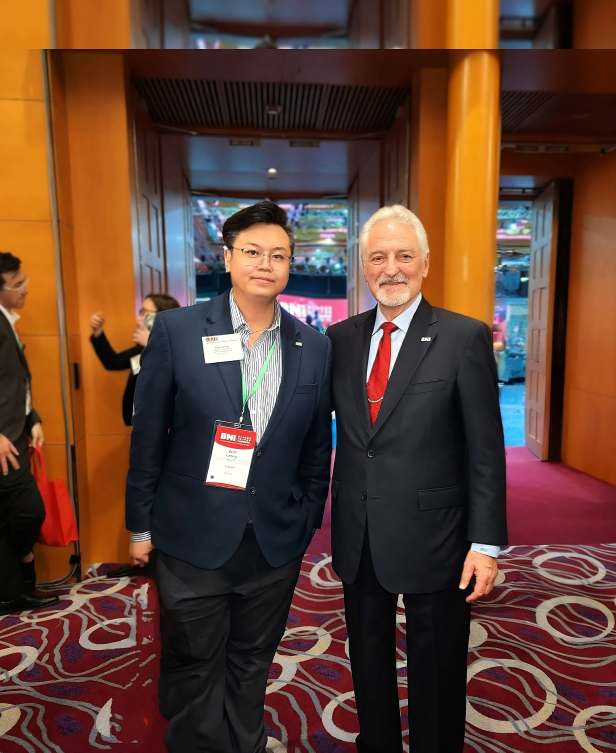
Meet Zach, Finance and Marketing Director at Faithtrust Accounting, a firm he founded 11 years ago. With over 23 years in the finance and compliance industry, he brings a rare blend of technical expertise and business insight. He specialises in financial reporting, tax advisory, and compliance solutions that not only meet statutory requirements but also empower SMEs to make better decisions and grow sustainably.
Zach believes that good financial reporting isn’t just about numbers. It’s the story of a business told in a way that helps founders, shareholders, and partners understand the true state of play. He’s passionate about helping businesses unlock clarity, improve cash flow, and avoid costly compliance mistakes, all while staying ahead in a fast-evolving financial landscape.
You have spent over 23 years in finance and compliance. What inspired you to specialise in financial reporting and tax advisory?
I was drawn to the tangible impact that both areas have on business success and longevity. Financial reporting, in particular, is not just a compliance task. It’s the story of a company told in numbers.
I’m passionate about translating complex financial data into clear insights that help shareholders make informed decisions.
Statutory reporting can be complex and highly detailed. What are the biggest misconceptions companies have about financial reporting in Singapore?
A common misconception among SMEs is that financial reporting is merely to meet IRAS and ACRA requirements. In reality, these reports are crucial internal tools. They help SMEs understand which parts of their business are profitable and which are not, essentially acting as a financial report card.
It also provides insight into cash flow and working capital, which is far more valuable than just being a compliance checkbox.
In your experience, what are the most common compliance pitfalls SMEs face and how can they avoid them?
One of the biggest issues is poor record keeping. Many SMEs don’t invest in accounting systems and instead rely on bank statements to gauge profitability. This is inaccurate, as it doesn’t reflect capitalised assets or proper expense classification.
Another pitfall is the mixing of personal and business funds. Directors often use company accounts for personal expenses, which creates compliance and audit issues.
Cash flow is king, profit is an opinion. Profit can appear healthy due to accounting treatments like depreciation, but it doesn’t necessarily reflect actual liquidity.
Can you share a challenging tax case where your advisory made a significant difference to the client’s outcome?
I worked with a Singapore-based tech company with an overseas subsidiary. The tax authority viewed the subsidiary as a dependent agent of the parent company, risking an $800,000 tax exposure.
I conducted a detailed financial analysis, proving the subsidiary’s independence and showing that core functions like contract signing were performed in Singapore.
This helped negate the existence of a permanent establishment overseas, saving the company from significant tax liabilities.
What is one financial principle you believe every business owner should understand regardless of industry?
Cash flow is king, profit is an opinion. Profit can appear healthy due to accounting treatments like depreciation, but it doesn’t necessarily reflect actual liquidity.
Cash flow determines whether you can pay salaries, rent, and suppliers. A profitable company can still fail if cash flow isn’t managed properly. It’s critical for business owners to monitor both.
If you could meet one business owner over dinner, who would it be and why?
I would love to meet the founder of Grab, Anthony Tan. His journey from building a local transport app to creating a tech ecosystem that empowers drivers and small businesses is inspiring. I admire how he aligned technology with community upliftment, especially in regions like Indonesia.
I would be keen to learn how he navigated complex regulatory environments and built a business that operates across multiple jurisdictions.
What’s your vision for Singapore in the next five years?
I foresee Singapore becoming a global leader in sustainable finance and mandatory climate-related disclosures. There will be increased demand for green reporting standards and innovative financial instruments for transition projects.
AI-driven compliance, especially in areas like KYC (Know Your Customer) and anti-money laundering, will also become the norm. We will need specialised talent to stay competitive, especially in Web3 and decentralised finance sectors.
If you could have a superpower for one day, what would it be and why?
I would choose the ability to instantly reveal the full financial truth of any company, including off-balance-sheet risks, pending lawsuits, and environmental liabilities.
This would provide clarity for regulators, investors, and decision-makers, enabling them to act with full transparency and stabilise financial risks before they spiral.
Connect with Zach: FaithTrustAccounting and LinkedIn.
Zach is a member of Rainmaker, a revolutionary movement that rallies like-minded people together based on the values of Love, Authenticity, Respect, Kindness and Youthfulness (LARKY).