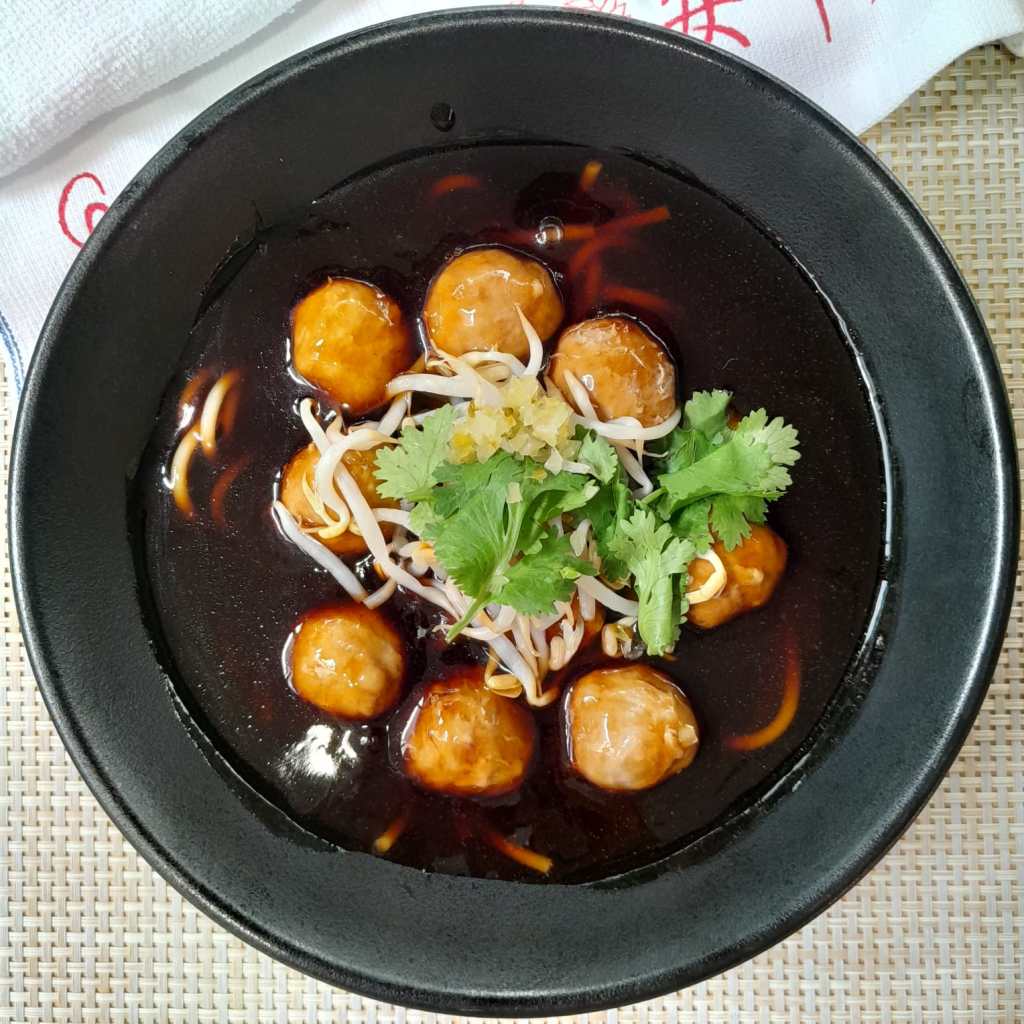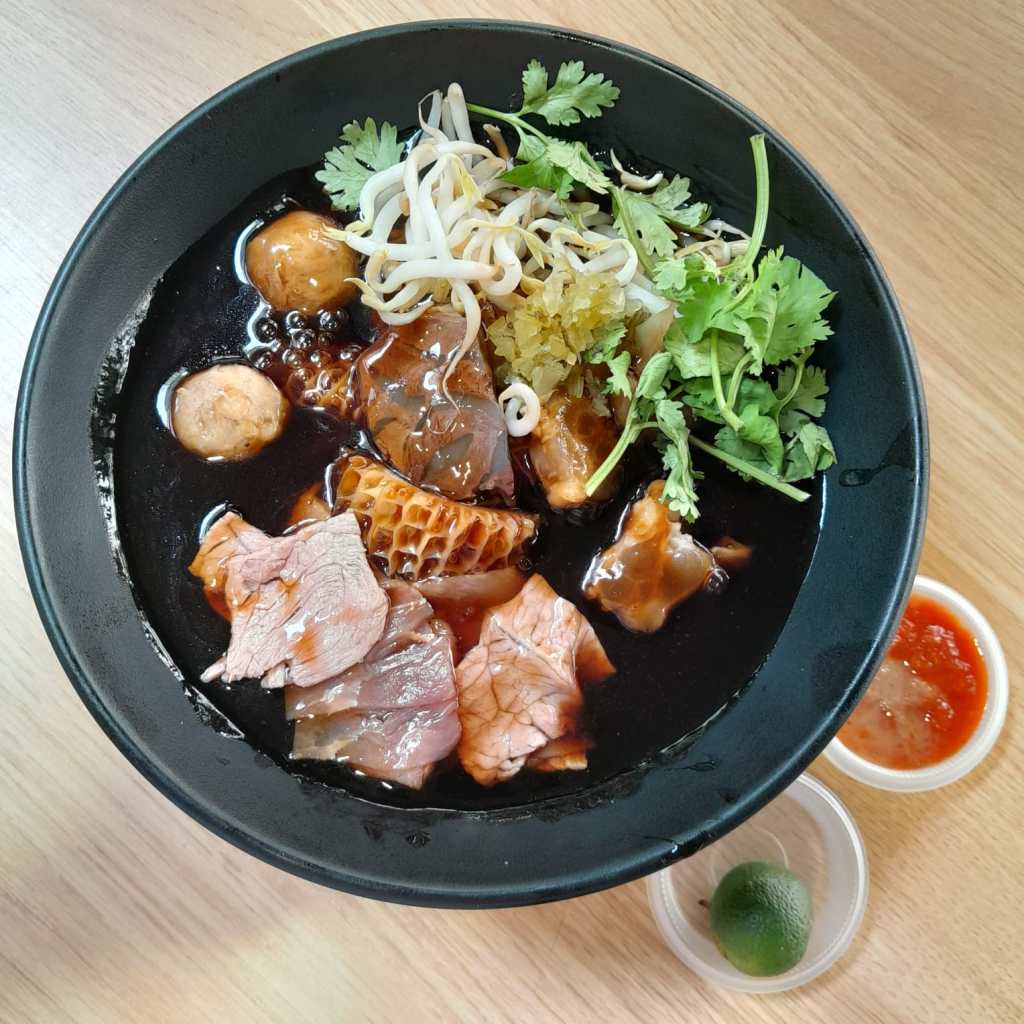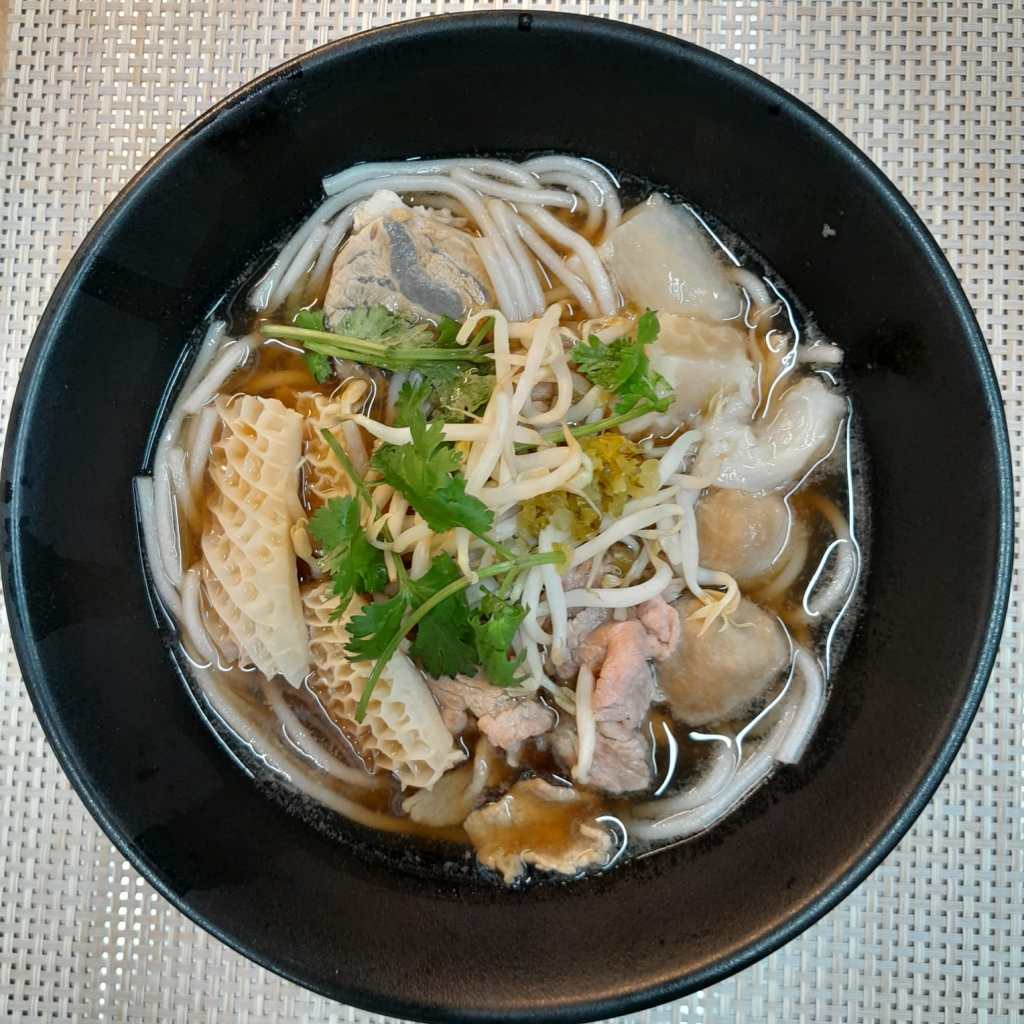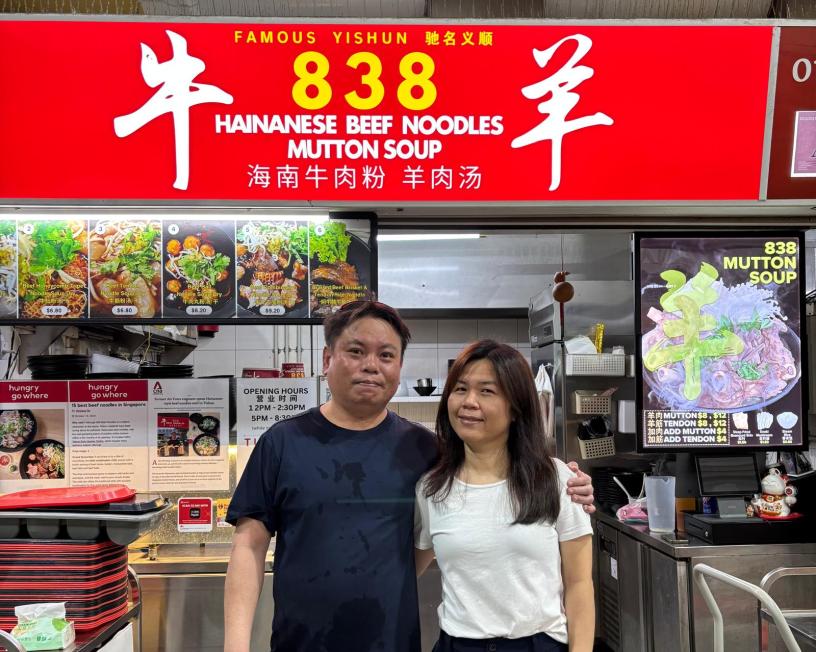
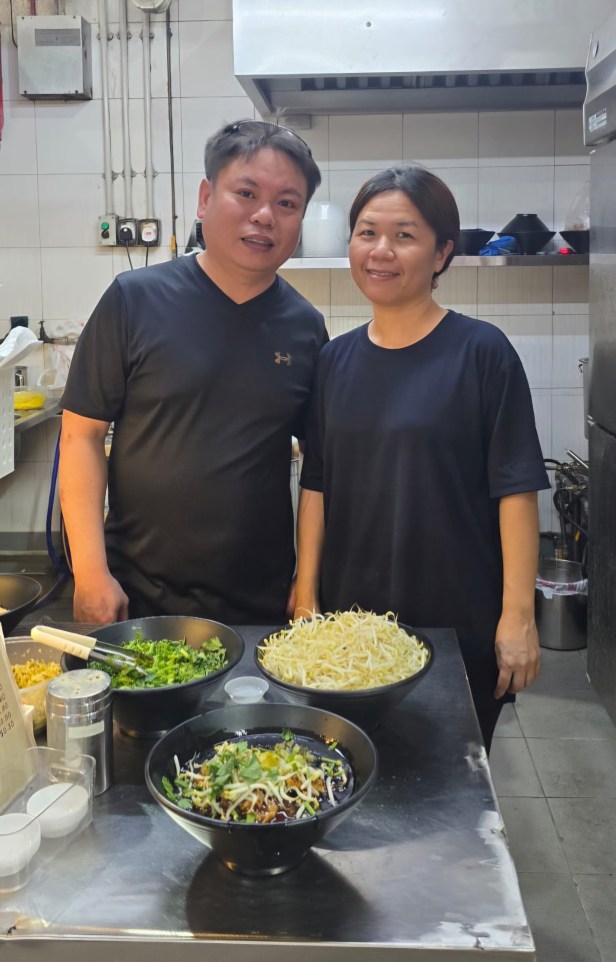
Meet Jerry, the founder of 838 Beef Noodles at Yishun Park Hawker Centre. For 25 years, Jerry built his career in aviation, serving in the Air Force and the private sector. But beneath the disciplined exterior of an engineer lived a man who carried his late mother’s treasured recipe and a desire to preserve flavours from a Singapore that is rapidly fading.
Inspired by food documentaries and driven by a longing to honour tradition, Jerry walked away from a stable career and reignited a piece of culinary heritage. Today, his hawker stall has captured the hearts of both elderly Singaporeans who recognise the nostalgic taste and younger diners discovering it for the first time. Jerry’s journey is one of courage, craftsmanship and conviction, a reminder that heritage lives on only when someone chooses to protect it.
You spent years in the Air Force as an aviation engineer before venturing into the F&B world. What inspired such a bold switch, and how did the idea of selling Hainanese beef noodles come about?
For context, I was not only in the Air Force but also in the private aviation sector. Altogether, I spent around 25 years in aviation. Before returning to Singapore to work as a hawker, I was posted to Brunei with my family, working on helicopters for the Singapore Armed Forces. I lived in Brunei for seven years before coming home.
During that time, I watched many food‑related documentaries, including “Old Taste Detective” and “Belly of a Nation.” These shows deeply inspired me, especially the stories of hawkers working tirelessly to preserve heritage flavours. It struck a chord because I felt many nostalgic tastes from the old days were slowly disappearing.
I also had my late mother’s original recipe for Hainanese beef noodles, which is something you can hardly find anymore. As I grew more tired of corporate work, I felt a strong pull towards doing something I was passionate about beyond aviation. I have always been good at cooking, so I told myself, “Why not try?” I didn’t want to reach the end of my life regretting that I never attempted something meaningful.
The documentaries ignited something in me, a feeling that perhaps this was a calling. So I quit my well‑paid job in Brunei, came home, settled my family, and less than a year later, started 838 Hainanese Beef Noodles.
What do you believe sets 838 Hainanese Beef Noodles apart from other beef noodle stalls in Singapore?
My taste is unique. You cannot find this exact Hainanese beef noodle flavour elsewhere. It is nostalgic, something you would find 30 or more years ago. Many customers tell me, “Brother, this is old‑school taste; we cannot find this anywhere else.” That is exactly my intention.
There are very few Hainanese beef noodle hawkers left. The older ones are retiring soon. While some franchises exist, the taste is not the same. My mission is to preserve the old flavour and share it with people so they know how Hainanese beef noodles used to taste. Many elderly customers, and even younger ones, appreciate it because it reminds them of the past.
In the Air Force we aim then fire, but in real life, if you want to break out of your comfort zone, you must sometimes fire first and adjust along the way. You will definitely face challenges and make mistakes, but that is how you grow.
As a hawker‑preneur, what are the day‑to‑day challenges people don’t see, and how do you stay motivated on difficult days?
The usual challenges are long working hours and daily grinding, but what people don’t see is the emotional and mental pressure of running a business. When you become a hawker, you are essentially a sole proprietor.
Business is never stable. It goes up and down. If you come from a comfortable, stable job, it can be challenging to adapt.
For example, during school holidays, footfall drops because many families travel. If you expect every day to be good, you will be disappointed. As an entrepreneur, you must anticipate fluctuations and maintain a balanced mindset. Even now, although I’m established in Yishun and have customers from places like Marine Parade, there are still ups and downs.
Some weeks, weekdays perform better than weekends. You must endure, stay steady, and trust the process. Once your customer base grows, they return regularly and your business stabilises. The key is not to be discouraged by temporary dips.
If you could give one piece of advice to someone wanting to leave a stable job to pursue their passion, what would it be?
Very simple: just do it, and work your hardest. There’s also a quote from T. Harv Eker, author of Secrets of the Millionaire Mind: “Shoot first, then aim.”
In the Air Force we aim then fire, but in real life, if you want to break out of your comfort zone, you must sometimes fire first and adjust along the way. You will definitely face challenges and make mistakes, but that is how you grow.
I always encourage people to make as many new mistakes as possible, as long as they don’t repeat the same one again. Within a year, you will be miles ahead of where you started. That’s what separates the top one percent from the rest: they are not afraid to fail and learn.
Food often carries emotion and nostalgia. What do you hope customers feel or remember when they eat your beef noodles?
In Chinese we call it “人情味” – the human touch. I want customers to taste something familiar, something that reminds them of their childhood or the olden days. I treat all my customers kindly, like friends, and when good service meets good food, the experience becomes meaningful.
Many customers leave reviews saying the owner is friendly. That matters because customer service elevates the food experience.
What legacy do you hope to leave behind?
I have many recipes in my head. One day, instead of franchising, I hope to open a large space or coffee shop selling a variety of dishes—all my recipes. If the business thrives, the name and taste will live on long after I’m gone. That would be my legacy.
What’s your vision for Singapore in the next five years?
For F&B businesses, especially in the northern region, a major headwind is coming when the JB–Singapore RTS opens. Even now, many Singaporeans cross the border on weekends to eat and shop. When the RTS launches, it will become even easier, and footfall for hawkers in the north may drop by 30–50 percent.
Many may not survive unless they prepare now. My advice: anticipate the storm. Strengthen your mindset, build alternative revenue streams, consider relocation or islandwide delivery, and stay adaptable. In entrepreneurship, crisis and opportunity always come together. Those prepared will survive and even grow.
If you could have a superpower for one day, what would it be and why?
Personally, I wish I could revive my late mother and father. But if speaking more practically, I would want the ability to multiply myself thousands of times so I could serve good food to more people at once. If I could multiply myself globally, imagine how much impact I could create.
Connect with Jerry: Instagram and TikTok.