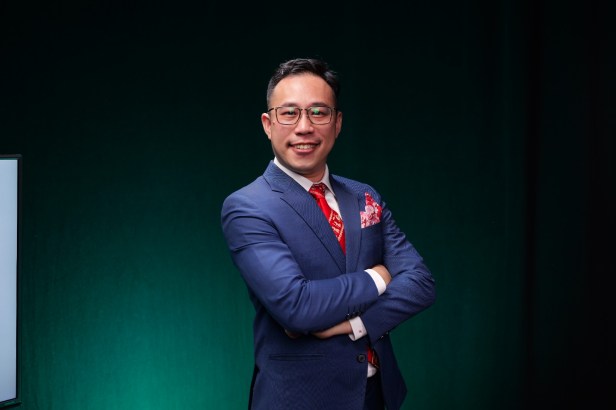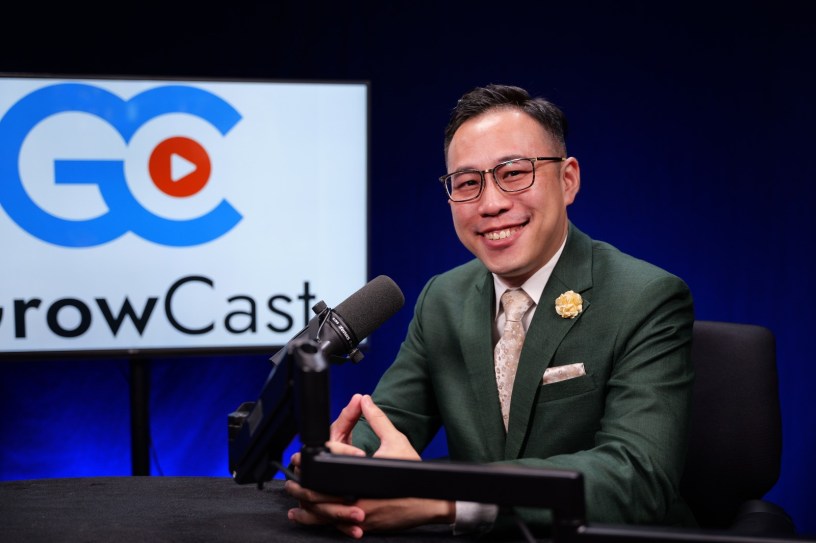
Meet Kin, a seasoned keynote speaker, communication coach, and leadership trainer who has helped professionals from numerous industries become more confident and impactful communicators. With a background that includes leading SAF Commandos and serving as COO of a China-listed firm and WCPS (World Championship of Public Speaking) Finalist, Kin knows the power of clarity, presence, and purposeful speech.
His passion for helping others find their voice stems from personal experience, having once lost his own confidence as a child. Today, he empowers others, especially the shy and self-doubting to speak with authenticity, precision and power.
What first inspired you to specialise in communication, public speaking and helping others find their voice?
I remember it clearly. It was my first day in Primary One, and I was in maths class. The teacher asked, “How many of you know the numbers one to ten?” I eagerly raised my hand and said, “Me, me, me!” She called on me, and I blurted out something like “Five, seven, seven three… seven minus three is five?”
The whole class burst into laughter. Then she said, “You’re stupid. Sit down, shut up and listen.” That one moment stuck with me. For the next twelve years, I never raised my hand in class. I lost my confidence that day.
But over time, I realised how important it is to speak up, to lead, and to be heard. After joining the commandos, finding my voice again, and diving into Toastmasters and public speaking, I realised that even the shyest person has something valuable to share.
That’s why I do what I do now, to help others find their voice, especially when they don’t feel brave enough to use it. I also help them speak with confidence, certainty, and credibility.
Before becoming a trainer and keynote speaker, you led teams in SAF Commandos and later served as COO of a China-listed company. How did those high-pressure environments shape your approach to communication and leadership today?
One major difference is that in writing, people get to edit and refine. When you send an email, you can review it multiple times, even run it through AI. But in speech, you often get just one shot. In high-pressure environments, what you say can determine whether people support you or turn against you.
So, being able to think quickly, frame arguments effectively and sound smart is crucial. If you can choose the right words, frame your message powerfully and inspire people within a minute, you become a real leader, not just changing minds, but moving hearts.
What common issues do people struggle with when they are in front of the camera, and how do you transform those fears into confidence?
When it comes to the camera, many people become robotic. They rely on teleprompters or second-guess themselves, which makes them sound inauthentic and disconnected. We help them realise that it’s not just about what they say, it’s about how the audience hears it.
Our coaching helps them tap into their own confidence, authenticity and clarity, so they can speak with power, both on and off camera. We have developed frameworks that we have used with hundreds, almost thousands, of clients.
Conciseness. Most people either say too little or too much. The key is to say just enough, clearly, with context and purpose. In fast-paced workplaces, people don’t have time for backstories. They want decisions and clarity.
In your experience, what separates a good communicator from a truly powerful one in today’s fast-moving workplace?
Conciseness. Most people either say too little or too much. The key is to say just enough, clearly, with context and purpose. In fast-paced workplaces, people don’t have time for backstories. They want decisions and clarity.
The best communicators can get straight to the point, highlight the value, and still grab attention. Especially now with short attention spans, thanks to TikTok and everything else, grabbing attention from the get-go is what sets the great apart from the good.
Many senior managers struggle to project executive presence, even though they have the experience. What are the key elements you focus on when helping them “speak up with power” and stand out among their peers?
This is especially common among Asian managers in Multi-National Corporations (MNCs), as East Asian culture and education systems often condition us to “sit down, shut up, and listen”.
Coupled with the fact that English may not be our first language, we can find it difficult to speak powerfully and confidently in English compared to native speakers from the West. However, in the workplace, correct grammar is not the most important thing. What matters more is how you communicate your value, your ideas, and your expertise.
We focus on three key areas. Firstly, your mindset which influences the confidence with which you speak. Next, the way you move your body which affects your physical state and communicates power non-verbally. Lastly, the words you speak which convey expertise, certainty, and clarity.
When you consistently communicate with power at a higher level, people are naturally drawn to it and defer to it, often subconsciously. That is how you build influence quietly, by strengthening your presence.
What belief from five years ago has changed?
Five years ago, I believed communication should be crisp, clear and direct. Now I believe it should be crisp, clear and kind. This shift happened during my work in a neighbouring country, particularly dealing with government officials.
Sometimes they would say “Yes, yes” but nothing would happen. It was frustrating. I wanted clear answers. But I learnt that communication styles differ across cultures. What’s considered polite in one culture might be seen as evasive in another.
So instead of insisting on my own way, I learnt to understand their cues and adjust accordingly. It taught me not to assume my way is the only right way, and that kindness in communication can be just as powerful as clarity.
What’s your vision for Singapore in the next five years?
When I cross the Causeway, I do feel a kind of freedom in the air. But still, I’m proud to be Singaporean. I love that when I travel, people react with admiration when I say I’m from Singapore. Looking ahead, I hope Singapore continues to be a strong, respected voice in ASEAN and the world.
I hope we slow down, be kinder to one another, and care more for disadvantaged communities. And most of all, I hope we become a more joyful society, not just chasing results, but focusing on what makes life meaningful.
I want us to celebrate our identity, cherish our people, and build a better, happier future together.
If you could have a superpower for one day, what would it be and why?
I would want the power to create anything I speak. If I say “table,” a table appears. It’s not just about creating wealth, but about manifesting my thoughts into reality. To say something and have it happen, that is true power. Even if it lasts one day, that experience would stay with me forever.
It would remind me of the responsibility and potential we have when we speak with intention. I would use that power not just to benefit myself, but to create a better future for others and for Singapore.
Connect with Kin: LinkedIn, Facebook and Instagram.