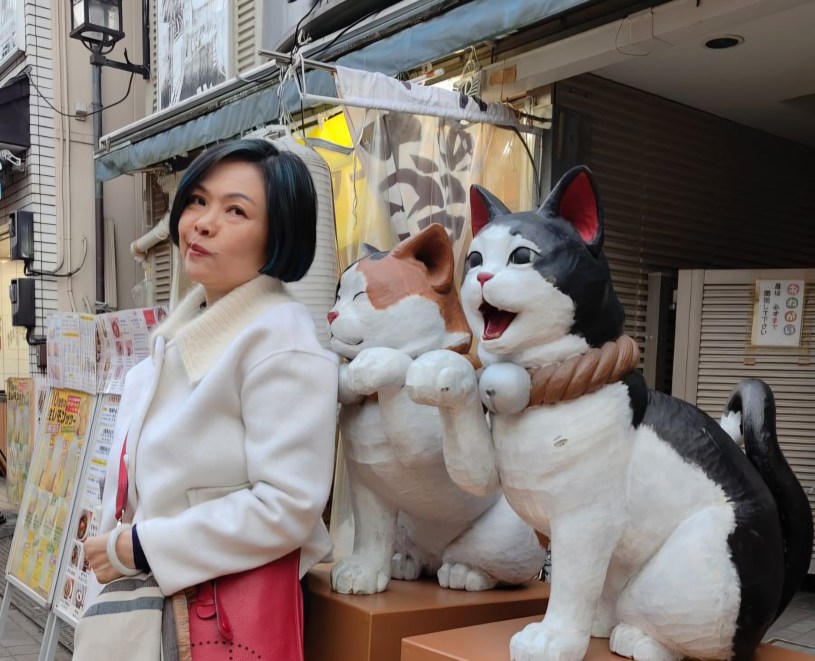
Meet Ai Nee, who didn’t set out to become a life coach. But after years of navigating personal darkness, including losing a beloved cousin to suicide, she discovered that the road to healing begins with personal responsibility. Today, she uses that hard-won insight to guide others out of their own shadows and into clarity.
From corporate trainer to coach, and from entrepreneur to mother, Ai Nee’s story is one of resilience, reflection, and radical empathy. In this candid conversation, she opens up about emotional breakthroughs, identity, and why true transformation starts when we rewrite the stories we tell ourselves.
Your cousin’s passing was a heartbreaking turning point. How did that moment reshape your understanding of mental health, choice, and personal responsibility?
I struggled with depression even before my cousin did. At the time, I didn’t recognise it as a mental health issue. I just knew I was going through a very difficult phase. When my cousin passed away from suicide, I still didn’t connect it to mental health.
She had post natal blue, a very severe one caused by a chemical imbalance after childbirth. She was hospitalised and on medication. We were very close, but she was in Penang and I was in Singapore, so I wasn’t there with her. After her death, I was overwhelmed by guilt and fell deeper into depression.
I eventually went on a quiet retreat to process the grief, and during that time, I had a powerful realisation: no one else is in charge of my emotions except me. Whether I choose to stay in the dark or crawl out of it, that’s my decision.
That awareness changed everything. Throughout my earlier life too, I had to take responsibility for myself. It’s easy to blame people or circumstances, but ultimately, I had to be accountable for how I chose to live and feel.
What inspired you to eventually step into the world of coaching, and when did you know you were ready to guide others through their own darkness?
It started when I worked as a corporate trainer. The programme I was part of trained junior management up to C-suite leaders over three months. Beyond the classroom, I was required to coach them, but within a strict SOP, since it was a franchise model.
That’s when I realised I wasn’t just working with job titles. I was dealing with human beings. There was a conflict between following the SOP and truly connecting with the person in front of me.
That’s when I decided to quit and go into coaching full-time. People just want to be seen, heard, and understood. And often, that alone can be deeply healing.

Most people hold a narrative in their head that they believe defines them. Sometimes, we hold on to a narrative that once helped us get through tough times. But over time, it no longer serves us, yet we may not even realise we are still clinging to it.
Can you recall a moment in your coaching where you witnessed a client made a powerful breakthrough?
There are many, but one that stands out involved a client in his late 40s or early 50s who came to me for weight loss. He was the sole breadwinner for a young family and struggled with high blood pressure, cholesterol, and heart issues.
He had tried many times but couldn’t lose weight. I always say I work with the person, not just the problem. During one session, a childhood trauma surfaced unexpectedly. I guided him through the memory, and this big, strong man broke down.
Later that evening, he texted to say he finally felt a huge sense of relief. It was something he had never shared with even his family, and once it was released, it became clear that it had been affecting him all along.
You’ve founded four businesses and experienced both success and failure. What did entrepreneurship teach you about identity, resilience, and self-belief?
Entrepreneurship taught me that things only fall into place when I stop making it about me. It’s not about my success, my failure, my performance. Once I started focusing on what my clients needed, on serving rather than proving, everything shifted.
For example, when I ran a preschool, worrying about rent and bills didn’t help. But the moment I focused on giving the children a rich experience and earning the parents’ trust, things clicked. As for resilience, maybe it’s my generation. We don’t overthink it. If you’ve taken on a responsibility, you just do it, one step at a time.
What is the most common emotional barrier you observe in your clients, and how do you help them break through it?
Most people hold a narrative in their head that they believe defines them. Sometimes, we hold on to a narrative that once helped us get through tough times. But over time, it no longer serves us, yet we may not even realise we are still clinging to it.
I listen, and if I can help them shift their perspective even slightly, look at themselves from a different angle, they often discover they already have the resources they need to move forward.
If you could go back to a particular stage in your life, when would it be and why?
Without question, it would be the moment I gave birth to my first child. That moment changed everything. Until then, it was always about me, how much my spouse cared for me, how others affected me.
But holding my son for the first time made it about someone else. I now had to live for him, and that shift in perspective was profound. The same happened with my second child. I wouldn’t trade that for anything.
What’s your vision for Singapore in the next five years?
If I had my way, I would like us to shift away from measuring children by exam scores and focus instead on each child’s potential and capabilities. I wish we had a society that nurtures individuals for who they truly are and could be, not just for how they perform academically.
Singapore is very economically driven, and I hope we can become more human-centred in our approach to development.
If you could have a superpower for one day, what would it be and why?
I would give everyone the ability to self-regulate their emotions. If people could manage their inner world, they would naturally become the best version of themselves. Ironically, that would probably make my job as a coach redundant, but it would be worth it. It would create a healthier, kinder world.
Connect with Ai Nee: IntegralSpace, LinkedIn and Instagram.
Ai Nee is a member of Rainmaker, a revolutionary movement that rallies like-minded people together based on the values of Love, Authenticity, Respect, Kindness and Youthfulness (LARKY).

