
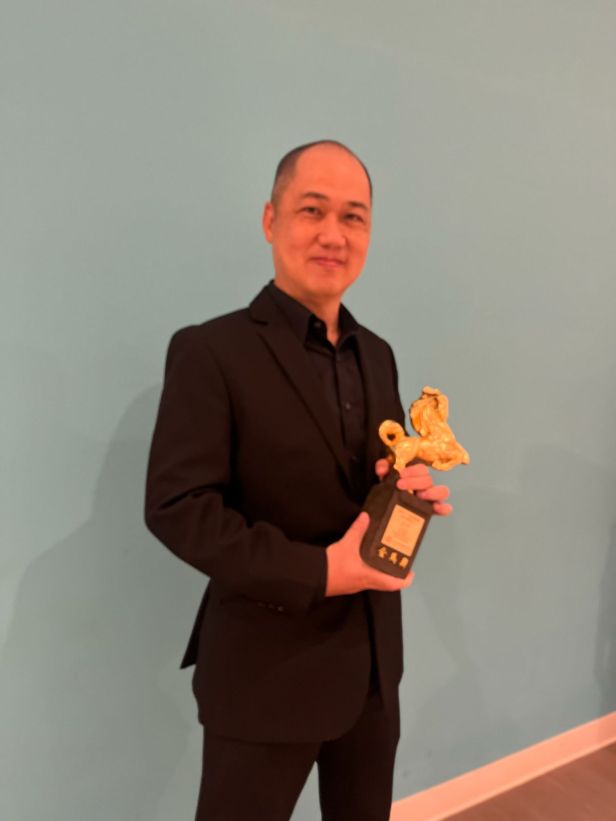
Meet Gin Kai, who didn’t grow up dreaming of making movies, but today he is one of Asia’s most respected figures in film production and media finance. With decades of experience working with global broadcasters and winning prestigious awards like the Golden Horse (金馬奖), he brings both creative excellence and business acumen to the screen.
But beyond lights, cameras, and deals, Gin Kai is driven by a deeper purpose: to make the world kinder through storytelling. Whether building Southeast Asia’s first media fund or empowering underserved communities, his mission is clear and that is to use creativity for impact and leave a legacy far greater than just box office success.
You have spent decades creating, producing and financing award-winning films and TV programmes. What first sparked your passion for storytelling and visual media?
Well, it’s a complicated story. I didn’t grow up wanting to be a filmmaker. Like most Singaporeans, our parents expected us to become doctors, lawyers, or engineers. Filmmaking wasn’t on that list. I never really knew what I wanted, but somehow I stumbled into this industry. Because I enjoy it, I’ve stayed in it for decades.
You have worked with broadcasters like Discovery, Animal Planet, CNBC and Mediacorp. What does it take to produce content that resonates globally yet remains authentic to its roots?
Actually, it’s not that difficult to tell a global story. Many of the values we hold are universal—love, war, poverty, relationships. Whether it’s a rom-com or a horror film, people respond to the same core emotions. The issue is how the story is told.
Some people focus too much on making a “Singapore film” or a “Thai film,” but to me, it’s not about the label. It’s about whether it’s a good film or a bad film. I want to tell universal stories that connect with a wide audience, not just a narrow one.
You just won Best Animated Feature for Another World at the 62nd Golden Horse Awards—an important milestone. What does this recognition mean to you at this stage of your career?
It is not the first award I have won, but it’s certainly the most prestigious. It’s encouraging because this is a difficult industry. The creative sector isn’t always appreciated or recognised, especially in Singapore. The journey can be quite lonely and even painful at times.
This award encourages me to persevere. It shows I can be proud of myself, but more importantly, it recognises the entire team who poured sweat and tears into making this film possible.
I have always believed that if I spend my whole life trying to please myself, I may not succeed because humans are hard to satisfy. But if I aim to bring joy to five others and succeed, then my life is worth five lifetimes. I would rather live a life like that.
Through Silver Media Group, you run one of Asia’s few privately managed media funds. What inspired you to enter the world of film financing and what makes this investment space so misunderstood or overlooked?
When I started my company, I approached it from both a creative and business standpoint. Creative work is still a business, but many people focus only on the art and neglect the financial side. I began with international co-productions to reach a broader audience, and through these collaborations, I saw best practices in financing and returns that weren’t common in Southeast Asia. I wanted to bring that structure here.
So, years ago, I set up the region’s first film fund. Even though it was a small one, it was still a pioneering step. I later helped a friend in Estonia do the same and now I’m setting up a new MAS-registered media fund. This will allow us to raise capital from a wider investor base, beyond just friends and family.
People often ask if films can make money. The movie industry is over 100 years old. If it weren’t profitable, it wouldn’t have lasted. Entertainment is a basic human need after food and shelter. But many investors enter the industry out of excitement rather than knowledge. That’s risky.
Like any investment, media must be assessed professionally. With proper financial planning, media can be as lucrative as tech or biotech. In fact, while tech promises unicorns, films can have blockbuster unicorns too. And because film has 100 years of data, its downside is often safer to calculate than newer sectors. Media is misunderstood, but with the right practices, it offers high potential and manageable risk.
Beyond filmmaking, your deepest passion lies in social causes, from disaster relief to capacity building in underserved communities. What drives this commitment?
It comes from both personal belief and a broader sense of purpose. Too often, people associate happiness with surface-level pleasures. But deeper joy comes from meaningful impact, such as helping others or improving the world. That’s partly influenced by my religious upbringing, but I believe anyone, regardless of faith, can find joy in serving others.
I have always believed that if I spend my whole life trying to please myself, I may not succeed because humans are hard to satisfy. But if I aim to bring joy to five others and succeed, then my life is worth five lifetimes. I would rather live a life like that.
If you could speak to your younger self, what would you tell him about creativity, courage and impact?
I would tell him that creativity isn’t just fun, it’s powerful. A film, a song, or a piece of art can shape how people think and feel. And that’s what I strive for in my work now. Creativity, when used the right way, can touch people deeply. It can inspire, move and transform.
When I was younger, I believed the only way to help others was to make a lot of money and donate it. Now, I see that it’s also about inspiring others to help. It’s not just one person giving, but it’s about building a kinder world where more people want to give. Creativity can ignite that shift. And I wish I had realised that sooner.
What’s your vision for Singapore in the next five years?
I want Singapore to be known as a kinder society. People around the world talk about our success such as highest GDP per capita, best airport, smartest population. But no one says we’re the kindest. We’re not unkind, but we could be much more known for our compassion, friendliness, and global impact, not just politically or economically, but in making the world better.
If you could have a superpower for one day, what would it be and why?
I would want to read minds. When I was younger, I wanted to fly. But now, I think the ability to truly understand what others are thinking would be powerful. People don’t always say what they mean. Having deeper insight into others would be incredibly useful and interesting.
Connect with Gin Kai: Facebook.
Gin Kai is a member of Rainmaker, a revolutionary movement that rallies like-minded people together based on the values of Love, Authenticity, Respect, Kindness and Youthfulness (LARKY).
