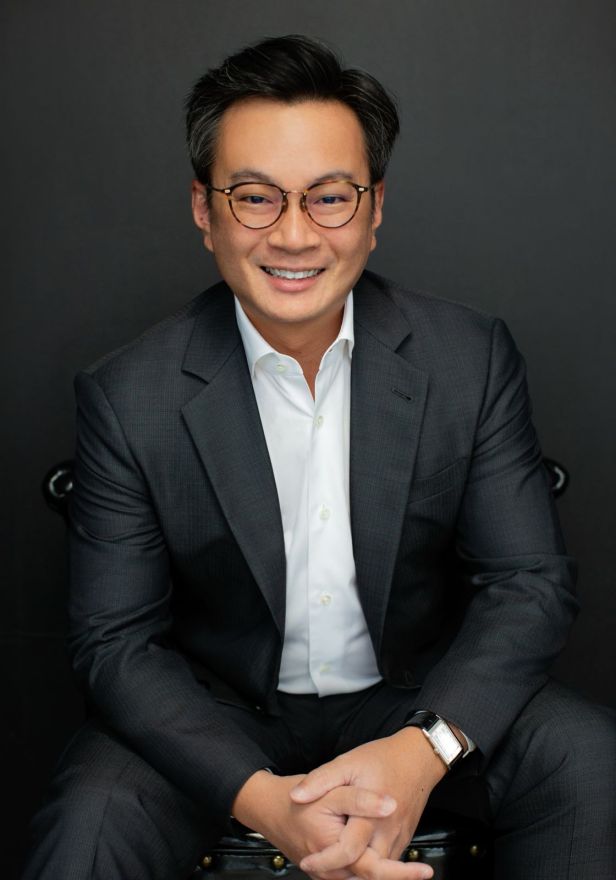
Meet Gerard Lee. His 20-year career in executive search wasn’t part of a grand master plan. It started with a simple, unexpected phone call, a pivot from the world of advertising that launched him into global firms like Korn Ferry, Russell Reynolds, Philips, Google, and now, Zscaler. Driven by a deep curiosity about people, Gerard has spent decades helping companies find the kind of leadership that doesn’t just fill a seat, but fuels growth.
Beyond talent strategy, he is a certified Solution-Focused coach, a Google Mentor, and a dedicated community advocate. Whether he is mentoring rising leaders, guiding the responsible use of AI in recruitment, or shaping tech initiatives at the Singapore Children’s Society, Gerard brings the same things to the table: empathy, clarity, and a practical belief in human potential.
You have had over 20 years of experience in talent management and executive search. What first drew you into this field and what has kept you motivated throughout your journey?
To be honest, it wasn’t part of the plan. Fresh out of graduation, my heart was set on marketing, and I started out in account management at an ad agency. By chance, one of my clients happened to be an executive search firm.
One day, a leader from that firm called me. She asked if I would consider crossing over into the executive search domain. At the time, I barely understood the industry. To me, they were just a client I managed. But her perspective struck me. She saw potential in me that I hadn’t even recognised in myself yet.
Knowing I had an interest in technology, she placed me in their tech practice. That was over 20 years ago, and I have never looked back. I’m grateful she helped me make that pivot, because I discovered that helping businesses grow through their people feels meaningful.
You have worked with world-class firms like Korn Ferry, Russell Reynolds, Philips, Google, and now Zscaler. How has each stage of your career shaped your perspective on leadership and hiring?
I have been fortunate to have mentors who gave me space to learn, and I have tried to approach every role with an open mind. The biggest lesson has come from watching the industry evolve.
In tech, change is the only constant. I have watched the world shift from hardware in the early 2000s to today’s AI-driven landscape. This evolution has completely redefined leadership. It’s no longer just about technical “know-how”; it’s about having the agility to navigate ambiguity.
Today’s organisations need leaders who can see around corners. We need people who don’t just manage teams but can genuinely motivate them through massive market shifts. Leadership has to evolve just as fast as technology does.
In a hyper-growth environment where AI and cloud innovation are evolving rapidly, what qualities do you look for when hiring beyond just technical skills?
It is exciting to be part of a company with such a clear, founder-led vision. I am fully aligned with Zscaler’s mission to secure the world through the Zero Trust Exchange, particularly as AI redefines the landscape of cloud security.
Because that landscape changes so fast, the way we hire has to change, too. It’s no longer enough to check off a list of technical skills or impressive job titles on a resume.
We look for the “software” inside the person: their adaptability, their openness, and their drive. I’m less interested in what you did five years ago and more interested in how you solve problems today. These behavioral traits are the real ingredients for long-term success in a hyper growth company like ours.
Today’s organisations need leaders who can see around corners. We need people who don’t just manage teams but can genuinely motivate them through massive market shifts. Leadership has to evolve just as fast as technology does.
As a certified Solution-Focused Coach, how do you bring coaching techniques into your work with leadership candidates and teams?
I have had amazing coaches throughout my career, many of whom I’m still in touch with and they inspired me to get certified so I could pay that forward.
People development is my passion. I find myself using those coaching techniques naturally, whether I’m leading my team or just having a coffee chat. Sometimes, people don’t need a manager to tell them what to do; they need a sounding board to help them find the answer themselves.
Outside of work, I continue to support others through career and life coaching. It is a fulfilling way to give back and keeps me grounded.
You were part of Google’s AI Exec global committee, focusing on upskilling teams in AI for recruitment. How do you see AI transforming executive search and talent acquisition?
Being part of the committee was a valuable experience. We focused on developing members on using AI to enhance productivity, not to replace what we do, but to make our processes efficient. We connected with AI leaders globally to share their practical knowledge, and I’m grateful for those lessons.
At Zscaler, I’m applying experience and knowledge to our workflows. We are mapping out processes to see where AI can handle the heavy lifting. Tasks that used to take 15 minutes can now be done in under a minute.
But the real value isn’t just speed; it’s insight. AI helps us challenge conventional thinking and highlights things we might miss. It frees us up to focus on the human side of hiring, building relationships and assessing culture fit, which is critical in a hyper growth environment.
You serve on the Tech Advisory Committee at the Singapore Children’s Society. How does community service influence your outlook as a leader and professional?
Giving back has always been important to me, especially when it involves children. I have been involved in community work and donations since the early 2000s. Joining the Tech Advisory Committee at the Singapore Children’s Society was a very meaningful step.
I was impressed by the Singapore Children’s Society commitment to thoughtful digital transformation. It allows me to use my professional network and experience to help shape how the organisation uses technology to support therapists, caregivers, and ultimately, the children.
It’s a different kind of reward than closing a business deal. It’s a quiet, genuine way to make a difference, and it reminds me that technology should always serve a human purpose.
What’s your vision for Singapore in the next five years?
Singapore will undoubtedly keep developing, but my best hope is that we grow stronger as a community, not just an economy.
As we face more social and mental well-being challenges, I believe those of us with capability and experience have a duty to step up. It is time to build real relationships and foster true community bonds. My vision is of a Singapore that puts empathy and mutual support first – where we are as “high-touch” as we are “high-tech.”
If you could have a superpower for one day, what would it be and why?
I have actually thought about this before! I’m a big X-Men fan, so I would have to choose Professor Charles Xavier’s telepathy. But not for the sake of spying! I would use it to truly understand people’s thoughts and honest motivations.
If I could instantly understand the root of a person’s worry or hope, imagine how much better we could support one another. It would be the ultimate tool for empathy.
Connect with Gerard: LinkedIn.