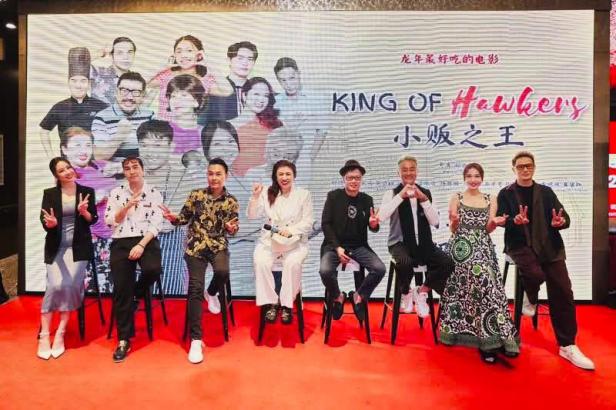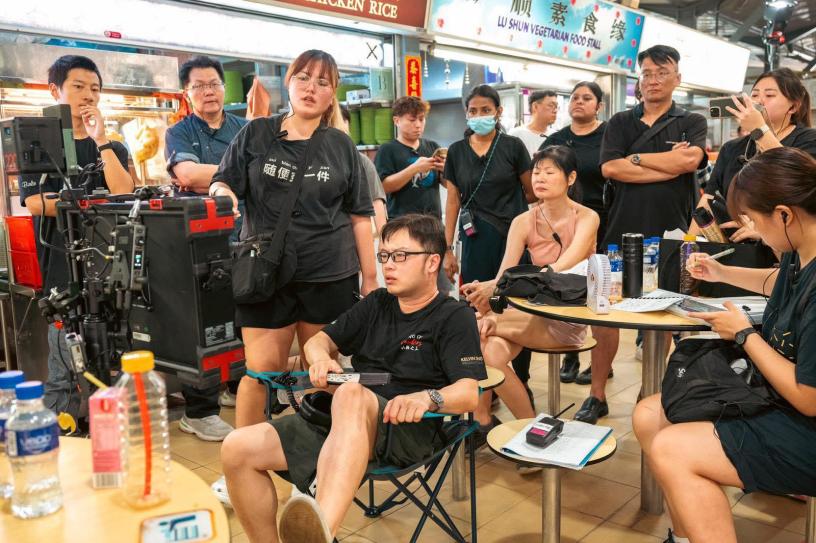
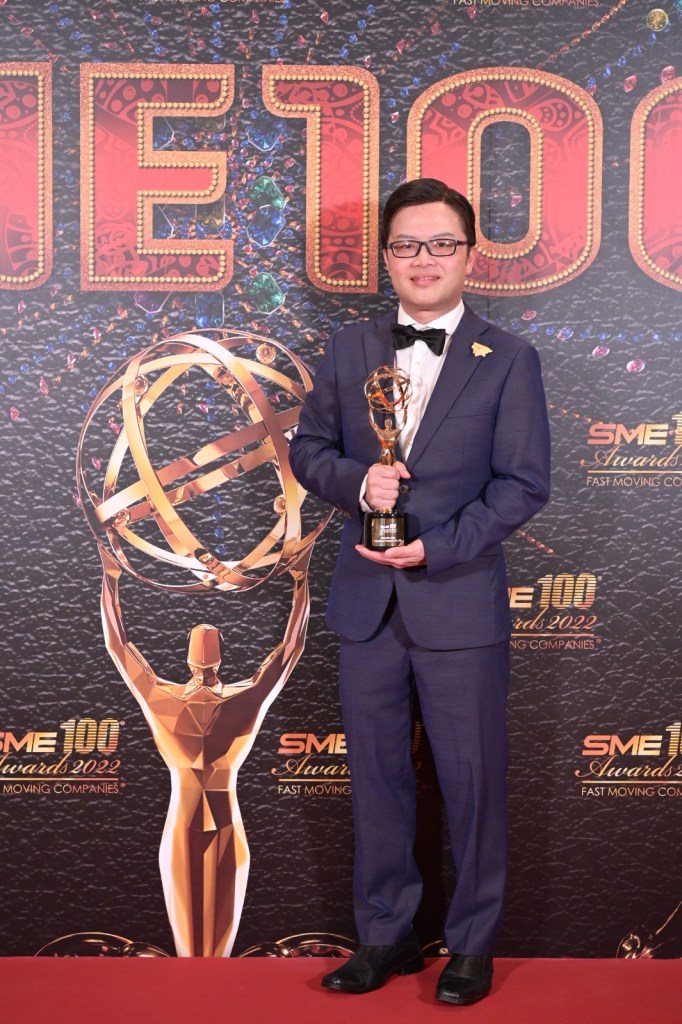
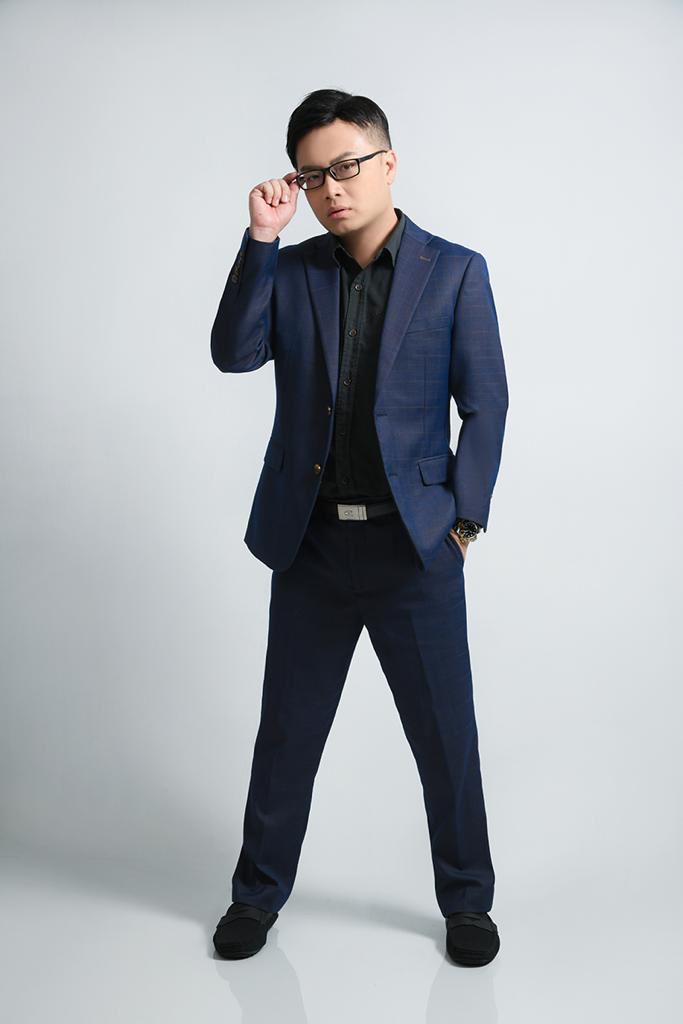
Meet Kelvin, a fearless storyteller whose path from classroom to cinema is a masterclass in purpose and perseverance. Once a respected head of department teaching Chinese, Kelvin gave up the comforts of a stable career to chase his creative calling. That bold leap led him to direct Taxi! Taxi!, one of Singapore’s million-dollar box office hits.
Over the past two decades, Kelvin has grown into one of Singapore’s most respected filmmakers, producers, and mentors. Through his company, Kelvin Sng Productions, he continues to nurture new generations of storytellers while reimagining what Singapore cinema can be.
You switched from a teaching career to filmmaking. What motivated that change ?
In fact, when I was growing up, I was always intrigued by movies, music, and the arts. However, when I was in my 20s, I still didn’t know what I wanted to do. I was offered a job with the Ministry of Education, which was how I ended up becoming a teacher.
But the storytelling spirit in me never went away. I was doing well in my teaching career. I was a Chinese teacher and also Head of Department. However, at the age of 30, I decided I needed to move on. If I didn’t, my dream would never materialise.
So, I quit my job, received a scholarship from IMDA, and went to pursue an Advanced Diploma in Film Production at Ngee Ann Polytechnic.
As the saying goes, the rest is history. I studied, built my family, built a company, and eventually had the opportunity to direct my first film, Taxi! Taxi!, which was released in 2013.
Speaking about your first film, Taxi! Taxi!, it became one of Singapore’s highest-grossing local films at the time. Can you share more about the challenges you faced when directing your first movie?
For all filmmakers, whether it’s your first or tenth film, it will always be challenging—especially the first. I was given two extremely popular comedians, Mark Lee from Channel 8 and Gurmit Singh from Channel 5. For a first-time filmmaker, having two big stars was extremely intimidating.
Comedians don’t follow the script. They follow timing and being in the moment. I’m also not a strict script follower, and sometimes what I envisioned wasn’t necessarily the best. Before Taxi! Taxi!, I had only directed short films, never comedies. Making a movie was already a challenge, and working with two seasoned comedians made it even more demanding.
The key challenge was communicating effectively while maintaining my authority as a director, without being overwhelming. There was a lot of trial and error, but overall, it was a pleasant experience.
The two of them had excellent chemistry and were easy to work with, contrary to what many might think. They followed my directions while also tweaking things to maximise the comic effect.
What were the biggest shifts you’ve observed in Singapore’s film industry over the years, and how have you adapted your own work and ambition to these changes?
I’ve been blessed to witness 20 years of evolution in Singapore’s film industry. Broadly, there are two kinds of films here. First, the box-office hits—heartland films, often Chinese New Year releases, like some of my own or Jack Neo’s. These appeal to mass audiences.
Second, there are the festival films, works that most Singaporeans never see but are created for international film juries. We often hear about a local director winning an award at a European festival, yet these films rarely reach the public here. They cater to a niche audience. I often find myself drifting between both worlds because I believe it’s important to strike a balance between artistic credibility and mass appeal.
Since COVID, the industry faces a new crossroads. Cinemas are struggling. The Projector (a key indie venue) and Cathay both closed. Everyone’s watching Netflix and TikTok. People fear cinema is dying, just like when TV first arrived. But cinema survived then by offering something unique.
Now, it’s time for another evolution. I see this as an opportunity, not a crisis. I’m working on projects that will hopefully bring a revolutionary change to how cinema is experienced again.
I often give public talks, and the questions are always the same: “Does Singapore have a future in film?” I speak from experience to motivate others. Nothing in life is easy, not even media.
What role do you believe mentorship and local filmmaking infrastructure play in cultivating the next generation of Singapore talent?
As long as we’re alive, we should always be mentoring and educating, regardless of industry. My company, Kelvin Sng Productions, used to sign artistes and mentor them. We still run a training arm that sends educators to schools to teach filmmaking, video production, and photography.
This stems from my teaching background, and I’ve never wasted that identity. I’ve trained the next generation of educators, and we continue to pass the baton. It’s everyone’s responsibility, not just educators’, to mentor and guide. Knowledge and experience shouldn’t die with us, but they should be passed down.
I often give public talks, and the questions are always the same: “Does Singapore have a future in film?” I speak from experience to motivate others. Nothing in life is easy, not even media. It’s about failing, growing, and gaining perspective, just like any other field.
Looking back on your journey, what guiding principle or belief has consistently underpinned your decisions and creative direction?
The most important guiding values are attitude and empathy. Attitude means doing the right thing even in tough circumstances. I maintain a positive outlook, even when others think things are hopeless.
Empathy allows me to understand people’s perspectives, which I developed during my teaching days and now apply to my own children and team. These values have helped me grow as a leader and have guided every major decision I have made.
When was the last time you truly felt alive, and what were you doing?
A few days ago. I had just completed a 60-episode micro-drama series for Mediacorp YES 933FM. It was shot entirely in vertical format for mobile viewing—each episode just one and a half minutes long.
We had our wrap party, and it felt amazing to thank my cast and crew in person while enjoying food and drinks. Every time I’m on set or creating something, I feel alive because I’m living my dream.
What’s your vision for Singapore in the next five years?
My vision is for Singapore to stand united, not just in general, but in how we support local films. Local productions are often seen as subpar compared to Hollywood or Hong Kong.
Yes, we have room to grow, but we also need collective support from Singaporeans, not just during National Day. I hope to see a daily cultivation of pride in local films and products.
If you could have a superpower for one day, what would it be and why?
If I had a superpower, I would want to make a movie on a whim, without raising funds. If I had an idea today, the money would instantly appear in the bank, and I could start shooting tomorrow. That would be the dream.
Connect with Kelvin: Instagram and Facebook.
Kelvin is a member of Rainmaker, a revolutionary movement that rallies like-minded people together based on the values of Love, Authenticity, Respect, Kindness and Youthfulness (LARKY).