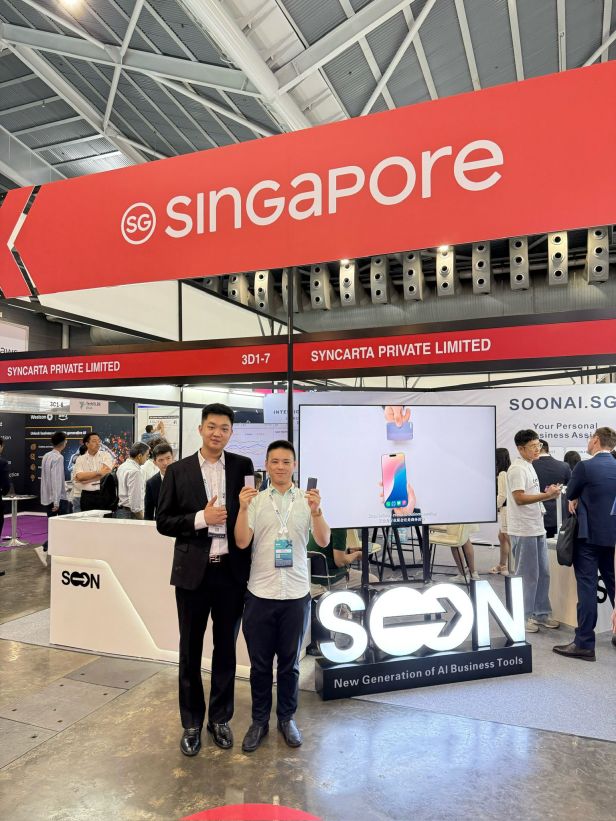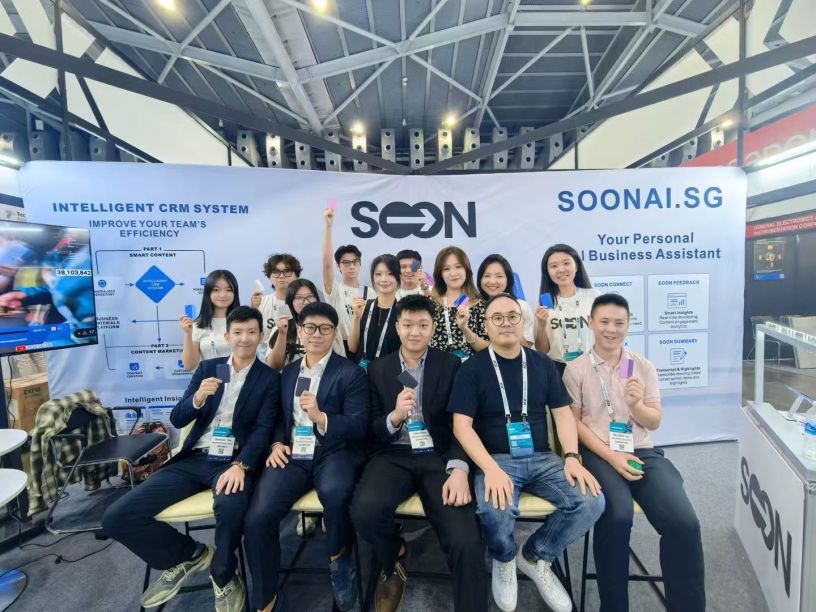
Meet Mike, a visionary entrepreneur who turned his years of global experience and tech-savvy instincts into a powerful solution for the digital age. Frustrated by fleeting handshakes and forgotten introductions at trade floors, Mike founded Soon AI to reimagine the way professionals connect, communicate, and collaborate across borders.
His journey wasn’t just about building a smart business card but it was about solving a human problem with empathy and innovation. Mike saw the future in real-time translation, intelligent follow-up, and seamless integration, and he made it happen. With Soon AI, he bridges culture and technology, enabling entrepreneurs worldwide to build lasting relationships, grow their networks, and turn moments into momentum.
What inspired you to create a digital and AI-powered business card solution?
I grew up professionally at the intersection of hardware, software, and international business. The moment that really pushed me to build Soon AI happened across countless trade floors: you meet someone amazing, exchange a paper card, and within 24 hours the context is gone.
No shared notes, no live translation, no way to continue the conversation with relevance. The “card” wasn’t broken; the workflow around it was. We asked: what if the business card wasn’t a piece of paper, but a living identity that helps two people actually connect—translate each other in real time, capture intent, schedule next steps, and flow into a CRM (Customer Relationship Management) automatically?
That’s the spark behind Soon AI: turning an introduction into a relationship, and a handshake into an action.
The traditional business card has been around for decades. Why reinvent it now with AI and digital technology?
Three major shifts made it clear that the timing was right. First, we now live in a world where work is global by default. Teams, suppliers, and customers span time zones and languages, and the traditional paper card simply doesn’t support that kind of cross-border collaboration.
Second, attention is incredibly scarce. If following up after a meeting isn’t effortless and contextual, it just doesn’t happen. People aren’t going to spend time retyping names, titles, or conversation notes into a CRM.
And third, AI has finally become practical. Tools like translation, summarisation, and meeting assistance have matured into reliable, always-on utilities instead of flashy demo-ware.

Perfect empathy. For one day, I’d like to feel what the other person feels such as during a sales meeting, a hiring conversation, or a support call.
Soon AI integrates advanced translation across 156 international languages—how did this feature come to life, and what impact do you expect?
We built translation the way sales and partnerships actually happen: real-time modalities such as text chat, face-to-face voice translation, and even live assistance during video calls because introductions happen in noisy halls, cafés, and Zoom rooms.
Context carry-over ensures that names, company terms, and product vocabulary stay consistent so that translation sounds like you, not a dictionary. Privacy and consent are built-in, with explicit user triggers and clear controls, which is critical for enterprise adoption.
The impact? More meetings turn into demos because people stay in the conversation longer when the language barrier drops. SMEs gain fairer access. For example, founders in Ho Chi Minh or Bandung can negotiate with buyers in Milan without hiring interpreters.
And data quality improves because the conversation becomes structured insight-who met whom, what was promised, and what happens next.
How does Soon AI bridge cultural and language gaps for cross-border users?
We think beyond words. Soon AI helps in four ways. Firstly, we have live translation with etiquette cues such as short prompts that adapt tone, whether formal or friendly, so your message lands appropriately in Tokyo, Bangkok, or Berlin.
Smart sharing allows the recipient to get your profile in their preferred language, plus relevant assets like decks, product sheets, and calendar links without email ping pong. We do follow-up where Soon AI drafts a recap and proposed next steps in the recipient’s language, leaving you to edit rather than start from scratch.
Lastly, we have a lightweight CRM that automatically tracks contacts, notes, and commitments so nothing is lost between events, airports, and time zones.
Building a platform that merges AI, communication, and design must have been challenging. What key obstacles did you face?
One major challenge was designing for real-life exchanges and not desktop dashboards. Most tools assume users are at a desk, but we built for one-handed use, poor Wi-Fi, noisy venues, and the need for privacy in crowded spaces.
Translation was another hurdle. Literal accuracy wasn’t enough. We needed brand names, SKUs, and technical terms to stay consistent. We built a terminology memory system so the output matched the user’s identity, not just the dictionary.
Then came what we call the “adoption valley.” People love the idea of a digital card, but if it adds friction, they won’t use it. Our rule: if exchanging contact details takes longer than paper, it’s wrong. So, we made QR and NFC instant, with the heavy work happening after the handoff.
Lastly, enterprise trust was critical. Security, data control, and compliance had to be airtight. We built consent flows and clear data boundaries so companies could adopt Soon AI with confidence.
What is the hardest truth you’ve learned that no one prepared you for?
The hard truth is that excellence isn’t about the feature list; it’s about reducing friction in the moment that counts.
That a 90% solution is a 0% solution if it doesn’t fit the moment of use. We shipped features that people praised during demos but ignored in real-world use, because the real world is messy—with dead batteries, spotty networks, and loud rooms.
What’s your vision for Singapore in the next five years?
I believe Singapore will cement itself as the world’s most trusted bridge for AI-enabled trade—a place where data policy, financial rails, and cross-border talent all harmonise. My vision rests on three key pillars.
First, AI must serve SMEs, not just big tech. We need practical, on-the-ground AI solutions that help regional distributors quote faster, medtech startups onboard doctors across different languages, and even traditional family businesses expand their reach internationally.
Second, I see a future where identity and payments become fully interoperable. Imagine NFC IDs, secure data sharing, and instant cross-border payments. Think of something like PayNow, but extended seamlessly across ASEAN corridors. That’s the infrastructure we’re building towards.
Third, and perhaps most distinctively, is Singapore’s potential to lead in human-centric multilingualism. AI must go beyond literal translation. We can be a pioneer in “AI + etiquette”—making sure our tools understand and reflect cultural intelligence.
At Soon AI, we’re focused on being a small but meaningful part of that larger story, lowering the barriers for entrepreneurs to do global business from Singapore.
If you could have a superpower for one day, what would it be and why?
Perfect empathy. For one day, I’d like to feel what the other person feels such as during a sales meeting, a hiring conversation, or a support call.
If we could truly sense intent and constraints, we’d ship better products, negotiate fairer deals, and resolve conflicts faster. Technology translates words; empathy translates meaning.
Connect with Mike: LinkedIn and Instagram.
Mike is a member of Rainmaker, a revolutionary movement that rallies like-minded people together based on the values of Love, Authenticity, Respect, Kindness and Youthfulness (LARKY).