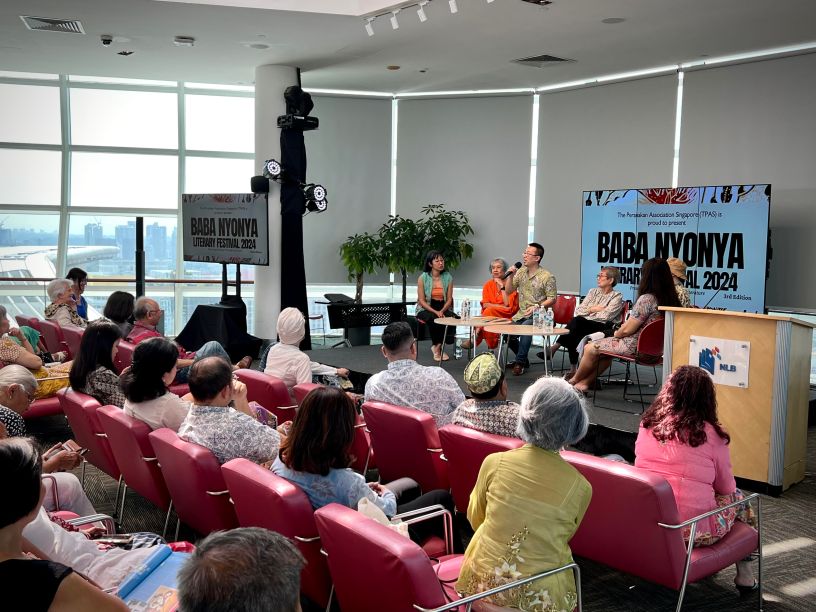
Meet Shawn, who is more than an author—he’s a passionate advocate for history, heritage, and the enduring values of our pioneers. With a speaker’s voice and author’s vision, he brings forgotten stories and unsung heroes to life, helping Singaporeans connect with their roots in meaningful ways.
Whether he’s speaking at schools, writing books, or sharing insights on public platforms, Shawn’s mission is clear: to inspire the next generation with lessons from the past. His work celebrates not just achievements, but the grit, courage, and community spirit that shaped Singapore into what it is today.
What first sparked your interest in history, and how did that curiosity grow into a lifelong passion for documenting Singapore’s past?
My early interest in family history began with curiosity about my own roots.
In primary school, I was interested in stories behind streets named after members of my family, namely Seah Street, Eu Chin Street, Liang Seah Street, and Peck Seah Street. My father would sometimes talk passionately about these prominent pioneers. I always thought it would be interesting to learn more and write about them.
I also have to say that I genuinely enjoyed studying international history and modern European history.
You come from a lineage that connects deeply with Singapore’s story — Seah Eu Chin, Seah Liang Seah, and others. How has your family heritage influenced your approach to writing and storytelling?
My family history gives me some historical perspective and influences my historical storytelling. My forefathers were not just businessmen. They were also community leaders who worked with other pioneers in Singapore and believed in giving back to society.
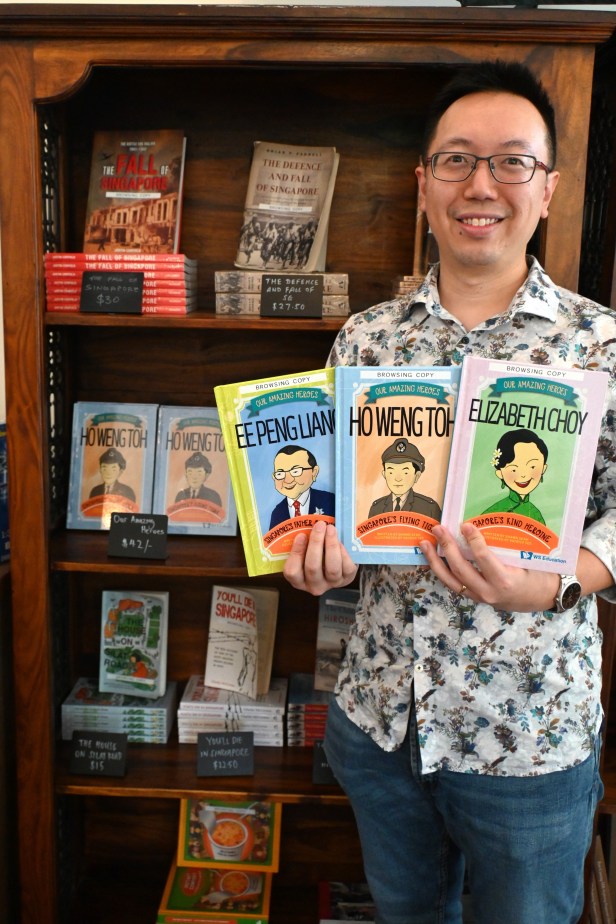
When I write or speak, I try to talk more about the values they lived by, such as perseverance, determination, grit, and service to society, rather than just about how successful they were. This is especially true for my children’s book series, Our Amazing Heroes (2025) and Our Amazing Pioneers (2023).
For me, Singapore’s history can help my fellow Singaporeans better understand where we came from, who we are, and what values define us.
Many of your talks and books highlight values like courage, service, and resilience. Why do you think these lessons from the past are still so relevant for today’s generation?
Yes, the books in my children’s series indeed highlight these important values, because the challenges may have changed, but these values remain relevant today. For example, the courage and resilience that helped our pioneers cross the seas and settle in Singapore might be the same courage and resilience young people need today to face uncertainty and challenges.
When I speak to primary school pupils at assembly talks, I often remind them that our forefathers faced dangers and difficulties but made the best of what they had. Grit, resilience, and determination to succeed are timeless and universal qualities, even in a fast-changing world.
Writing history for the general public can be challenging—especially when dealing with sensitive topics or forgotten stories. What obstacles have you faced in researching or presenting your material?
One of the biggest challenges of historical storytelling is making history simple and accessible to audiences. I often think about how I can make history engaging, edu-taining, and easy to read. However, despite my best and most sincere efforts, I cannot satisfy everyone.
Another challenge is striking a harmonious and healthy balance between my work — which is important to me and takes up the majority of my time — my family, and my writing hobby. I often imagine that I am juggling many balls at the same time, some of glass and others of stone. If you drop a glass ball, it will definitely shatter, so I try to pay more attention to those.
I’m also sometimes accused of writing quite hard-hitting history content for children, like when I wrote about how opium ruined migrants’ lives, or when someone leapt up to stab a prominent community leader, or when I wrote about how bombs fell on Singapore during the Second World War.
As far as possible, I try to be respectful, check my sources as best as I can, and treat every story with understanding and respect. But I believe it is important for children to appreciate that colonial Singapore was not always a safe, secure, and simple place, so that they will, hopefully, not take what we have for granted.
I often imagine that I am juggling many balls at the same time, some of glass and others of stone. If you drop a glass ball, it will definitely shatter, so I try to pay more attention to those.
You wear many hats—author, educator, public speaker, and researcher. Which role do you like most and why?
I love working, writing, and speaking. Of my various hats, I would say I enjoy writing and speaking the best, because I enjoy making historical stories come alive. In the process of writing and speaking, I have had the wonderful opportunity to meet many diverse, dynamic, and determined people who are helping keep heritage alive.
I believe in playing my part to nurture a society where our history, our shared heritage, and our community stories are cherished and celebrated. Through my efforts in historical storytelling as a published author and public speaker, I hope to inspire more Singaporeans to explore the stories of those who came before us.
What moment in your life changed the way you see the world?
I think there were two big moments.
The first was the Bukit Brown saga. In September 2011, the Singapore Land Transport Authority (LTA) announced a plan to construct a new road cutting through part of Bukit Brown Cemetery. I must confess that I did not know that Bukit Brown Cemetery existed before that announcement.
However, that announcement changed everything. Fearing that the rich history of Bukit Brown Cemetery would be lost, some Singaporeans banded together. They wanted the cemetery preserved and protected. I followed this whole Bukit Brown saga with interest. It spurred me on to start writing my own family’s history seriously.
For me, this was the turning point where I decided: this is important, and I must stand up and be counted. And I thought to myself: if I do not publish my ancestor’s story, his life’s achievements and contributions to Singapore could one day be lost, possibly forever.
As the Greek poet Pindar rightly said, “Unsung, the noblest deed will die.”
It was the start of a very long and challenging writing and speaking journey. And it led to my first book, Seah Eu Chin: His Life and Times (first published in 2017). Sometimes when I look back on my personal journey, I am amazed at how far I have come and how many challenges I have overcome over the years.
The second was writing My Father’s Kampung: A History of Aukang and Punggol.
Interviewing my father was my way of spending time with him and better understanding the place he came from. The book was not meant to be a definitive or comprehensive guide to Hougang or Punggol. Rather, it covered my journey to learn more about my father’s kampung.
My father lived and grew up in the northeastern part of Singapore, where there were many Teochews and Roman Catholics. When he was young, Singapore was also recovering from the Japanese Occupation and was not as wealthy and successful as it is today.
I think family history begins at home, with the stories of our parents and grandparents. It also deepened my sense of purpose, to record and reflect upon the memories that help us understand who we are.
What’s your vision for Singapore in the next five years?
Through my efforts in historical storytelling as a published author and public speaker, I hope to inspire more Singaporeans to explore the stories of those who came before us. Over the next five years, I hope more Singaporeans are able to learn more about our home and those who came before us.
By knowing where we come from, and who we are, I believe we stand a good chance of remaining rooted, centred, and united as one people as we move forward together into the future. This is my wish for my fellow Singaporeans.
If you could have a superpower for one day, what would it be and why?
Interesting question! If I could, I would travel through time. I would love to see 19th-century Singapore with my own eyes. I could also visit Europe in the 20th century. But I would return to the present to share what I have experienced to remind people that their hopes, their dreams, and their sacrifices still matter today.
Connect with Shawn: ShawnSeah and Instagram.
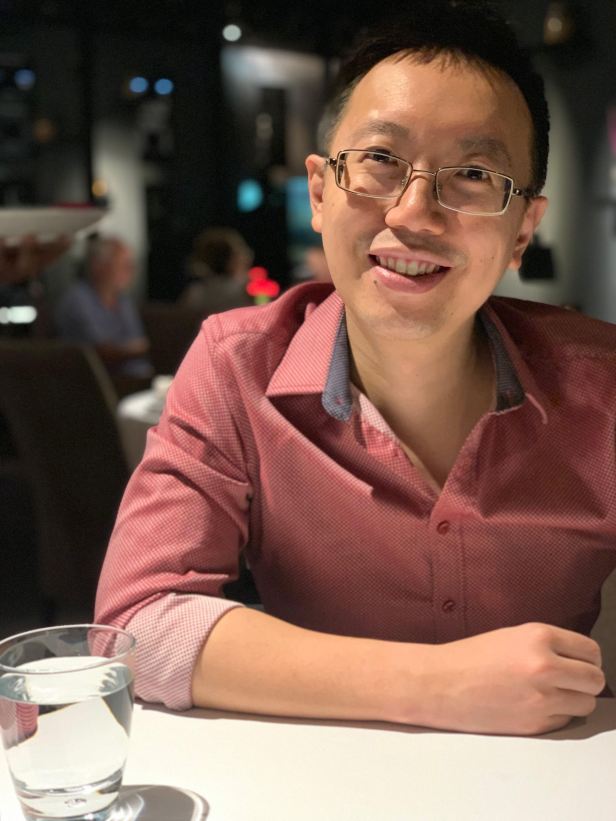
All pictures courtesy of author and speaker Shawn Seah.
